When a hub carrier loses its hub, the recovery playbook quickly stops looking like aviation and starts looking like logistics. With Doha (DOH) effectively offline for passenger flying and Gulf air corridors still constrained, Muscat International Airport (MCT) has emerged as the region’s most practical “pressure-relief valve” — and two oneworld heavyweights are now leaning on Oman’s capital to get stranded passengers moving again.



Qatar Airways (QR) is positioning a temporary “mini hub” at Muscat (MCT) to run a limited set of relief flights while Doha (DOH) remains unavailable. British Airways (BA), which does not normally operate scheduled service to Muscat (MCT), is adding special Muscat–London Heathrow (LHR) flights for displaced customers — turning an Omani airport into an emergency bridge for travelers who were originally trying to move through Dubai (DXB), Abu Dhabi (AUH), and Doha (DOH).
The reason Muscat is suddenly so important is simple: it sits just outside the most constrained airspace, has the runway infrastructure to take heavy widebodies all day, and still has functional access to multiple long-haul routings when neighboring FIRs don’t.
Read our stories in your inbox
Two aviation newsletters. Zero fluff.
Qatar Airways’ “mini hub” concept: a hub carrier without its hub
Qatar Airways’ network model is built around timed connection banks at Doha Hamad (DOH). When DOH is unavailable, QR doesn’t just lose departures — it loses its global connective tissue: aircraft rotation continuity, crew positioning, and the ability to re-accommodate passengers through its own system.
The workaround is Muscat (MCT), where Qatar plans to base a small number of aircraft and operating crews and run relief services from MCT to a short list of European gateways. The planned Muscat (MCT) destinations include:
Operationally, this is not “moving the hub.” It’s building a controlled launchpad for outbound evacuation flying — a small, stable schedule that prioritizes stranded passengers and prevents the network from scattering aircraft and crews even further.
What aircraft are likely to operate these relief flights?
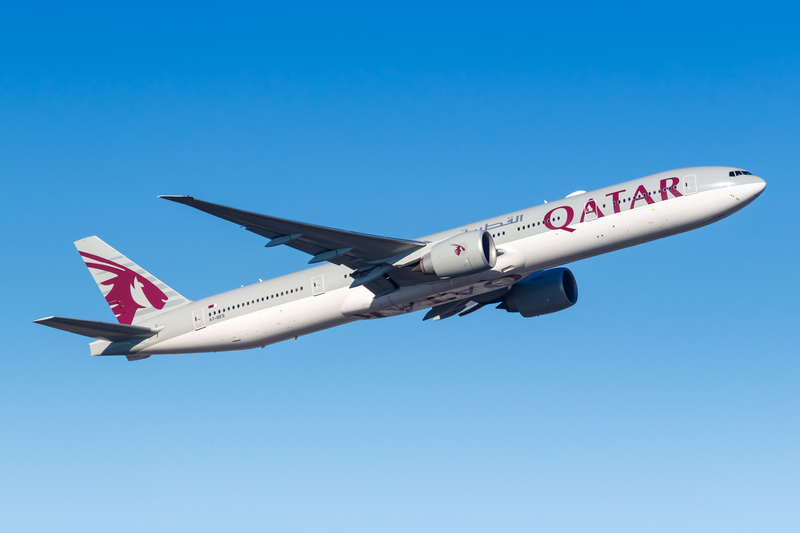
Qatar Airways can use a broad set of widebodies on Europe–Muscat sectors, depending on what’s positioned and legal:
-
Airbus A350-900/A350-1000: high-capacity, long-range, strong fuel efficiency for 6–8 hour stages.
-
Boeing 787-9: flexible gauge and efficient trip costs, ideal for “get people moving” flights.
-
Boeing 777-300ER: large lift capacity — useful when you need to drain passenger backlogs quickly.
The common denominator is that Muscat (MCT) can handle them all — including heavy widebodies at high landing weights — without the gate and runway constraints you’d see at smaller alternates.
British Airways’ Muscat (MCT) lifeline: a non-served city becomes an emergency gateway
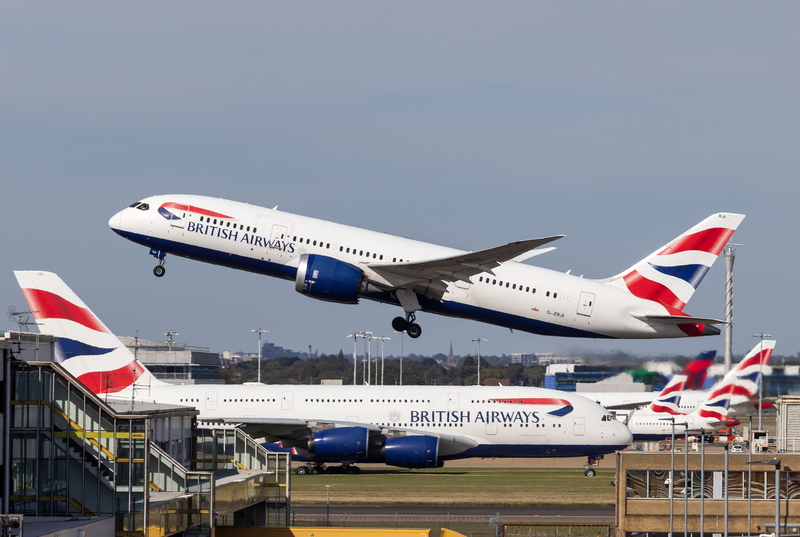
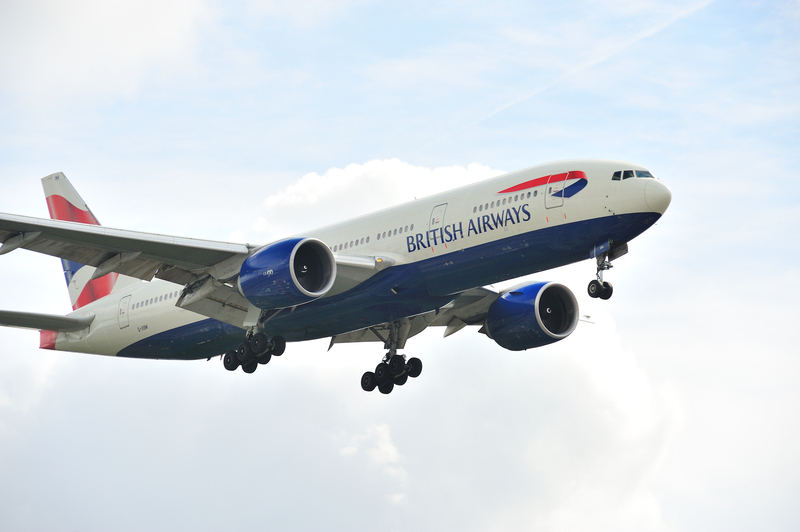
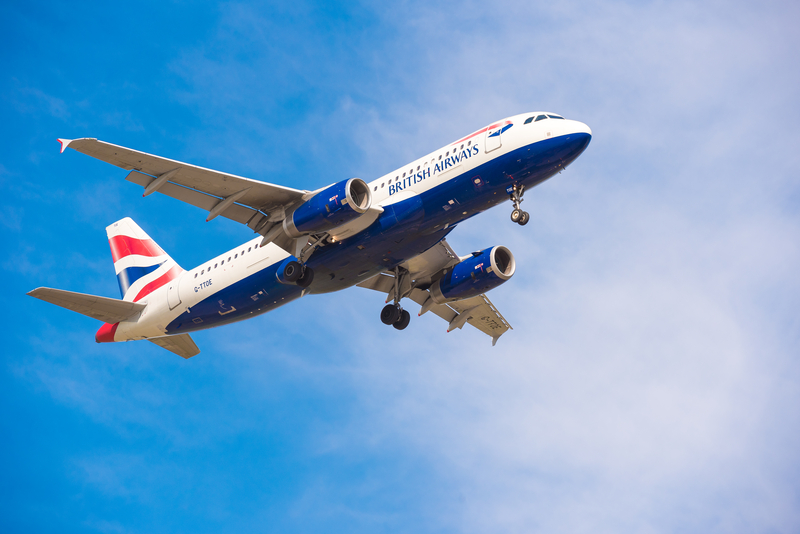
British Airways has also pivoted toward Oman, scheduling special Muscat (MCT)–London Heathrow (LHR) flights for displaced BA customers who have made it to Oman or are attempting to reach Oman from the UAE.
BA has publicly confirmed special departures including:
-
March 5: MCT → LHR, 02:30 local departure
-
March 8: MCT → LHR, 02:30 local departure
BA has also indicated additional Muscat (MCT)–Heathrow (LHR) flying between those dates as the situation evolves, with seats allocated to customers with existing bookings and managed through BA’s call center and direct outreach.
Why BA needs a “controlled exit point”
BA’s Gulf flying typically relies on straightforward hub operations into airports like Dubai (DXB) and Doha (DOH) — large stations with established handling contracts, crews, and recovery options. When those airports close, the usual safety net disappears.
Muscat (MCT) offers a controlled alternative:
-
A stable airport outside the highest-risk airspace
-
Widebody handling capability for long-haul aircraft
-
More predictable passenger processing than ad hoc diversion points
-
A manageable environment for staged repatriation flights
For BA, it’s less about operating a “route” and more about operating a recovery pipeline.
The hard part: getting passengers to Muscat by road
The most unusual piece of this strategy is that many travelers can only reach Muscat (MCT) by crossing borders on the ground first — a step airline systems aren’t built for.
For passengers stranded in the UAE, Muscat is reachable via a relatively straightforward road journey. For anyone coming from Qatar, the overland move is far longer and can involve multiple border transitions depending on the path available.
Approximate distances to Muscat (MCT) often quoted by operators and travelers during the disruption:
| Origin | Destination | Miles | Kilometers |
|---|---|---|---|
| Dubai (DXB) | Muscat (MCT) | 281 | 453 |
| Abu Dhabi (AUH) | Muscat (MCT) | 309 | 498 |
| Sharjah (SHJ) | Muscat (MCT) | 275 | 443 |
| Doha (DOH) | Muscat (MCT) | 643 | 1,036 |
For airline professionals, this is where the term “airlift” becomes literal: the aircraft is only one part of the chain. The upstream constraints are now border policy, ground transport availability, and passenger documentation — all outside the airline’s normal control.
Why Muscat works: infrastructure that can absorb irregular operations
Muscat International (MCT) is not a boutique field. It’s Oman’s primary gateway and a capable widebody airport with the scale and infrastructure to function as a temporary relief node.
Key operational attributes:
-
Two long parallel runways: 08R/26L (4,080 m / 13,385 ft) and 08L/26R (4,000 m / 13,123 ft)
-
2024 traffic: about 12.9 million passengers and 96,116 aircraft movements
-
Hub for Oman Air (WY) and SalamAir (OV), with broad international service reach
Those runway lengths matter for the kind of aircraft being displaced and repositioned. Whether it’s an A350 at a heavy weight, a 787 with long-range fuel, or a 777 repositioning to Europe, MCT can accept and turn the airplane without “short runway” compromises.
The secondary effect: Oman Air ramps up capacity too
As Muscat (MCT) becomes a regional relief valve, Oman Air (WY) has also been adding capacity on key routes — particularly into major European points such as London Heathrow (LHR) — and adjusting aircraft deployment away from closed Gulf city pairs to routes that can still operate.
This matters because even if BA and QR operate dedicated relief flights, the fastest way to clear a backlog is often incremental capacity on existing scheduled airlines that already have slots, staff, and aircraft rotations in place.
What passengers should do now
Both BA and Qatar Airways have emphasized a crucial rule in these situations: do not travel to the airport unless you have a confirmed booking and direct airline notification.
If you are attempting to reposition to Muscat (MCT) overland:
-
Confirm entry requirements for Oman and any transit country you may cross.
-
Plan for delays at border points and limited services during peak congestion.
-
Keep essential medication and critical items in carry-on luggage (checked baggage may not be accessible during rebooking or diversions).
-
Assume rebooking will be capacity-limited until hubs like DOH normalize.
Bottom Line
Muscat (MCT) has become the Gulf’s operational escape hatch — and a rare example of a major airport suddenly functioning as a temporary substitute hub for airlines that don’t normally rely on it. Qatar Airways is using MCT to run a limited set of relief flights to core European gateways while Doha (DOH) remains unavailable. British Airways is supplementing with special MCT–London Heathrow (LHR) flights to move displaced customers home.
It’s not a long-term network shift. It’s a crisis-era logistics solution — built on Oman’s ability to keep airspace stable, handle heavy widebodies, and provide an orderly platform for recovery flying when the region’s biggest hubs can’t.
Keep reading FlyMag
Get the Daily Brief in the morning or the Route Watch weekly recap on Fridays. Or both.
Share this story
Composed for each network — click to share, or copy the composed text for your own timing.