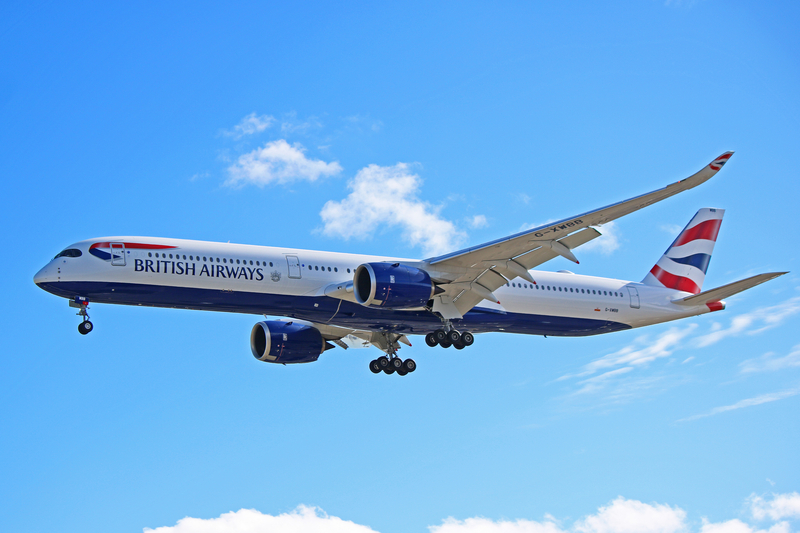
A passenger death aboard British Airways flight BA32 from Hong Kong International Airport (HKG) to London Heathrow Airport (LHR) has drawn attention not because onboard deaths are unheard of, but because of how the situation was reportedly managed during a very long flight.

The central fact is clear: a woman in her 60s died about an hour after takeoff on the March 15 service from HKG to LHR, and the Airbus A350-1000 continued to Heathrow rather than diverting. British Airways has confirmed that a customer died onboard and says all procedures were correctly followed. That, in itself, is important. Once a passenger has died and there is no prospect of medical intervention changing the outcome, a diversion is not automatically required. The operational decision becomes more complex than many non-aviation readers assume.
That is why this story matters. It is not really about shock value. It is about how airlines manage one of the most emotionally difficult scenarios that can happen in the cabin.
Read our stories in your inbox
Two aviation newsletters. Zero fluff.
Continuing To Destination Was Not Necessarily Abnormal
The instinctive public reaction is often that a flight should land immediately. In practice, that is not always how it works.
If a passenger suffers a medical emergency and there is a realistic chance that immediate treatment on the ground could help, diversion logic is strong. But if death has already occurred, the calculus changes. Pilots and operators must then weigh the remaining flight time, available diversion points, operational implications, ground support, and the wellbeing of everyone else onboard.
On BA32, the flight reportedly continued to London after the woman died early in the journey. From an airline-operations perspective, that is not inherently improper. It is a grim situation, but not automatically an emergency in the same way as an active onboard fire, decompression, or an ongoing medical crisis with a chance of reversal.
That distinction is important for readers who know airline operations well. The difficult part of this story is less the decision to continue than the reported handling of the body during the remainder of the flight.
The Reported Body Placement Is What Has Driven The Reaction
According to multiple media reports, the body was moved to a rear galley after a proposal to place it in a lavatory was reportedly rejected. Some reports further allege that the galley area had heated flooring and that passengers later noticed an odor near the end of the flight.
That part of the story should be handled carefully.
British Airways has publicly said only that its procedures were followed. The airline has not publicly validated every operational detail described in the tabloids and follow-on coverage. So the most accurate way to frame this is that the death onboard is confirmed, the continuation to London is confirmed by the fact of the completed service, and the rear-galley placement and heated-floor details are based on reported accounts rather than a released investigative document.
That distinction matters because this is exactly the kind of incident where sensational retellings can harden into accepted fact before formal review has clarified the sequence.
Why Crew Options Can Be More Limited Than They Sound
When people think about managing a deceased passenger onboard, the imagined options often sound simple: use a row of empty seats, use a crew rest area, use a lavatory, or isolate the body in some other way.
Long-haul reality can be messier.
Cabins may be full or near full. Family members may be seated nearby. Certain locations may be impractical, unsafe, or undignified. The crew has to think about privacy, access, passenger visibility, workflow, and what can realistically be done without making a traumatic situation even worse. On a fully boarded long-haul aircraft, there may be no ideal answer, only a least-bad one.
That does not mean every decision is beyond criticism. But it does mean these incidents tend to be judged too easily from the outside.
The Crew Impact Is Often Underestimated
One of the most overlooked parts of an onboard death is the crew burden.
Cabin crew are expected to manage grief-stricken relatives, continue service, maintain composure, protect the dignity of the deceased, communicate with the flight deck, and carry the rest of the cabin through a long sector as normally as possible. If reports are correct that some of the BA32 crew later took time off after the event, that would not be remotely surprising.
This is one reason airlines treat onboard deaths so seriously even when the aircraft itself is never in technical danger. The operational side may remain controlled, but the human side can be extremely difficult.
The Aircraft And Route Context Matter
BA32 is one of British Airways’ longest scheduled passenger services, linking HKG and LHR with an Airbus A350-1000.
That route length is relevant because a death one hour after departure on a long-haul sector creates a very different management problem from the same event on a short intra-European or domestic flight. Once the decision is made not to divert, the crew may still be left with 10 to 13 hours of flight time to manage the consequences.
That is why the body-placement issue became such a major part of the coverage. On a shorter route, a difficult temporary arrangement may last an hour or two. On a Hong Kong–London flight, it may last the better part of a working day.
The Bigger Lesson Is About Procedures, Not Outrage
This incident will likely renew discussion about whether airline procedures for handling onboard deaths are sufficiently specific.
British Airways says procedures were followed. That may be true, and still leave open a wider industry question: are the procedures detailed enough for long-haul realities in full cabins? Do crews have enough practical guidance on where a body should be placed when no ideal option exists? And how much discretion should be left to onboard judgment?
For aviation professionals, those are the useful questions. Public outrage alone does not improve procedure. A careful review of what options actually existed onboard that aircraft, in that cabin load, on that route, might.
Bottom Line
The British Airways BA32 incident is tragic first and foremost because a passenger died and her family had to endure the remainder of a long-haul flight in those circumstances.
Operationally, the decision to continue from Hong Kong (HKG) to London Heathrow (LHR) was not necessarily abnormal once death had occurred. The more difficult issue is the reported onboard handling afterward, especially the claim that the body was placed in a rear galley for much of the flight. British Airways says all procedures were correctly followed, but some of the most widely repeated details still rest on media reports rather than a formal public investigative record.
For airline readers, the real value in this story is not the shock factor. It is the reminder that onboard deaths create some of the hardest judgment calls crews can face — situations where there may be no good answer, only the least harmful one available at 38,000 feet.
Keep reading FlyMag
Get the Daily Brief in the morning or the Route Watch weekly recap on Fridays. Or both.