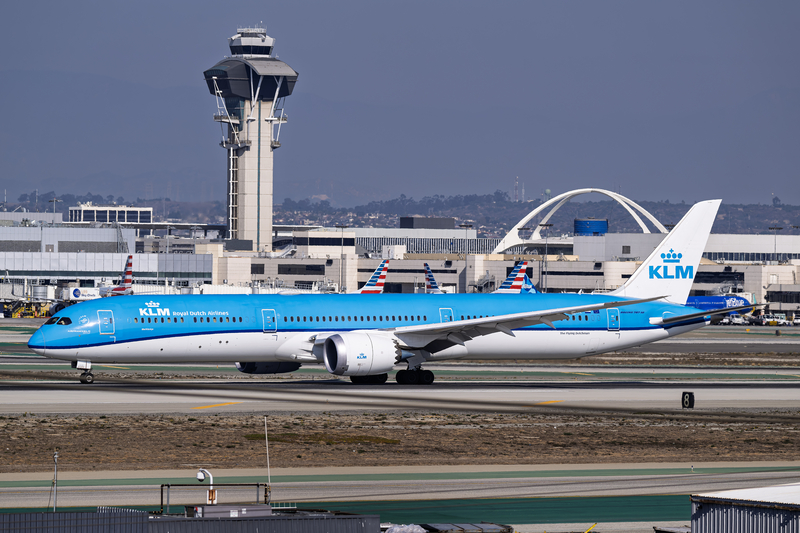
KLM has suspended multiple Middle East routes and tightened its overflight posture as regional security risk escalates. In a statement issued January 24, the airline said it is avoiding the airspace of Iran, Iraq and Israel, as well as parts of airspace over several Gulf countries, and that—until further notice—it will not operate flights from Amsterdam Schiphol (AMS) to Dubai (DXB), Riyadh (RUH), Dammam (DMM) and Tel Aviv (TLV).

That list is notable because it spans both classic Gulf trunk demand (DXB) and Saudi corporate/industrial flows (RUH/DMM), alongside a politically sensitive destination (TLV). In network terms, this is not a minor tweak; it’s a deliberate decision to remove entire city pairs when safe, reliable routing—and the supporting insurance and risk tolerances—can’t be assured at KLM’s required threshold.
What KLM is really saying when it “avoids airspace”
Airlines don’t make overflight decisions casually. “Avoiding airspace” typically means the carrier’s security, ops control, and flight planning teams have determined that the risk profile inside certain FIRs or corridors is no longer acceptable—whether due to kinetic threats, heightened military activity, instability, or concerns such as navigation interference.
Read our stories in your inbox
Two aviation newsletters. Zero fluff.
Even when a region’s airspace remains technically open, a carrier may still self-restrict because:
-
Overflight risk isn’t binary. It changes by corridor, altitude, time of day, and the evolving threat picture.
-
Routing workarounds have real limits. Detours can push block times, fuel uplift, alternate planning, and crew duty constraints to the edge—especially on long-haul sectors that were optimized around the shortest corridors.
-
Dispatch reliability matters. If a route becomes a daily exercise in last-minute re-routes and payload penalties, airlines often prefer a clean suspension over an operation that’s “scheduled but shaky.”
KLM says it is continuously monitoring conditions and coordinating closely with Dutch authorities and international aviation-safety bodies—exactly the kind of framework you’d expect when a major European carrier alters overflight policy across multiple countries at once.
The aircraft angle: why the 777 and 787 matter here
KLM’s Middle East flying out of Amsterdam (AMS) is normally the domain of its long-haul widebody fleet—primarily Boeing 777-200ER/777-300ER and Boeing 787 Dreamliner variants—because those aircraft balance belly cargo capability, range, and seat economics on medium-long stage lengths.
This matters because when airlines are forced to route around closed or avoided corridors, aircraft performance and fuel efficiency become more than spreadsheet details:
-
Boeing 787 (Dreamliner): Designed for long-range efficiency with strong ETOPS capability and lower fuel burn per seat versus older widebodies—useful when detours inflate distance and contingency fuel.
-
Boeing 777: A payload-capable workhorse with strong cargo economics, often favored when freight demand is material—though detours can raise trip cost and make crew/alternate planning more complex.
KLM’s decision to suspend (rather than simply re-route) tells you something: the challenge isn’t only extra miles. It’s the total operational and risk envelope—routing certainty, insurance comfort, alternates, and a stable operating environment at destination airports like DXB, RUH, DMM, and TLV.
Passenger handling: rebooking isn’t as simple as “put them on another airline”
KLM has indicated affected customers have been informed and can choose between rebooking options and compensation pathways, including vouchers or refunds. The airline also signaled that immediate re-accommodation onto other carriers is not always practical during industry-wide disruption—particularly when multiple airlines are pulling capacity from the same region at the same time.
In real-world terms, once several European operators suspend the same destinations, spare seats disappear fast. That’s especially true in winter peak periods for Gulf hubs like DXB, where loads can be high even before irregular operations compress demand into fewer flights.
This isn’t just KLM: the wider Europe response is shifting day by day
KLM’s move is part of a broader pattern across Europe as carriers reassess the Middle East operating environment:
-
Air France (hub Paris CDG) briefly paused and then resumed Dubai (DXB) service while emphasizing real-time monitoring.
-
Lufthansa (hubs Frankfurt FRA and Munich MUC) has stated it would bypass Iranian and Iraqi airspace and limited flying to Tel Aviv (TLV) and Amman (AMM) on a time-bound basis.
-
British Airways (hub London Heathrow LHR) temporarily suspended flights to Bahrain (BAH) before later restoring availability.
-
Finnair (hub Helsinki HEL) reported re-routing flights to Doha (DOH) and Dubai (DXB) via Saudi airspace to avoid Iraqi corridors.
-
Wizz Air has described operational knock-ons for westbound Gulf flying, including technical stops for fuel and crew changes at Larnaca (LCA) or Thessaloniki (SKG) when avoiding certain airspace.
The common thread is not a single destination—it’s corridor risk. When multiple operators avoid the same overflight regions, the network impact spreads well beyond the city pairs being suspended, because detours reshape fleet utilization, crew pairing, and aircraft rotation buffers.
Why “limited impact to Asia” can still be true—and still expensive
For many European carriers, avoiding Iran and Iraq has already been increasingly common in recent weeks, meaning some Asia routings were already built around alternative tracks. That can limit incremental disruption to flight times—yet still impose significant costs through longer routings, higher fuel burn, and tighter operational margins.
Even small block-time increases compound quickly at scale: more fuel, fewer available widebody hours, and less slack to absorb winter weather or ATC restrictions. In a high-utilization long-haul operation, “only 20–30 minutes longer” can be the difference between an on-time departure and a crew duty-time problem two sectors later.
Bottom Line
KLM’s suspension of Amsterdam (AMS) flights to Dubai (DXB), Riyadh (RUH), Dammam (DMM) and Tel Aviv (TLV) is a clear signal that the airline’s current risk model no longer supports reliable, repeatable operations through key Middle East corridors. While widebodies like the Boeing 777 and Boeing 787 can technically handle longer routings, the decision to pull routes entirely shows this is about more than performance—it’s about certainty: safe overflight, stable dispatch, viable alternates, and passenger recovery options when multiple airlines are reacting at the same time. Expect continued volatility in schedules until the region’s security picture—and the overflight guidance shaping it—settles into something carriers can plan around.
Keep reading FlyMag
Get the Daily Brief in the morning or the Route Watch weekly recap on Fridays. Or both.