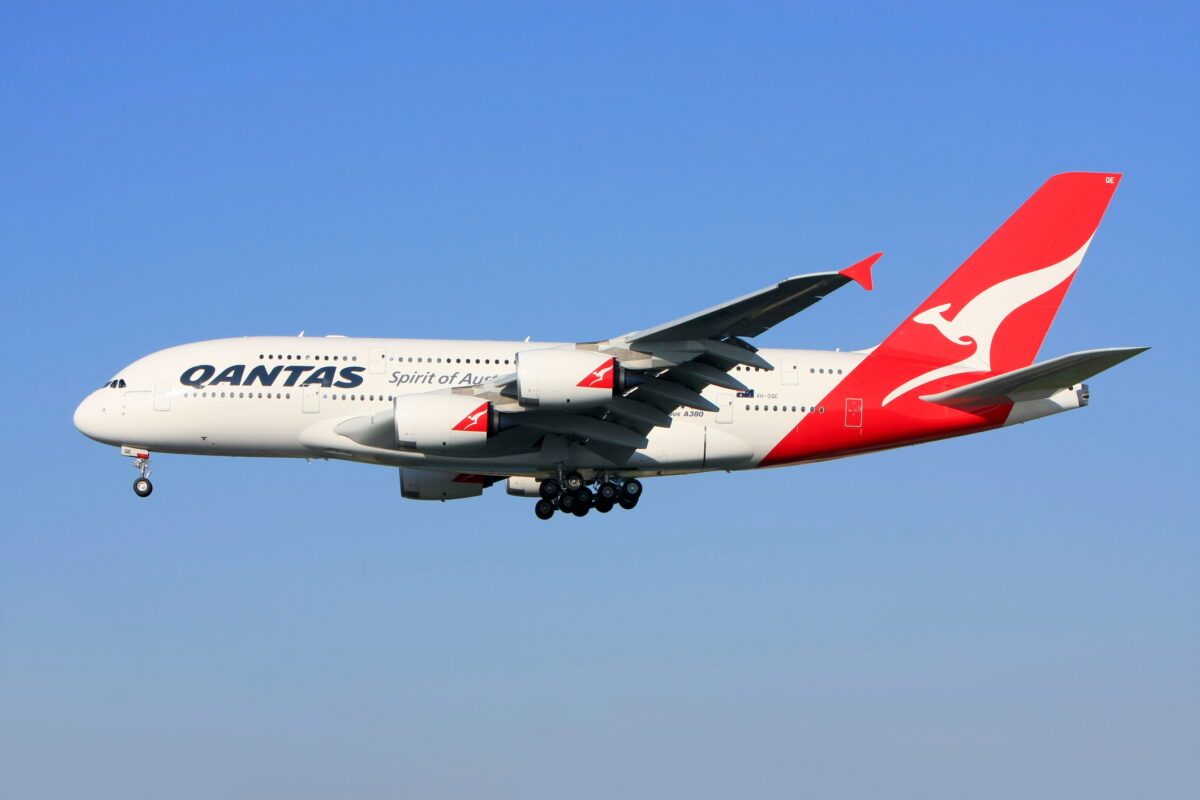
Qantas and Jetstar have outlined plans for three new nonstop routes to Indonesia, using nearly all of the additional capacity made available to Australian airlines under a revised bilateral agreement.


The proposed expansion includes daily Qantas flights from Perth (PER) to Jakarta (CGK), daily Jetstar service between Western Sydney (WSI) and Bali (DPS), and a daily Qantas link from Brisbane (BNE) to DPS. Qantas also intends to increase Melbourne (MEL)–CGK to daily service.
The routes have not yet received final regulatory approval. They appear in a Qantas application submitted to Australia’s International Air Services Commission seeking 4,539 seats per week in each direction for five years. The airline said it would fully use the allocation by November 1, 2027.
Read our stories in your inbox
Two aviation newsletters. Zero fluff.
Qantas Plans Daily Perth–Jakarta Flights From December
The first addition would begin December 14, 2026, when Qantas plans to restore nonstop service between Perth and Jakarta with a daily Boeing 737-800 flight.
QF211 is scheduled to leave PER at 9:30 a.m. and arrive at CGK at 1:10 p.m. The return QF212 would depart Jakarta at 2:15 p.m. and reach Perth at 7:55 p.m. All times are local.
Qantas proposes using a 165-seat 737-800, contributing 1,155 seats per week in each direction. The aircraft gives the airline enough capacity to support daily frequency without committing an Airbus A330 to a market of roughly five hours.
Although described as a new service in the application, the route represents a return for Qantas. The carrier previously launched Perth–Jakarta with three weekly 737 flights in 2022, but the link is absent from its current published international network.
The proposed morning departure from Perth and afternoon return from Jakarta create a consistent daily schedule aimed at both leisure and commercial traffic. Jakarta is a materially different market from Bali, which dominates Australia–Indonesia leisure capacity, and the route would give Western Australia a Qantas-operated connection to Indonesia’s principal business center.

Jetstar Would Make Bali Its First Western Sydney Route
Jetstar plans to start daily WSI–DPS flights on March 15, 2027, using a 232-seat Airbus A321LR. JQ45 would depart Western Sydney at 9 a.m. and arrive in Bali at 12:20 p.m., while JQ46 would leave DPS at 2 p.m. and land at WSI at 11:05 p.m.
The service would add 1,624 seats per week in each direction and become an important early international route for the new airport. WSI is due to begin passenger operations on October 25, 2026, with Jetstar operating the first commercial departure. Qantas previously confirmed that Jetstar and Qantas would initially build a domestic network at Western Sydney, followed by Qantas flights from March 2027.
The Indonesia agreement was a prerequisite for adding Bali. The revised bilateral arrangements specifically allow Indonesian and Australian airlines to serve WSI, removing a regulatory obstacle that would otherwise have prevented the airport from being included among the principal Australian gateways covered by the agreement.
Jetstar’s A321LR is well suited to the route. The high-density, all-economy aircraft provides substantially more capacity than an A320 while retaining narrowbody operating economics. It has become central to Jetstar’s expansion on medium-haul leisure routes, where its 232-seat cabin allows the airline to add capacity without deploying a Boeing 787.
For Western Sydney, Bali also provides a strong test of the airport’s international catchment. The daily schedule targets one of Australia’s largest outbound leisure markets rather than relying on connecting traffic through another Australian gateway.

Brisbane–Bali Joins the Qantas Mainline Network
Qantas proposes opening daily Brisbane–Bali flights on August 1, 2027. QF285 would leave BNE at 5:55 p.m. and arrive at DPS at 10:40 p.m. QF286 would depart Bali at 11:55 p.m., reaching Brisbane at 8 a.m. the following day.
The airline again plans to use a 165-seat Boeing 737-800, adding another 1,155 weekly seats in each direction. The overnight return makes efficient use of the aircraft while producing a morning arrival in Brisbane, where passengers could connect into Qantas’ domestic network.
Jetstar already serves the Brisbane–Bali market, meaning the new flight would expand the Qantas Group’s presence rather than introduce the group to the city pair. The move adds a full-service option under the Qantas brand and illustrates how the group is dividing capacity between its two airlines: Jetstar will anchor the larger leisure operation, while Qantas can address premium leisure, loyalty and corporate demand with a smaller cabin.
Combined, the three new routes would provide 3,934 seats per week in each direction. Most of the remaining capacity requested from the IASC would support Qantas’ Melbourne–Jakarta expansion.
Melbourne–Jakarta Moves Toward Daily A321XLR Service
Qantas plans to increase Melbourne–Jakarta to four flights per week from March 28, 2027, using a 247-seat Airbus A330-200. QF39 and QF40 would operate on Mondays, Wednesdays, Fridays and Sundays.
A more significant change is scheduled for October 31, 2027. Qantas wants to make the route daily while replacing the A330 with a 194-seat Airbus A321XLR. The proposed narrowbody schedule has QF39 leaving Melbourne at 3:10 p.m. and arriving in Jakarta at 6:30 p.m. QF40 would depart CGK at 8 p.m. and land in Melbourne at 6:30 a.m. the next day.
The switch shows how Qantas intends to use the A321XLR to trade widebody gauge for frequency on medium-haul international routes. Moving from four 247-seat A330 flights to seven 194-seat A321XLR flights would raise weekly one-way capacity from 988 to 1,358 seats while giving the market a daily schedule.
Qantas says the A321XLR has a full-payload range of about 4,700 nautical miles, approximately 3,000 kilometers farther than its 737-800. The airline describes the type as a platform for opening or increasing direct links to Southeast Asia and the Pacific, making Jakarta a representative mission for the long-range narrowbody.
Capacity Becomes Available Under Revised Bilateral
Australia and Indonesia updated their air services arrangements on September 19, 2026, adding 5,000 weekly seats for airlines of both countries. It was the first major revision to the bilateral framework in 15 years.
The agreement also opens access to additional Indonesian destinations beyond Jakarta and Bali, including gateways serving Lake Toba, Borobudur, Mandalika, Komodo and Likupang. Qantas’ immediate application, however, concentrates on established markets and the opening of WSI rather than testing one of the newly available Indonesian points.
The IASC has opened the capacity case and invited competing applications, with submissions due October 19, 2026. Qantas’ proposed schedules remain subject to the commission’s decision and other required approvals.
Bottom Line
The application gives the Qantas Group a clear first-mover position following the bilateral expansion. Its request for 4,539 of the 5,000 additional weekly seats would secure most of the newly available Australian capacity, although the IASC process gives rival carriers an opportunity to make competing claims before an allocation is finalized.
Western Sydney is the most strategically important addition. A daily Bali flight would give Jetstar an immediate international leisure anchor at WSI and provide a practical measure of whether the airport can generate demand independently of Sydney Kingsford Smith. Perth–Jakarta and Brisbane–Bali are more conventional network additions, but both deepen Qantas’ ability to segment the market between its mainline and low-cost brands.
The Melbourne–Jakarta aircraft change is equally revealing. Qantas is positioning the A321XLR as a frequency tool rather than simply a longer-range replacement for the 737. If the plan proceeds, Jakarta will demonstrate whether a daily narrowbody schedule can outperform a less frequent A330 operation in a market that needs schedule consistency but does not always support widebody capacity.