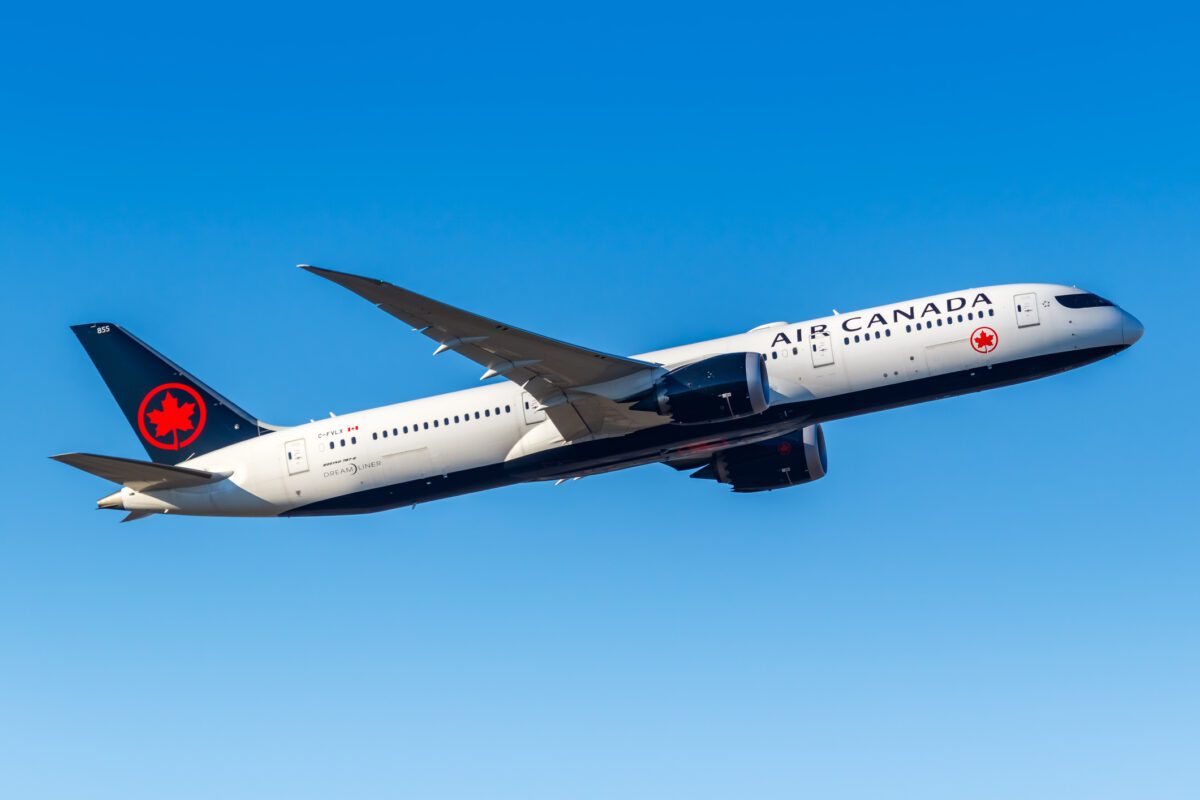
Air Canada’s 2026 schedule omits 16 long-haul destinations that appeared in the carrier’s network at some point during the previous decade, a review of the airline’s schedules and corporate disclosures shows.


The changes do not represent 16 routes canceled at once. Most disappeared several years ago, while others fell out of the network during the pandemic or in more recent schedule revisions. Only Montréal–Algiers was identified by Air Canada as part of its April 2026 response to higher fuel prices.
The comparison nevertheless illustrates how extensively Air Canada has reshaped its international network. The airline has moved away from the wide-ranging Air Canada Rouge transatlantic operation of the late 2010s, concentrated more flying at Toronto Pearson (YYZ), Montréal (YUL) and Vancouver (YVR), and assigned its available widebody capacity to larger or more strategically important markets.
Read our stories in your inbox
Two aviation newsletters. Zero fluff.
The 16 destinations no longer served
The removed destinations, grouped by region, are:
- Europe: Bordeaux (BOD), Bucharest (OTP), Glasgow (GLA), Istanbul (IST), London Gatwick (LGW), Marseille (MRS), Shannon (SNN), Warsaw (WAW) and Zagreb (ZAG).
- Africa: Algiers (ALG) and Cairo (CAI).
- Asia-Pacific: Melbourne (MEL), Mumbai (BOM), Nagoya (NGO) and Taipei (TPE).
- Middle East: Doha (DOH).
Nine of the 16 are in Europe, where Air Canada and Air Canada Rouge mounted an aggressive expansion before the pandemic. The airline’s own 2016 corporate filing recorded the introduction of Rouge flights from Toronto to Glasgow, London Gatwick and Warsaw. Its 2017 filing added Montréal–Algiers, Montréal–Marseille, Vancouver–Nagoya and Vancouver–Gatwick, alongside mainline services to Melbourne, Mumbai and Taipei.

The expansion continued in 2018. Air Canada’s annual report for that year listed new Rouge services from Toronto and Montréal to Bucharest, Toronto to Zagreb and mainline service from Toronto to Shannon. Montréal–Bordeaux followed in 2019.
Most of those European experiments were short-lived. Istanbul disappeared after 2017. London Gatwick’s Air Canada-operated service also ended in that period, leaving the airline to consolidate its London operation at Heathrow. Bordeaux, Bucharest, Glasgow, Marseille, Warsaw and Zagreb last appeared in 2019 schedules, while Shannon’s Air Canada service was limited to 2018.
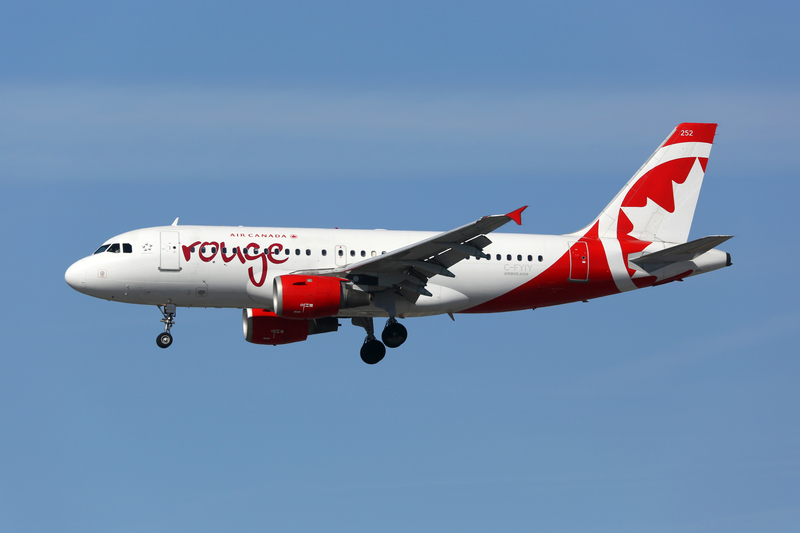
Rouge’s Boeing 767 exit closed one chapter
The European withdrawals share an important fleet connection. Many were operated by Air Canada Rouge’s Boeing 767-300ERs, which allowed the group to pursue seasonal, leisure-heavy routes with lower operating costs and denser cabins than its mainline widebodies.
Rouge configured some of its 767-300ERs with about 280 seats, including a small Premium Rouge cabin. That capacity worked for peak-summer markets such as Bucharest, Glasgow, Marseille, Warsaw and Zagreb, but it was less suitable once demand collapsed in 2020.
Air Canada retired its remaining passenger Boeing 767s in 2020, including the Rouge fleet. The aircraft that remain in the company’s operation are freighters. Without the passenger 767, the airline no longer had a comparable low-cost widebody for marginal seasonal routes. Replacing a Rouge 767 with a Boeing 787 or Airbus A330 would have increased both capacity and the opportunity cost of serving those markets.
That helps explain why the post-pandemic rebuild did not simply reproduce the 2019 network. Air Canada restored Budapest and Prague and returned to Berlin from Montréal, but several smaller Rouge-era destinations remained absent.
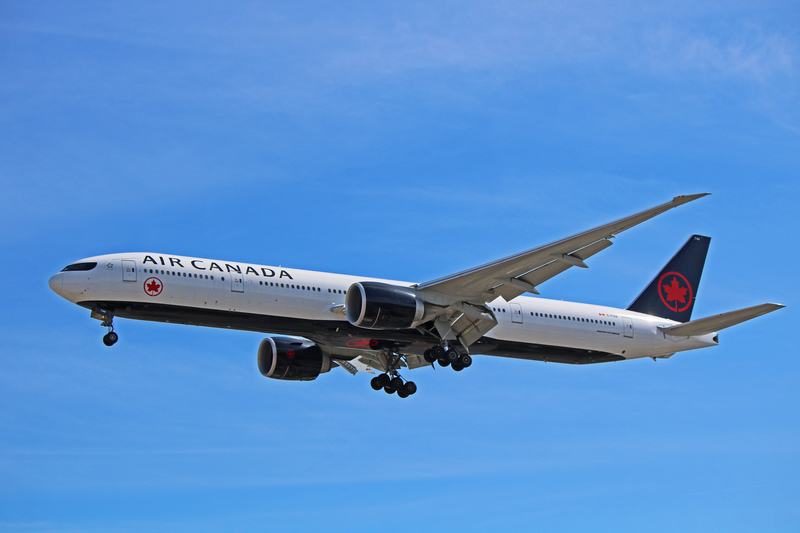
Africa, Asia-Pacific and the Middle East
The non-European removals followed several different patterns. Vancouver–Melbourne, Vancouver–Taipei and Vancouver–Nagoya were products of Air Canada’s rapid Pacific expansion. Melbourne and Taipei used Boeing 787s, while Nagoya launched with a Rouge Boeing 767-300ER. Melbourne and Taipei disappeared during the 2020 collapse in international flying; Nagoya had already ended after 2018.
Toronto–Mumbai began in 2017 as a year-round Boeing 787-9 route. The Dreamliner’s range and belly-cargo capability made it suitable for the long sector and for connections over YYZ, but the route no longer appears in Air Canada’s 2026 operation. The airline has continued to serve India through Delhi when operating conditions permit.
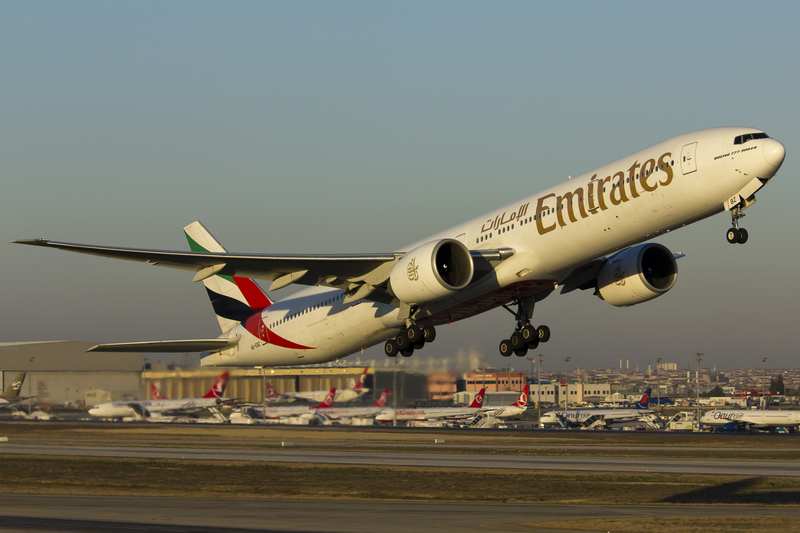
Montréal–Cairo was a more recent addition. Air Canada’s 2021 annual report records the first flight on June 18 of that year, describing the route as a link for the Egyptian community in Montréal and elsewhere in North America. It remained a limited-frequency market and last operated in 2023.
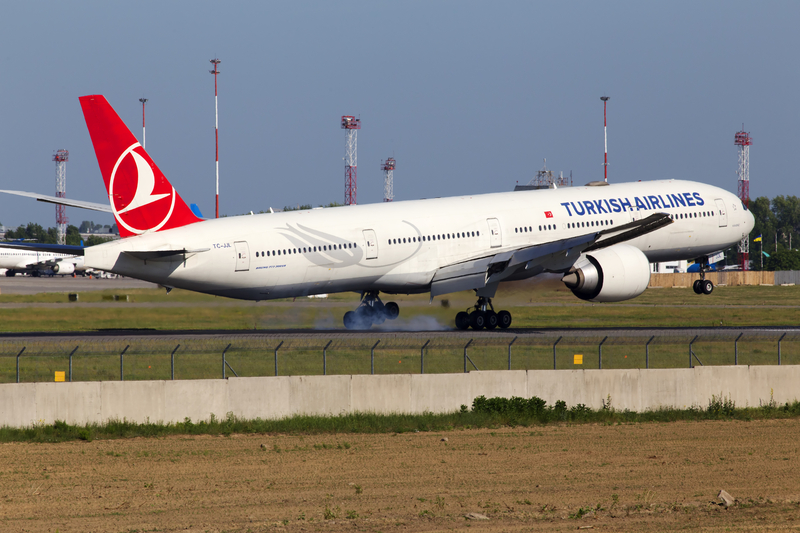
Toronto–Doha was launched in late 2020 with the Boeing 787-9, initially operating three times weekly. It was designed to connect Air Canada’s YYZ network with onward services at Doha, but Air Canada removed the route in 2023.
Algiers is the outlier because its absence is tied to a specific 2026 action. Air Canada said in April that Montréal–Algiers would be temporarily suspended for the summer after jet fuel prices doubled following the start of the Iran conflict. The airline’s schedule statement said the route was planned to return in 2027 and placed the total capacity effect of all the announced fuel-related changes at about 1% of annual available seat miles.
The network is still expanding elsewhere
The removed destinations should not be read as a general retreat from long-haul flying. Air Canada says its international network reaches 111 airports, while its current fleet profile lists 40 Boeing 787s alongside 25 Boeing 777s and 20 Airbus A330-300s.
Its summer 2026 program added Catania and Palma de Mallorca from Montréal, restored Budapest and Shanghai from Toronto, and made Vancouver–Bangkok year-round. The airline’s published schedule also increased Toronto–Prague to four weekly flights during peak periods.
Air Canada has also begun taking delivery of the Airbus A321XLR. The 182-seat aircraft entered commercial service in June 2026 and gives the airline a lower-capacity option for long, thin markets that previously required a widebody. With lie-flat Signature Class seats and transatlantic capability, it can support routes where a 787 or A330 would be too large, although it is not a direct replacement for the higher-capacity Rouge 767.
Bottom Line
The 16 destinations reveal less about a sudden contraction than about the natural attrition behind a large network. Air Canada opened many of the routes during an unusually expansionary period, when Rouge’s Boeing 767 fleet supplied relatively inexpensive widebody capacity and the group was pursuing sixth-freedom traffic through all three major hubs. Several markets were seasonal tests rather than permanent pillars of the schedule.
The passenger 767’s retirement raised the threshold for keeping those routes. A destination that could support a dense Rouge aircraft for several summer months might not justify scarce Boeing 787 time, particularly when the same aircraft can be deployed to an established European capital, a major Asian gateway or a route with stronger premium and cargo demand. The concentration of removals in Europe reflects that fleet transition as much as demand in any single country.
The Airbus A321XLR now gives Air Canada another way to revisit thinner Atlantic markets, but any return is likely to be selective. Routes such as Glasgow, Marseille, Shannon and Zagreb fit the broad profile of markets the aircraft can address; Melbourne and Mumbai require a different answer. Those longer sectors will depend on widebody availability, operating conditions and the arrival of additional long-range aircraft, including the Boeing 787-10 and Airbus A350-1000.
Keep reading FlyMag
Get the Daily Brief in the morning or the Route Watch weekly recap on Fridays. Or both.