Airline dispatch desks had one job on February 28: keep aircraft out of harm’s way while still getting people and cargo where they needed to go. That became dramatically harder after U.S. and Israeli strikes on Iran — followed by Iranian retaliation — pushed multiple states to shut or severely restrict their airspace, abruptly choking one of the world’s most important east–west flight corridors.
The immediate impact was felt at the region’s big connectors: Dubai (DXB/DWC), Doha (DOH) and Tel Aviv (TLV). When those hubs hiccup, the ripple doesn’t stay local. It propagates across Europe–Asia schedules, Africa–Asia flows, and the long-haul networks that depend on predictable Gulf “banking” to connect hundreds of city pairs on tight minimum connection times.
What closed, and why it matters to the route map
Several countries moved quickly to reduce risk by closing airspace outright or limiting civilian movements, particularly around Iran and adjacent corridors that airlines routinely use to thread Europe–Gulf–Asia routing. When Iran’s airspace closes, traffic doesn’t simply “go around” neatly — because the next-best lanes often traverse Iraq, Jordan, and the northern Gulf, which were also impacted by restrictions.
Read our stories in your inbox
Two aviation newsletters. Zero fluff.
For a modern airline network, the distinction between “airspace closed” and “airspace functionally unusable” is academic. Once a region becomes unpredictable, major carriers will preemptively avoid it to protect aircraft, crews, and schedule integrity.
Why Dubai (DXB/DWC) and Doha (DOH) disruptions are uniquely painful
Unlike many large airports, Gulf hubs are built on timed waves — widebody arrivals, rapid transfers, then widebody departures. When airspace closures arrive mid-bank, you get three simultaneous problems:
1) Aircraft in the wrong place
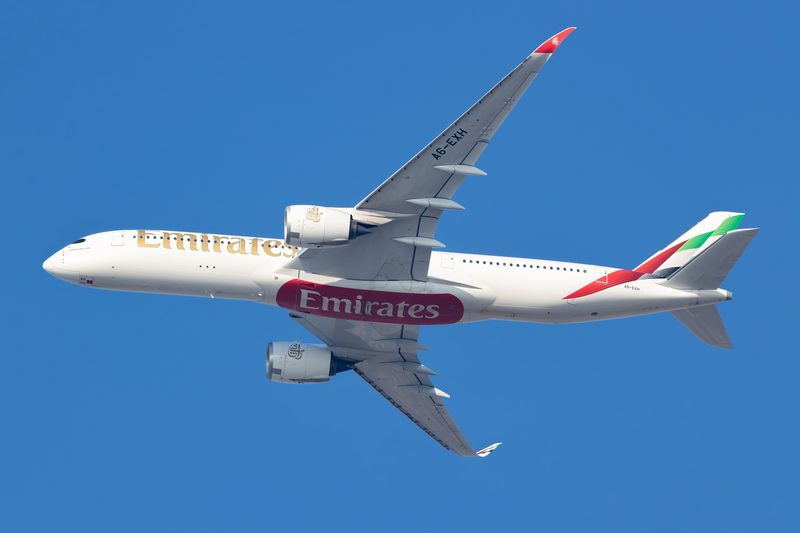
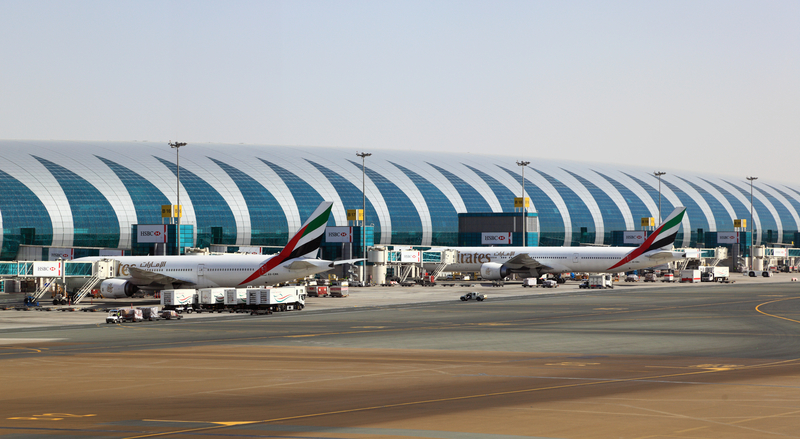
A 777-300ER, A350-1000, A380, or 787-9 planned to be at DXB or DOH for the next departure wave may divert to alternates like Larnaca (LCA), Jeddah (JED), Cairo (CAI) or Riyadh (RUH). That’s a safety win — and an operational headache. Crews time out, catering and cleaning are missing, and the aircraft is now outside its planned maintenance and crew-rest ecosystem.
2) Connections collapse instantly
Even short pauses can strand tens of thousands of passengers because the hub’s value is not one origin–destination pair — it’s the connections: Europe–India, Scandinavia–Southeast Asia, North America–South Asia, Africa–Asia. Miss a bank at DOH and you may not have a viable same-day alternative.
3) Cargo gets hit twice
Gulf carriers are not only passenger giants; they’re freight engines. Widebody belly cargo and dedicated cargo divisions rely on those same corridors. Once you start routing widebodies around closed airspace, payload, fuel planning, and arrival slots all change — and cargo is often the first thing to be constrained if an aircraft needs extra fuel margin.
What airlines do when Iranian and Iraqi corridors go dark
From an ops standpoint, the toolkit is limited and expensive:
Reroute north: Through Türkiye and the Caucasus — Istanbul (IST), Tbilisi (TBS), Baku (GYD) — then onward around closed regions. This can add distance and time, and it pushes more traffic into already-busy FIRs.
Reroute south: Over the Red Sea and Saudi airspace, often via Jeddah (JED) / Riyadh (RUH) and into Africa or the eastern Med. This avoids some hot zones, but it concentrates demand into fewer routes and can overload ATC capacity quickly.
Add fuel / reduce payload: More distance equals more fuel. More fuel can mean less cargo and, in rare cases, offloading passengers or bags on ultra-long sectors to stay within performance limits.

Cancel early to protect the next 72 hours: The hardest call is often the best one. Canceling flights proactively prevents an airline from scattering aircraft and crews across alternates where recovery becomes impossible. In high-disruption events, “protecting tomorrow” becomes the priority.
A short-haul problem with long-haul consequences
It’s tempting to view airspace closures as a Middle East problem. In reality, they are a global network problem because Gulf hubs sit in the middle of so many long-haul city pairs.
Even airlines that don’t serve Iran (IKA/THR) or Iraq (BGW/EBL) directly get dragged in. Europe–Asia services may need new tracks and additional fuel. South Asia services can see longer block times and crew-duty issues. And airports far from the region — think Paris (CDG), London (LHR), Frankfurt (FRA) — suddenly face misconnected passengers and widebody rotations out of sequence.
Bottom Line
February 28’s Middle East airspace closures were a reminder that the Gulf’s flight corridors are not just convenient — they’re structural. When airspace over Iran and neighboring regions becomes unavailable, hubs like Dubai (DXB/DWC) and Doha (DOH) can’t simply “work around it” without major knock-on effects: diversions to alternates, broken connection banks, aircraft and crews displaced, and cargo capacity squeezed by longer routings and higher fuel loads.
For passengers, the practical reality is uncertainty: cancellations, rebookings, and longer itineraries. For airlines, this is a high-stakes resilience test — one where the safest option is often the most disruptive, and recovery is measured not in hours, but in days.
Keep reading FlyMag
Get the Daily Brief in the morning or the Route Watch weekly recap on Fridays. Or both.