Ethiopian Airlines has inaugurated a new nonstop route between Addis Ababa Bole International Airport (ADD) and Sir Seewoosagur Ramgoolam International Airport in Mauritius (MRU), adding another strategically important destination to the carrier’s extensive African network.

The first flight operated on July 12, 2026, opening the first direct Ethiopian Airlines passenger connection between Ethiopia and Mauritius. The route will initially operate three times weekly, giving passengers in Mauritius access to Ethiopian’s large connecting hub at Addis Ababa (ADD).
Although Mauritius is internationally known as a major leisure destination, the route is designed to carry far more than vacation traffic between the two countries. Its greatest value will likely come from connecting passengers traveling between Mauritius and destinations across Africa, Europe, Asia, the Middle East, and North America.
Read our stories in your inbox
Two aviation newsletters. Zero fluff.
Ethiopian’s Full Addis Ababa-Mauritius Schedule
Ethiopian Airlines will operate flights ET887 and ET886 every Wednesday, Friday, and Sunday.
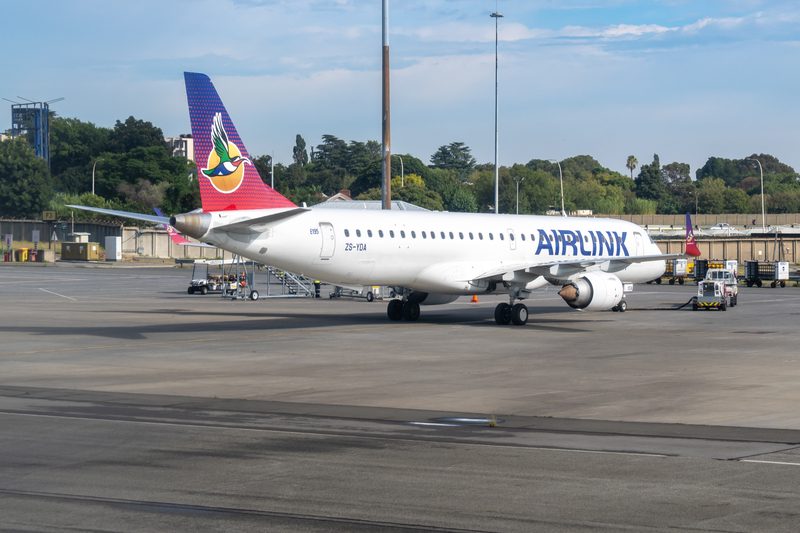
All times are local.
| Flight | Route | Departure | Arrival | Operating days | Aircraft |
|---|---|---|---|---|---|
| ET887 | Addis Ababa (ADD)-Mauritius (MRU) | 8:50 a.m. | 3:20 p.m. | Wednesday, Friday, Sunday | Boeing 737 MAX 8 |
| ET886 | Mauritius (MRU)-Addis Ababa (ADD) | 4:15 p.m. | 8:45 p.m. | Wednesday, Friday, Sunday | Boeing 737 MAX 8 |
Both flights have a scheduled block time of five hours and 30 minutes after accounting for the one-hour time difference between Ethiopia and Mauritius. The aircraft remains on the ground at Mauritius (MRU) for only 55 minutes before beginning the return journey to Addis Ababa (ADD).
That relatively short turnaround helps Ethiopian return the aircraft to its Addis Ababa hub within the same operating day. It also reduces the amount of time a valuable aircraft spends parked away from the airline’s main maintenance and operational base.
The departure from Addis Ababa (ADD) is timed to receive passengers arriving during Ethiopian’s morning connection bank. The return flight reaches Addis Ababa at 8:45 p.m., positioning travelers for late-evening and overnight departures across the airline’s wider international network.
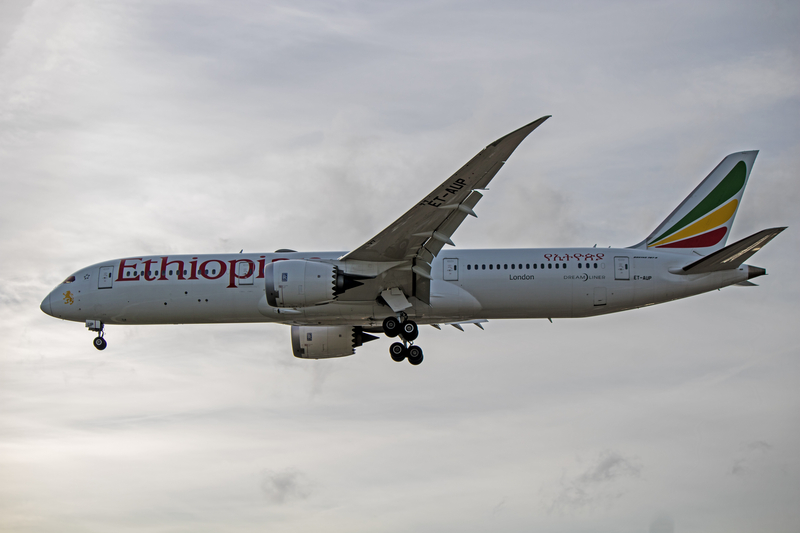
Boeing 737 MAX 8 Assigned to the New Route
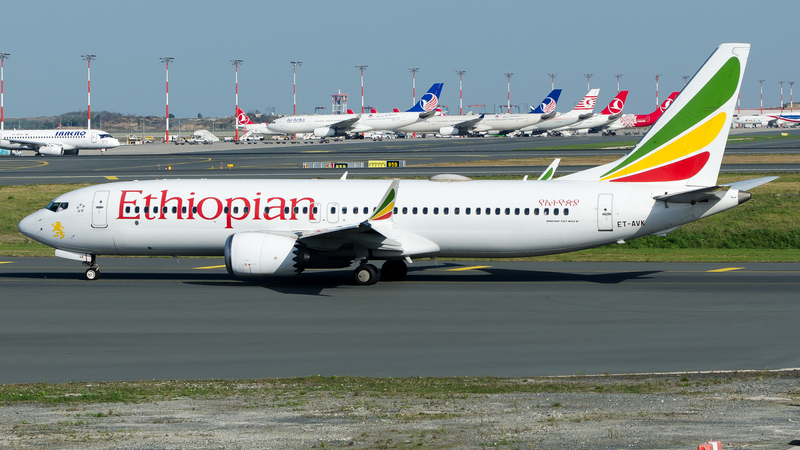
Ethiopian has scheduled the approximately 2,090-nautical-mile route with the Boeing 737 MAX 8, rather than one of its larger Boeing 787 Dreamliners or Airbus A350s.
The aircraft is a logical choice for the initial three-times-weekly schedule. It provides sufficient range for the five-and-a-half-hour mission while allowing Ethiopian to enter the market without introducing the significantly greater capacity and operating cost of a widebody aircraft.
Boeing lists a maximum range of approximately 3,500 nautical miles for the 737-8, although actual performance varies with passenger and cargo payload, winds, airspace restrictions, runway conditions, and required fuel reserves. The Addis Ababa (ADD)-Mauritius (MRU) sector is therefore well within the aircraft’s normal operating envelope.
Ethiopian configures its 737 MAX 8 fleet with 160 seats:
| Cabin | Seats |
| Cloud Nine Business Class | 16 |
| Economy Class | 144 |
| Total | 160 |
The aircraft is powered by two CFM International LEAP-1B engines and has a published maximum takeoff weight of approximately 82,200 kilograms. Ethiopian also lists 1,545 cubic feet of lower-deck cargo volume, although the space available for commercial freight depends on passenger baggage and operating weight.
At three weekly departures, Ethiopian is placing 480 seats into the market in each direction every week. That represents a cautious but meaningful opening capacity for a route where much of the demand must be generated through connections rather than local Ethiopia-Mauritius traffic alone.
Mauritius Gains Direct Access to Ethiopian’s Addis Ababa Hub
The new service connects Sir Seewoosagur Ramgoolam International Airport (MRU) with one of Africa’s most important connecting hubs.
Mauritius’ principal international airport is located at Plaine Magnien in the southeastern part of the island. The airport serves the capital, Port Louis, along with the country’s hotel and resort areas, and is operated by Airports of Mauritius.
Ethiopian’s arrival gives Mauritius another direct gateway into mainland Africa. Passengers can travel through Addis Ababa (ADD) to destinations in East, West, Central, North, and Southern Africa without first connecting through Europe or the Gulf.
That is particularly relevant in a continent where relatively short journeys can still require indirect and time-consuming itineraries. A passenger traveling between Mauritius and a West African city may otherwise need to connect through Johannesburg (JNB), Nairobi (NBO), Dubai (DXB), or a European hub.
By routing those travelers through Addis Ababa (ADD), Ethiopian can keep the entire itinerary within its own network and consolidate traffic from numerous smaller markets onto the Mauritius flight.
The Route Is Built Around Connecting Traffic
Mauritius and Ethiopia alone are unlikely to generate enough local passengers to support the service over the long term. The route’s commercial potential instead rests on Ethiopian’s ability to combine several different passenger flows on the same aircraft.
West African markets may be particularly important. Ethiopian can offer one-stop Mauritius itineraries from cities such as Lagos (LOS), Accra (ACC), Abidjan (ABJ), Dakar (DSS), and Abuja (ABV), depending on the connection times available on each operating day.
The route can also carry passengers from European and North American gateways through Addis Ababa (ADD). Ethiopian serves several major cities across Europe and operates long-haul flights to the United States and Canada, giving the airline access to leisure travelers seeking one-stop service to Mauritius.
Traffic can flow in the opposite direction as well. Mauritius-based travelers will gain additional access to Ethiopian’s African network, including cities that may be difficult to reach through other airline hubs.
The Sunday, Wednesday, and Friday schedule provides useful coverage across the week, although the absence of daily service will limit some connection combinations. Business travelers and vacationers must still plan their journeys around the three operating days.
Tourism Will Be an Important Source of Demand
Mauritius is one of the Indian Ocean’s best-known tourism markets, attracting travelers for its beaches, resorts, golf courses, outdoor activities, and premium leisure properties.
Ethiopian can now sell the island directly across its own distribution network rather than relying on another airline to operate the final segment. The carrier can also work with tour operators to package Mauritius itineraries from markets across Africa, where nonstop or convenient one-stop access has historically been limited.
The new flight may be especially valuable for travelers from countries without direct Mauritius service. Instead of traveling north toward Europe or east toward the Gulf, passengers can connect through Addis Ababa (ADD) and continue south across the Indian Ocean.
Mauritius could also benefit from Ethiopian’s position in the group and conference market. The airline has experience transporting government delegations, business groups, and conference attendees through Addis Ababa, which is home to the African Union and numerous international organizations.
Business and Cargo Traffic Could Support the Route
Tourism will attract attention, but the new service also has potential to strengthen commercial ties between Mauritius and mainland Africa.
Mauritius has developed a significant financial-services, investment, technology, and professional-services sector. Companies based on the island maintain relationships across Africa, creating demand for travel that extends beyond conventional tourism.
The Addis Ababa connection may improve access to business centers throughout the continent, particularly where existing itineraries require multiple airlines or lengthy layovers.
Cargo could provide a secondary source of revenue. The 737 MAX 8 cannot match the freight capacity of Ethiopian’s Boeing 787s, Airbus A350s, or dedicated Boeing 777 freighters, but its lower holds can still carry smaller, time-sensitive shipments.
Freight arriving at Addis Ababa (ADD) can also be transferred into Ethiopian Cargo’s broader network. This gives Mauritius access to additional destinations without requiring Ethiopian to operate a dedicated freighter to the island.
Ethiopian Faces No Nonstop Competition
Ethiopian Airlines is the only carrier currently offering nonstop passenger service between Addis Ababa (ADD) and Mauritius (MRU).
That gives the airline complete control of the direct market, but the absence of a nonstop competitor does not mean Ethiopian operates without competition.
Passengers traveling between Mauritius and destinations beyond Ethiopia can choose from several alternative hubs. Emirates connects Mauritius with Dubai International Airport (DXB), Turkish Airlines serves the island through Istanbul Airport (IST), and airlines including Kenya Airways, Air Austral, Air France, and South African carriers provide other regional and long-haul options.
Ethiopian must therefore compete on total journey time, fares, schedule convenience, baggage allowance, and connection reliability rather than simply being the only airline on the Addis Ababa-Mauritius city pair.
Its principal advantage is African network depth. Few competing airlines can offer the same range of one-stop connections between Mauritius and smaller cities across the continent.
The Initial Schedule Represents a Measured Market Entry
The published schedule initially runs from July 12 through September 30, 2026, according to airline timetable data reviewed before the route’s launch. Ethiopian’s official announcement described Mauritius as a new service rather than a limited charter program, but later schedule filings will determine how the operation continues beyond the first season.
A three-times-weekly launch gives Ethiopian an opportunity to evaluate demand without placing too much capacity into an untested market.
The airline will likely monitor local bookings, connecting passenger volumes, average fares, cargo revenue, seasonal demand, group reservations, and the performance of the Addis Ababa connection banks before deciding whether to extend or increase the service.
If the route performs well, additional frequency may be more valuable than an immediate aircraft upgauge.
A daily Boeing 737 MAX 8 service would provide greater schedule flexibility and more connecting opportunities than three weekly widebody flights. Passengers generally value the ability to travel on the day they choose, particularly when visiting friends and relatives, attending business meetings, or connecting from another flight.
Widebody aircraft could still appear during peak travel periods, major group movements, or dates with particularly strong cargo demand. Ethiopian frequently adjusts aircraft types across its network based on seasonal requirements and fleet availability.
The Route Strengthens Ethiopian’s African Strategy
Ethiopian Airlines has built its business around connecting African cities with each other and linking the continent to the rest of the world through Addis Ababa (ADD).
Mauritius fits naturally into that strategy. The island is geographically separated from mainland Africa but has significant tourism, commercial, and institutional ties across the continent.
Adding Mauritius (MRU) strengthens Ethiopian’s Indian Ocean presence while giving its African network another important leisure destination. It also provides Mauritius with a direct connection to an airline that serves a broad collection of markets that cannot support their own nonstop flights to the island.
The Boeing 737 MAX 8 is central to that type of network expansion. Its combination of range, moderate capacity, and lower operating cost allows Ethiopian to test thinner routes that would be difficult to support with a 270-seat or larger widebody.
Bottom Line
Ethiopian Airlines inaugurated its new nonstop service between Addis Ababa Bole International Airport (ADD) and Sir Seewoosagur Ramgoolam International Airport in Mauritius (MRU) on July 12, 2026.
Flights ET887 and ET886 operate every Wednesday, Friday, and Sunday, with a scheduled flight time of approximately five hours and 30 minutes in each direction.
The route is being operated with Ethiopian’s 160-seat Boeing 737 MAX 8, configured with 16 Cloud Nine Business Class seats and 144 Economy Class seats. The aircraft provides ample range for the approximately 2,090-nautical-mile journey while allowing Ethiopian to open the market with a manageable amount of capacity.
The service is about considerably more than direct travel between Ethiopia and Mauritius. Its primary strategic value comes from connecting Mauritius with Ethiopian’s extensive hub at Addis Ababa (ADD), creating new one-stop itineraries across Africa and the airline’s broader international network.
Tourism will provide an important portion of demand, but business travel, visiting-friends-and-relatives traffic, government travel, and lower-deck cargo could all contribute to the route’s performance.
The three-times-weekly schedule is a measured opening move. If Ethiopian generates sufficient connecting demand, increasing frequency would likely strengthen the route more effectively than immediately replacing the 737 MAX with a larger aircraft.
For Mauritius, the service adds a new mainland African gateway. For Ethiopian, it fills another gap in its network and extends the carrier’s hub strategy deeper into the Indian Ocean.