Aer Lingus (EI) is making a significant—and operationally meaningful—change to how it accepts identification on flights between the Republic of Ireland and Great Britain. Effective February 25, 2026, passengers will need a valid passport or an Irish passport card to board Aer Lingus services on these routes, even though the Common Travel Area (CTA) still exists and still permits free movement for Irish and British citizens.

For frequent flyers used to hopping between Dublin (DUB) and London Heathrow (LHR) with a non-passport photo ID, this is a hard reset. For airline and airport professionals, it’s a familiar theme: standardization at the check-in desk to reduce exceptions, speed up document checks, and lower the risk of compliance issues when rules tighten elsewhere.
Read our stories in your inbox
Two aviation newsletters. Zero fluff.
What’s changing on Aer Lingus flights between Ireland and Great Britain
From February 25, Aer Lingus says that all customers, including Irish and British nationals, travelling on Aer Lingus and Aer Lingus Regional services between the Republic of Ireland and the UK must present either:
-
a valid passport, or
-
an Irish passport card

Other photo IDs that were previously accepted on CTA sectors—such as driving licenses and various local ID cards—will no longer be valid for boarding on those EI-operated international sectors.
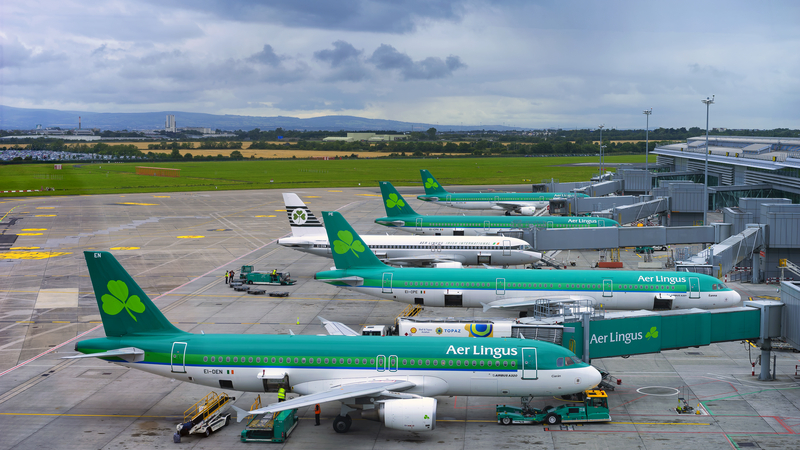
In practice, that affects the high-volume trunk flying you see every day across the Irish Sea: routes like Dublin (DUB)–London Heathrow (LHR), DUB–London Gatwick (LGW), DUB–Manchester (MAN), plus additional Great Britain links from airports such as Cork (ORK) and Shannon (SNN), depending on the season and schedule.
Aircraft note for ops-minded readers
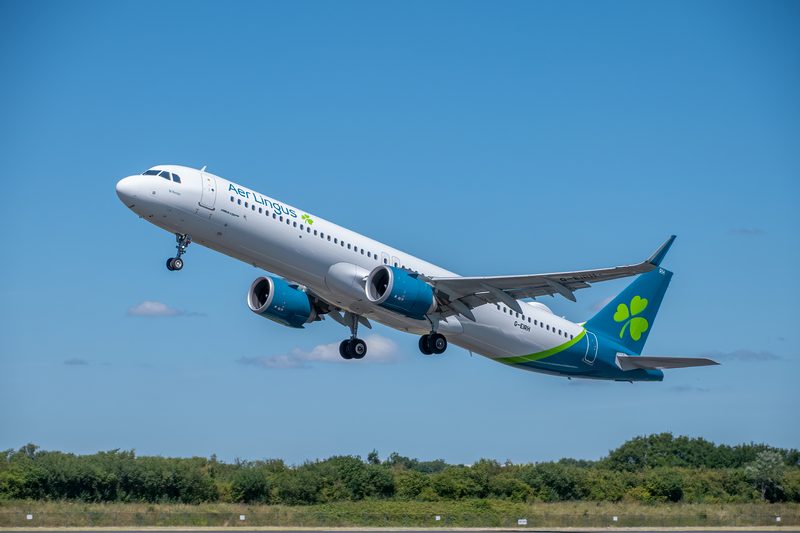
Most Aer Lingus Ireland–Great Britain flying is typically handled by the Airbus A320-family (A320/A320neo/A321 variants) on the mainline side, while Aer Lingus Regional—operated by Emerald Airlines—centers on the ATR 72-600, a type optimized for high-frequency regional sectors where quick turns and lower trip cost matter.
Common Travel Area rules haven’t changed—but airline acceptance rules can
This is the nuance that’s catching people out.
The Irish government’s CTA guidance is clear: Irish and British citizens are not required by law to carry a passport when travelling within the Common Travel Area. However, that same guidance also notes that air and sea carriers may require identification—and some treat a passport as the only acceptable ID.
In other words: CTA is about your right to travel; the airline policy is about what documents the carrier will accept to let you board.
That distinction matters operationally, because the boarding gate is where policy becomes reality. The check-in system needs something consistent, verifiable, and easy for agents to validate at speed—especially during peak departure banks at Dublin (DUB).
Why would Aer Lingus do this now?
Aer Lingus has framed the change as a consistency move across its network and a way to improve operational performance. There’s also a practical, systems-driven logic that airline professionals will recognize:
-
Passport data is machine-readable. A passport (or Irish passport card) is designed for fast capture and verification, reducing manual judgement calls at the desk—particularly helpful on high-frequency routes like DUB–LHR and DUB–MAN where queue dynamics are unforgiving.
-
Fewer “edge cases” at the gate. The broader the accepted-ID list, the more time agents spend debating whether an obscure photo card meets policy—exactly the kind of friction that compounds into missed slots and delayed departures.
-
A tighter external compliance environment. The UK is also moving into stricter “permission-to-travel” checks for many non-visa nationals via its Electronic Travel Authorisation (ETA) framework. While Irish and British citizens are generally exempt from ETA requirements, mixed-nationality passenger loads mean document checks are getting more complex—pushing airlines toward a simpler, more uniform document standard.
The exceptions and the biggest “gotcha” for travelers
Aer Lingus has indicated that domestic services operated by Aer Lingus Regional (Emerald Airlines) are exempt from this updated policy. That includes:
-
Belfast (Northern Ireland) services within the UK, and
-
the Dublin (DUB)–Donegal (CFN) route
The other major point of confusion: different airlines, different ID rules—sometimes on the same booking path.
British Airways (BA)—part of the same parent group as Aer Lingus—continues to publish CTA guidance that allows recognized photographic ID for travel within the CTA (not necessarily a passport). But passengers booking through BA channels can still end up on an Aer Lingus-operated flight segment. The only rule that matters at the airport is the operating carrier’s rule, so the “Operated by…” line on the itinerary becomes critical.
What this means for day-to-day travel between Ireland and Great Britain
If you’re flying Aer Lingus between Ireland and Great Britain—whether it’s DUB–LHR, ORK–MAN, or any similar CTA international sector—treat it like any other international departure from a documentation standpoint:
-
Bring a passport (or Irish passport card, if you’re an Irish citizen who holds one).
-
Assume other photo IDs won’t get you boarded, even if they worked in the past.
-
If you’re not an Irish or British citizen, double-check whether you need a UK ETA (or other permission) in addition to your passport, especially for Ireland-to-UK routings.
Bottom Line
Aer Lingus is tightening its Ireland–Great Britain travel-document policy effective February 25, 2026, requiring a passport or Irish passport card for EI-operated international CTA flights—regardless of nationality. The Common Travel Area itself hasn’t changed, but Aer Lingus’ boarding rules have, and that’s what will matter at the check-in desk at Dublin (DUB) or the gate at London Heathrow (LHR). For travelers and travel managers, the message is simple: if it’s Aer Lingus metal between Ireland and Great Britain, passport in hand—or don’t expect to fly.
Keep reading FlyMag
Get the Daily Brief in the morning or the Route Watch weekly recap on Fridays. Or both.