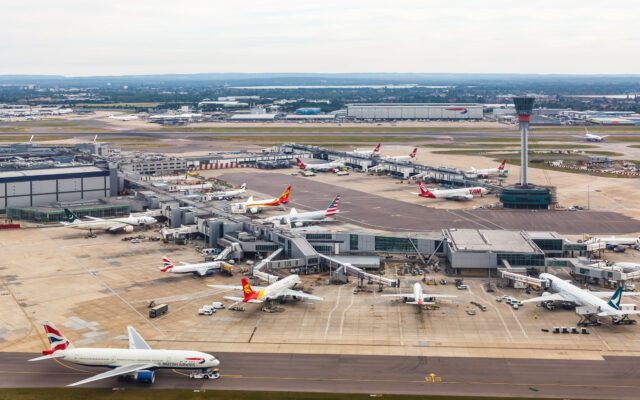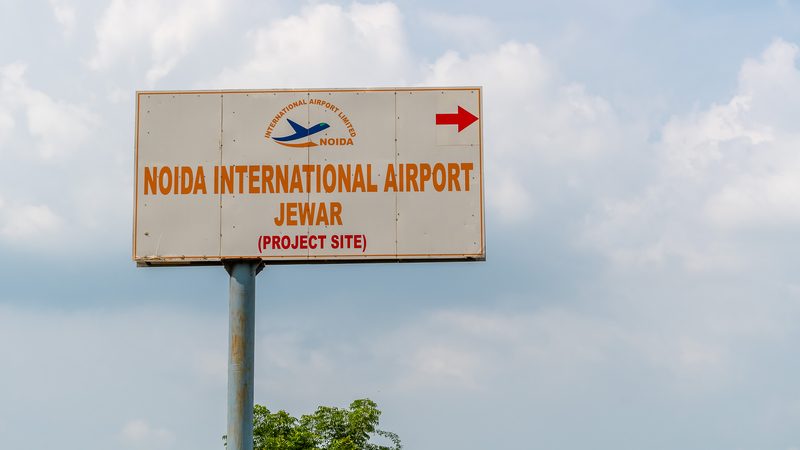
Noida International Airport is scheduled to begin commercial operations on June 15, 2026, with IndiGo set to operate the first flight and Akasa Air and Air India Express expected to follow shortly after.
That is the headline. The more important point is what it means: India’s most anticipated greenfield airport project is finally moving from construction and certification into live airline operations.
For aviation readers, though, the real story starts after the ribbon-cutting. Announcing an opening date is one milestone. Proving the airport can launch smoothly, relieve Delhi pressure, and scale toward its much larger long-term ambitions is the bigger test.
Read our stories in your inbox
Two aviation newsletters. Zero fluff.
The First Flight Matters More Than Symbolically
IndiGo operating the inaugural flight is not a surprise, but it is important.
As India’s largest airline, IndiGo gives the airport immediate commercial credibility. A first flight from a smaller or niche carrier would have marked a ceremonial opening. A first flight from IndiGo makes the launch feel operationally real from day one.
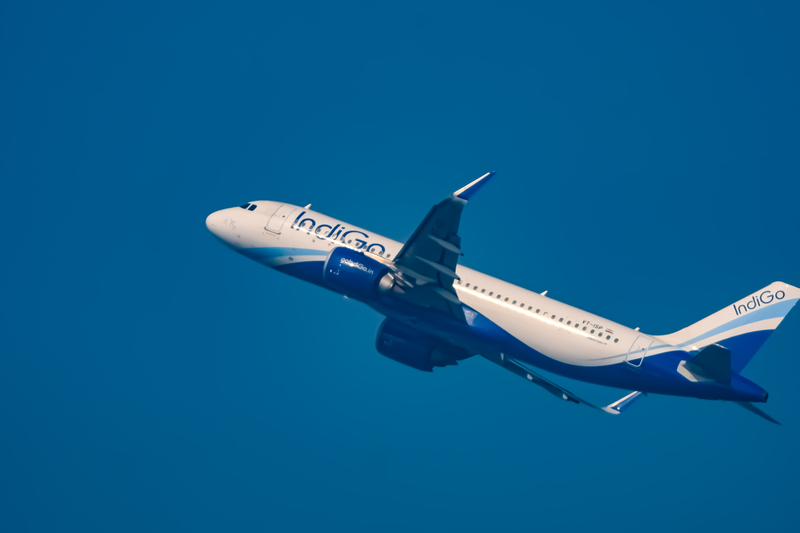
That matters because Noida International Airport is not trying to enter the market as a secondary regional field with modest ambitions. It is being positioned as a major aviation asset for the Delhi region and northern India. Starting with IndiGo reinforces that intent clearly.
This Is The Start Of A Phased Airline Build-Up
While the first commercial operation is due on June 15, the airport’s airline presence will not become meaningful all at once.
Akasa Air and Air India Express are expected to begin services shortly after IndiGo, which suggests the early rollout will be phased rather than immediate. That is entirely normal for a new airport. Airlines need time to move staff, set up operational systems, validate handling processes, and align schedules in a way that works with the broader network.
In other words, June 15 is the opening date, not the end state.

Noida’s Real Mission Is To Relieve Delhi
The strategic logic behind the airport is straightforward.
The Delhi region needs more aviation capacity, and Indira Gandhi International Airport (DEL) cannot absorb unlimited future growth without pressure on slots, terminals, and surface access. Noida International Airport is being built to share that burden and create a second major aviation gateway for the wider National Capital Region.
That is what makes the project more than a local infrastructure success. It is a structural answer to one of India’s biggest aviation-capacity problems.
The First Phase Is Large — But Not Final
The airport opens with a single runway and a terminal designed to handle around 12 million passengers annually in its initial phase.
That is already substantial. For many airports globally, 12 million annual passengers would be a mature mid-sized operation. But in the context of the Delhi region, it is only the beginning. Noida’s long-term plan is far more ambitious, with future phases expected to add more runways and push eventual capacity toward 70 million passengers per year.
That is why the airport is attracting so much attention. It is not being built only for today’s demand. It is being built for a much larger aviation role over time.
Zurich Airport’s Operator Role Matters
The project is also notable because it is being developed and operated by Flughafen Zürich AG.
That matters because international airport operators bring not only capital and design experience, but also a certain expectation around operational standards, passenger flow, and long-term planning. The involvement of Zurich’s airport group gives the project an added layer of credibility, especially in a market where execution is often watched as closely as ambition.
For aviation professionals, that international operator link is one reason the airport has been followed so closely.
The Hardest Part Comes After Launch
The real question now is not whether the airport has an opening date. It is whether the early operation runs cleanly.
New airports have to prove themselves in multiple ways very quickly. Airline schedules need to hold. Ground access needs to work. Passenger processing needs to be smooth. Baggage systems, check-in flows, stand allocation, and turnaround coordination all need to function under live conditions, not just in pre-opening simulations.
This is where ambitious airport projects often face their first genuine test. A successful launch is not just about opening the doors. It is about making the system reliable enough that airlines and passengers trust it from the outset.
International Growth Will Be Watched Closely
For now, the launch is centered on domestic flying, but international service is clearly part of the long-term vision.
That is where Noida’s broader strategic role becomes even more interesting. If the airport can establish itself as a meaningful second hub for the Delhi region, it could eventually become important not only for domestic distribution but also for medium- and long-haul international growth.
That would give airlines more flexibility in how they serve northern India and could gradually reshape traffic patterns in one of the fastest-growing aviation markets in the world.
Bottom Line
Noida International Airport’s scheduled opening on June 15, 2026, with IndiGo operating the first flight, is a major milestone for Indian aviation. It marks the start of commercial operations at a long-awaited second major airport for the Delhi region and sets the stage for a phased airline build-up that will soon include Akasa Air and Air India Express.
The first phase, with one runway and capacity for 12 million passengers a year, is already significant. But the larger story is what comes next: whether Noida can evolve from a newly opened airport into the scalable, high-capacity gateway it was designed to become.
Keep reading FlyMag
Get the Daily Brief in the morning or the Route Watch weekly recap on Fridays. Or both.