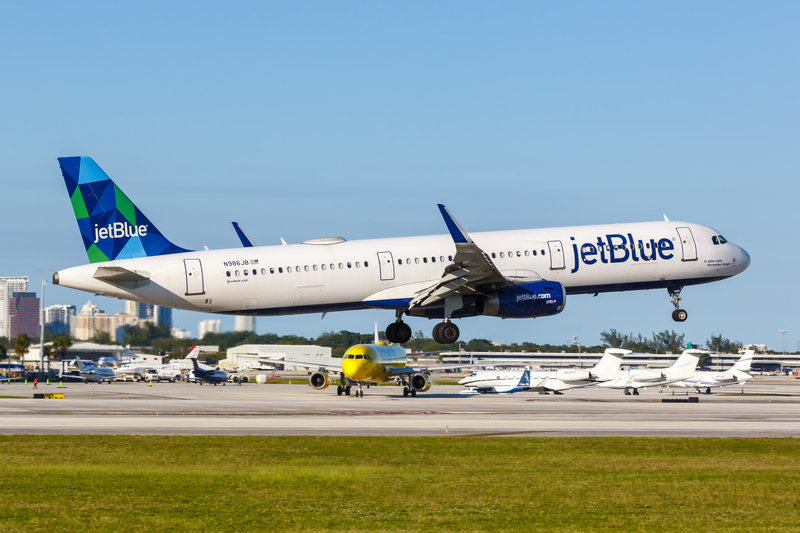
JetBlue Airways is moving aggressively to turn Fort Lauderdale-Hollywood International Airport (FLL) into an even larger South Florida focus city, with Chief Executive Joanna Geraghty confirming the airline is seeking additional gate access as it fills part of the void left by Spirit Airlines.

The target is significant: JetBlue wants access to as many as 30 gates at FLL. That would give the carrier the airport infrastructure it needs to support a much larger schedule, including recently announced new domestic, Latin America, and Caribbean routes from Fort Lauderdale.
The move is not surprising. FLL has suddenly become one of the most important battleground airports in the United States. Spirit’s collapse earlier this year removed one of the airport’s defining carriers almost overnight, freeing up passengers, employees, aircraft opportunities, gate space, and competitive white space. JetBlue was already strong at Fort Lauderdale. Now it sees a chance to become the clear replacement for much of Spirit’s lost capacity.
Read our stories in your inbox
Two aviation newsletters. Zero fluff.
Fort Lauderdale Is No Longer Just a Florida Spoke for JetBlue
JetBlue has long treated Fort Lauderdale (FLL) as one of its most important focus cities, alongside markets such as New York JFK (JFK), Boston Logan (BOS), Los Angeles (LAX), Orlando (MCO), and San Juan (SJU). But Spirit’s exit has changed the scale of the opportunity.
In May, JetBlue announced a major Fort Lauderdale expansion with 11 new nonstop routes and additional frequencies on existing FLL routes. New JetBlue cities from Fort Lauderdale include Baltimore/Washington (BWI), Charlotte (CLT), Columbus (CMH), Indianapolis (IND), Barranquilla (BAQ), and Cali (CLO). The airline also added new FLL flights to existing JetBlue cities including Nashville (BNA), Detroit (DTW), Houston (IAH), Chicago (ORD), and Ponce (PSE).
That schedule pushes JetBlue to nearly 130 daily Fort Lauderdale departures this summer, which the airline says is more than 75% higher than its 2025 level. By winter, the airline is targeting around 150 daily departures.
That kind of operation cannot be supported without gate depth. A route announcement is easy to publish. Operating 150 daily departures reliably requires aircraft parking positions, ticket counters, bag-drop capacity, crew rooms, ramp space, ground equipment, baggage systems, maintenance access, and enough terminal flexibility to recover from irregular operations.
That is why gates are now the real prize.
Why 30 Gates Matter
A gate is more than a place to board an aircraft. At a busy airport like Fort Lauderdale (FLL), gates determine how many flights an airline can schedule, how tightly it can bank departures, how much delay it can absorb, and how efficiently it can turn aircraft.
JetBlue already has a sizable presence at FLL, with domestic operations centered around Terminal 3 and international arrivals using Terminal 4. But if the airline wants to grow from a strong focus city to the dominant carrier at Fort Lauderdale, it needs more control over the physical airport footprint.
That is especially true because JetBlue’s South Florida operation is not only domestic. FLL gives the airline access to Florida leisure traffic, visiting-friends-and-relatives demand, Caribbean markets, Latin America, cruise passengers, and South Florida-origin business travel. Those passenger flows use different parts of the terminal system and often require different operational support.
International routes need customs and immigration access. High-frequency domestic routes need fast turns. Caribbean and Latin America flights need baggage capacity and schedule resilience. A larger gate portfolio helps JetBlue manage all of that without being squeezed by shared-use constraints.
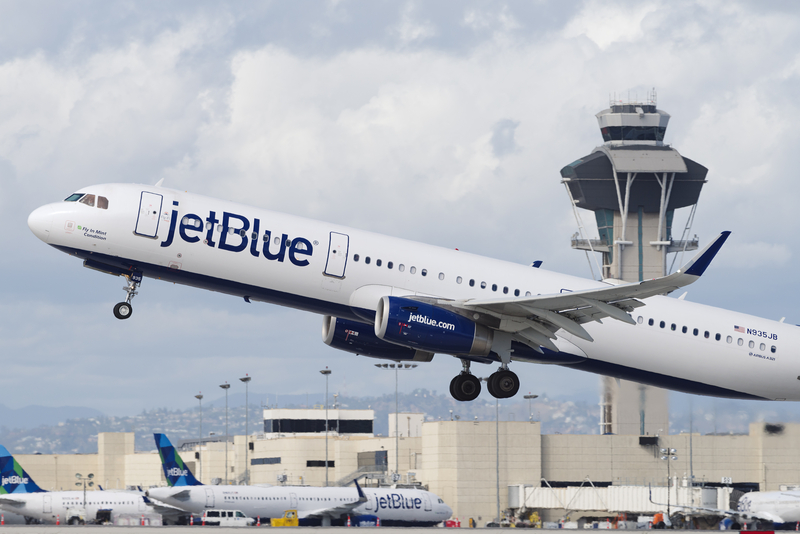
Spirit’s Collapse Created the Opening
Spirit Airlines was historically one of the defining airlines at Fort Lauderdale (FLL). Its ultra-low-cost model made FLL a major base for cheap flights to the Caribbean, Latin America, Florida, and domestic leisure destinations. When Spirit ceased operations and entered liquidation, it left behind one of the most important capacity gaps in U.S. aviation.
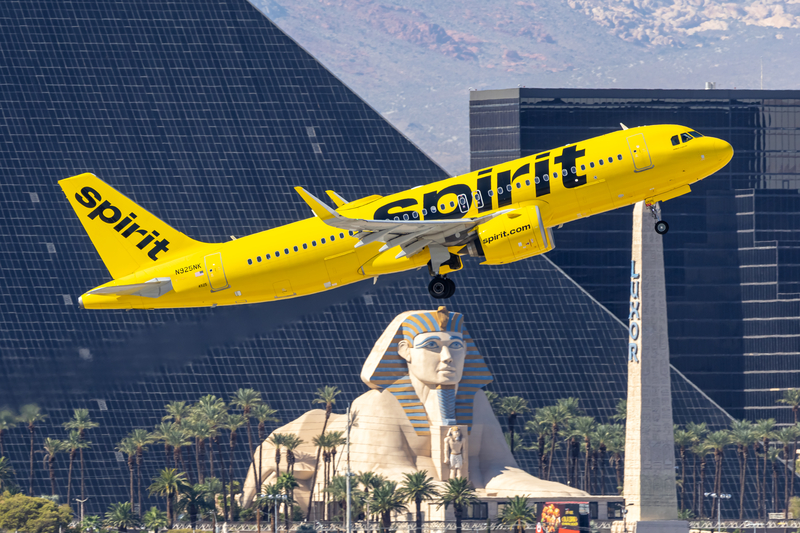
The Associated Press reported that Spirit received bankruptcy court approval to begin selling assets including aircraft, engines, spare parts, gates, and airport slots. Spirit’s remaining fleet included Airbus A320-family aircraft, and other reports indicate that some A320 and A321 aircraft are being auctioned separately.
For JetBlue, the timing creates a rare opportunity. The airline previously tried to acquire Spirit, but that merger was blocked. Now, instead of buying the whole airline, JetBlue may be able to pick up specific pieces of the Spirit ecosystem: customers, employees, gates, routes, and possibly selected assets.
Geraghty has said JetBlue is “in the mix” for some Spirit assets, but she also confirmed the airline is not interested in Spirit’s former headquarters building in Dania Beach. That makes sense. JetBlue already has a substantial corporate and operational footprint. What it needs most at FLL is airport capacity, not office space.
Fort Lauderdale Beats Miami on Cost
One of the most important details in Geraghty’s comments is cost. She said Fort Lauderdale is more attractive than other nearby Florida airports because its rates are significantly lower.
That comparison is aimed largely at Miami International Airport (MIA). MIA is the larger global gateway, with much deeper long-haul international service and a dominant American Airlines hub. But MIA is also more expensive and more complex. For JetBlue, which is trying to combine affordable fares with a differentiated onboard product, FLL offers a better cost base.
That matters because JetBlue is not a pure ultra-low-cost carrier. It does not compete exactly like Spirit. JetBlue offers free Wi-Fi, seatback entertainment, more legroom than many competitors, complimentary snacks and drinks, and a stronger leisure-premium product on some aircraft. Its costs are higher than Spirit’s were, so airport cost discipline becomes even more important.
Fort Lauderdale gives JetBlue a way to compete for former Spirit passengers without trying to replicate Spirit’s bare-bones model. The airline can offer lower fares than full-service legacy carriers while still selling a more comfortable product.
The Aircraft Fit the Mission
JetBlue’s fleet is well matched to a larger Fort Lauderdale operation. The airline operates an Airbus-heavy fleet built around the Airbus A320, Airbus A321, Airbus A321neo, Airbus A321LR, and Airbus A220-300, along with remaining Embraer E190 aircraft being phased down.
For FLL, the A320 and A321 families are especially useful. The A320 works well on domestic and shorter Caribbean routes. The A321 gives JetBlue more seats for dense leisure markets such as Fort Lauderdale to New York, Boston, San Juan, Santo Domingo, or other high-demand routes. The A321neo improves fuel burn and range, while the A321LR gives JetBlue flexibility for longer international markets if the airline chooses to grow that way from South Florida.
The A220 also has value. With lower trip costs and fewer seats than the A320 family, it can help JetBlue serve thinner routes without overcommitting capacity. That could be useful as the airline tests former Spirit markets where demand exists but may not justify a larger aircraft at high frequency.
This is where JetBlue differs from Spirit. Spirit’s high-density Airbus fleet was built to produce the lowest possible seat costs. JetBlue’s aircraft are less dense but more product-oriented. To win at FLL, JetBlue needs enough gates to use that fleet flexibly: A220s for thinner routes, A320s for core markets, A321s for dense leisure and VFR routes, and A321neos where efficiency matters most.
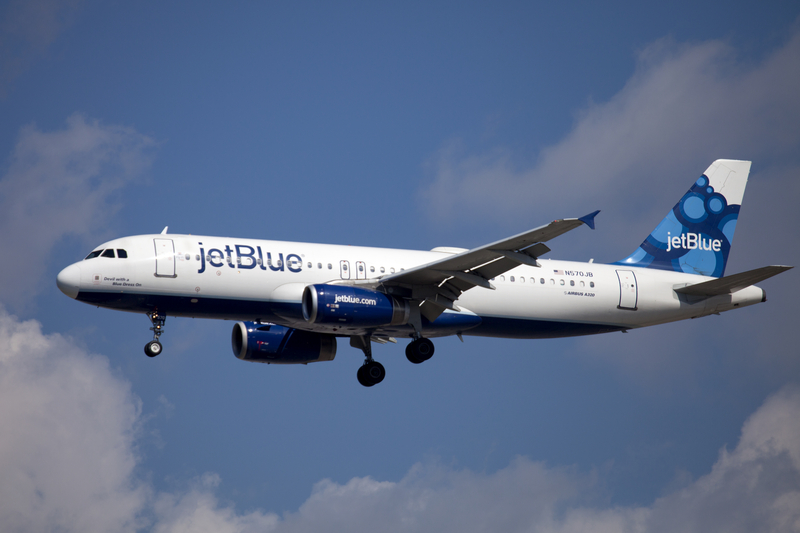
JetBlue Already Has the Lead at FLL
Schedule data cited by ch-aviation shows JetBlue now holds around 40% of weekly capacity at Fort Lauderdale, with Delta Air Lines the next-largest carrier at roughly 12%.
That is a dramatic change from the old FLL balance, when Spirit and JetBlue were the two defining carriers at the airport. Spirit’s disappearance has allowed JetBlue to leap ahead, but holding that lead will require more than temporary capacity replacement.
JetBlue needs to make former Spirit customers believe FLL still has strong low-fare options. It also needs to convince Broward County that allocating more gates to JetBlue is the best use of scarce airport infrastructure. Other airlines will also want pieces of the Spirit vacuum, including Frontier, Southwest, Delta, United, American, and possibly international carriers looking for opportunistic growth.
That is why the 30-gate request matters politically as much as operationally. Gate access determines which airline gets to define the post-Spirit era at FLL.
Hiring Former Spirit Employees Helps the Transition
JetBlue has also been hiring former Spirit employees as it expands in South Florida. That is operationally logical and commercially smart.
Former Spirit crew members, airport staff, supervisors, and operational employees already understand Fort Lauderdale. They know the local passenger flows, airport layout, ramp pressures, holiday peaks, and Latin America/Caribbean demand patterns. Bringing them into JetBlue can help the airline scale faster while also offering employment continuity to workers affected by Spirit’s shutdown.
There is also a customer-service angle. Spirit’s collapse left travelers with fewer ultra-low-cost options, and many passengers were suddenly forced to re-shop routes they had flown for years. JetBlue’s status match for eligible former Spirit loyalty members is part of the same strategy: capture displaced customers before they become loyal to another carrier.
JetBlue is not just replacing flights. It is trying to absorb part of Spirit’s local ecosystem.
The Risk: Growth Has to Be Profitable
The opportunity is obvious, but JetBlue still faces real risk.
The airline has been under pressure to restore profitability, improve reliability, and focus its network. It has cut weaker routes elsewhere, including its short-lived Manchester-Boston Regional Airport (MHT) operation, to redirect aircraft toward Fort Lauderdale and other stronger markets.
That is the tradeoff. Expanding at FLL may be the right strategic move, but it requires scarce aircraft, crews, gates, and capital. If fares are too low or costs rise too quickly, replacing Spirit’s capacity could become less profitable than it appears.
Spirit’s old passengers were highly price-sensitive. Many chose Spirit because it was cheap, not because they were loyal to the airport or carrier. JetBlue’s challenge is to win enough of those customers while still earning fares that support its higher-cost, higher-product model.
That balance will determine whether the Fort Lauderdale expansion becomes a turning point or simply another capacity push.

FLL Could Become JetBlue’s Most Important Southern Focus City
JetBlue’s network has always leaned heavily toward the East Coast, the Caribbean, and Latin America. Fort Lauderdale sits perfectly inside that geography.
From FLL, JetBlue can serve the Northeast, Midwest, Texas, Florida, Puerto Rico, the Dominican Republic, Colombia, Central America, and the Caribbean with narrowbody aircraft. It can also feed cruise traffic through Port Everglades and capture South Florida leisure demand without taking on the cost and congestion of Miami (MIA).
That makes FLL different from Orlando (MCO). Orlando is a huge leisure market, but it is more theme-park and domestic leisure oriented. Fort Lauderdale has more Caribbean, Latin America, cruise, and South Florida local traffic. It also gives JetBlue a stronger alternative to American’s Miami hub.
If JetBlue can secure enough gates, Fort Lauderdale could become the airline’s most important southern gateway.
What Comes Next
The next question is how Broward County allocates gate access after Spirit.
Airport gates are valuable public infrastructure, and the county will have to balance JetBlue’s growth plans against the needs of other airlines and the airport’s long-term competitive health. Giving JetBlue too much control could strengthen FLL’s largest carrier, but it could also reduce room for other airlines to backfill Spirit’s lost low-fare capacity.
For passengers, the best outcome is likely a mix: JetBlue grows meaningfully, but enough gate access remains available for other carriers to compete. That would preserve fare pressure and keep Fort Lauderdale from becoming overly dependent on one airline.
For JetBlue, the priority is clear. It wants enough gates to turn its current expansion into a durable, profitable focus-city operation.
Bottom Line
JetBlue’s push for up to 30 gates at Fort Lauderdale-Hollywood International Airport (FLL) is one of the clearest signs yet that the airline intends to become the dominant post-Spirit carrier in South Florida.
Spirit’s collapse created a rare opening at one of the most important leisure airports in the country. JetBlue is responding with new routes, more frequencies, former Spirit employee hiring, a loyalty status match, and a push for the physical gate space needed to support up to 150 daily departures by winter.
The strategy makes sense. FLL offers lower costs than Miami (MIA), strong local demand, excellent Caribbean and Latin America geography, and a large pool of former Spirit passengers looking for replacement service. But the opportunity comes with a test: JetBlue must grow without recreating the profitability problems that made low-fare flying so difficult for Spirit.
If JetBlue secures the gates and executes well, Fort Lauderdale could become one of the most important airports in its entire network. If not, the post-Spirit opening may prove harder to monetize than it looks.