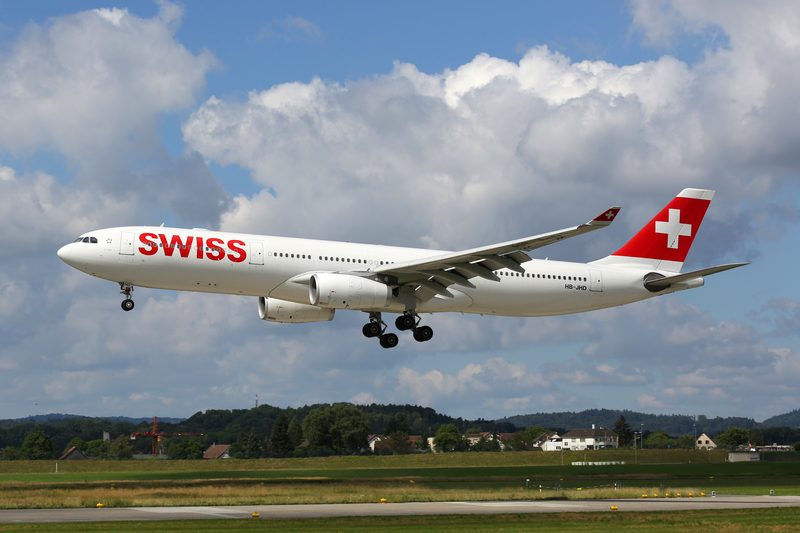
SWISS is preparing to resume flights between Zurich Airport (ZRH) and Tel Aviv Ben Gurion Airport (TLV) from July 1, 2026, marking a cautious return to one of the most politically sensitive markets in its network after months of disruption linked to the Middle East security situation.

At the same time, the airline is extending the suspension of its Dubai (DXB) service until September 13, 2026, while flights to Beirut (BEY) remain paused until October 24, 2026. That combination says a lot about how SWISS is reading the region right now. It is not treating the Middle East as one uniform recovery story. It is reopening selectively, route by route, based on a mix of operational, political, and commercial factors.
For aviation readers, that is the most important takeaway: this is a targeted network reset, not a broad normalization.
Read our stories in your inbox
Two aviation newsletters. Zero fluff.
Tel Aviv Is Coming Back — But Carefully
SWISS says it is now using the weeks before July to make the operational preparations needed for a Tel Aviv relaunch.
That includes cockpit and cabin crew planning, aircraft assignment, and coordination with employee representatives. Those details matter because restarting a suspended route is not just a matter of putting it back on sale. On a politically sensitive market like Tel Aviv, the airline needs enough confidence in crewing, scheduling, and operational risk management before the first flight departs.
The July 1 date suggests SWISS believes conditions are now stable enough to begin that process, but only after additional preparation time.
Lufthansa Group Is Moving Faster Than SWISS In Israel
Another notable point is that SWISS is not the first Lufthansa Group airline planning to return to Tel Aviv.
Other Lufthansa Group carriers are expected to resume earlier in June 2026, while SWISS waits until July. That difference is revealing. It suggests the group is not using a single uniform restart date across all airlines, but is instead tailoring the return according to each carrier’s fleet, operating pattern, and internal readiness.
In other words, the group may be moving broadly in one direction, but the pace still differs by airline.

Dubai Remains Suspended For Operational Reasons
While Tel Aviv is coming back, Dubai is staying off the map for longer.
SWISS has extended the suspension of Zurich–Dubai flights until September 13, 2026, explicitly citing operational reasons. That wording is interesting. It suggests the problem is not being framed purely as a destination-security issue, but as a broader fleet and network management challenge shaped by how the airline is choosing to deploy aircraft elsewhere.
That matters because it turns the Dubai suspension into more than a regional security story. It becomes a capacity-allocation story too.
Delhi Is Benefiting From The Dubai Suspension
The clearest sign of that aircraft reallocation is in India.
Because Dubai remains suspended, SWISS is continuing a second daily Zurich–Delhi service until at least September 13, 2026, using an Airbus A330 in addition to the regular daily operation. That is a significant move because it shows the airline is not simply parking the capacity that cannot be used in Dubai. It is shifting it into markets where demand is currently stronger and where the economics are more attractive.
This is a useful reminder that suspended routes do not just disappear. Their aircraft usually go somewhere else, and those reallocations often reveal where an airline sees the best short-term returns.
Beirut Stays Off The Network Longest
Among the routes mentioned, Beirut remains suspended for the longest period.
Flights to Beirut (BEY) will stay paused until October 24, 2026, which suggests SWISS remains significantly more cautious on Lebanon than on Israel or Dubai. That is an important contrast. It shows that even within the same broad region, the airline is assigning very different timelines to different markets.
That is exactly what a risk-based approach should look like.
This Is A Network Management Story As Much As A Security Story
At first glance, this looks like a simple Middle East security update. It is more than that.
Yes, geopolitics and regional stability are clearly central. But the route changes also show how airlines use suspended capacity to strengthen markets elsewhere. SWISS is not just waiting for the Middle East to normalize. It is actively reallocating aircraft into stronger-performing destinations such as Delhi while keeping a close watch on the region.
That makes this both a safety story and a fleet-optimization story.
Bottom Line
SWISS plans to resume Zurich–Tel Aviv on July 1, 2026, while extending its Dubai suspension until September 13 and keeping Beirut off the network until October 24. At the same time, the airline is using the freed-up aircraft to continue an additional Zurich–Delhi service with an Airbus A330.
The result is a clear sign that SWISS is not treating the Middle East as one broad recovery market. It is making highly selective decisions based on route-by-route operational reality. For passengers, that means Tel Aviv is coming back. For the wider network, it means India is currently winning the aircraft allocation battle.
Keep reading FlyMag
Get the Daily Brief in the morning or the Route Watch weekly recap on Fridays. Or both.