A long-haul departure rarely gets held up for something as simple as a sticker—until the sticker becomes a security signal.

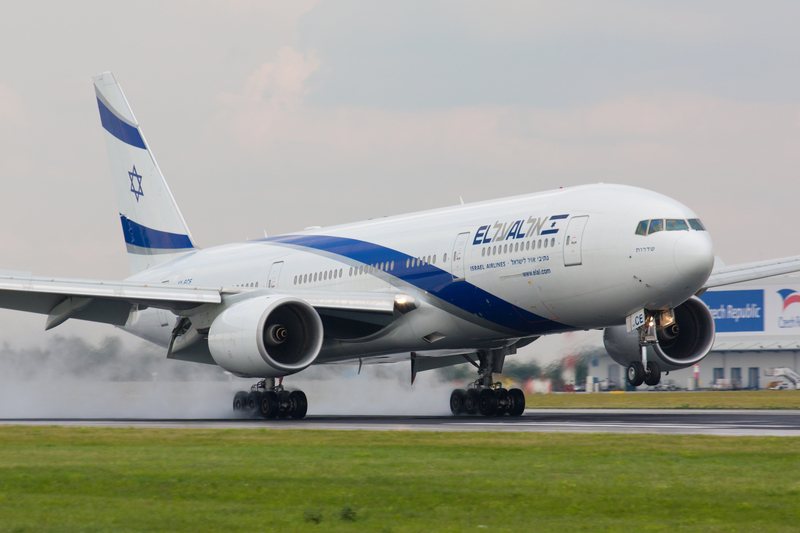
On February 16, 2026, passengers on EL AL (LY) flight LY6 from Los Angeles International Airport (LAX) to Ben Gurion Airport (TLV) were told their departure would be delayed due to an issue involving checked baggage. What initially sounded like a routine loading snag escalated into a full security response: airline staff identified roughly 140 suitcases bearing “Free Palestine” stickers and determined that each affected bag would require individual screening to rule out explosive or tampering concerns. In the end, EL AL chose to depart without the luggage rather than extend the delay further, leaving about 140 bags behind at LAX to follow on a subsequent service.
For travelers, it was an aggravating “where’s my suitcase?” moment. For airline professionals, it’s a case study in how quickly a baggage workflow can collapse when a risk indicator appears late in the turn—especially on an airline with a reputation for aggressive security protocols.
Read our stories in your inbox
Two aviation newsletters. Zero fluff.
What passengers were told—and what likely happened on the ramp at LAX
Passenger accounts describe a sequence that will sound familiar to anyone who has worked a widebody gate:
-
At or near scheduled departure time, a short delay was announced, initially framed as baggage-related.
-
Later, the captain reportedly clarified that a large number of checked bags were being pulled after stickers were discovered.
-
Because the bags required one-by-one screening, the timeline extended beyond what the operation could absorb.
-
EL AL ultimately departed LAX–TLV without the affected bags, and passengers later received notifications that their luggage did not travel.
The operational reality behind that sequence is messy. Pulling 140 checked bags off a long-haul flight isn’t the equivalent of grabbing a few late bags from a belt. On an intercontinental departure, checked luggage is typically consolidated into unit load devices (ULDs) and loaded into the belly. On a Boeing 787-9 Dreamliner, that commonly means LD3-style containers. If the tagged bags were spread across multiple ULDs, removing them could require partially or fully unloading several containers, re-manifesting, and then reloading—while the clock keeps running on departure slots, crew duty time, and downstream arrival timing at TLV.
The aircraft and mission profile: why a 787-9 makes this a high-stakes delay
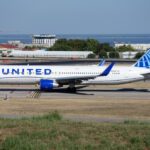
EL AL operates LY6 on a Boeing 787-9, a long-range widebody designed for exactly this kind of city pair. The Dreamliner’s range and efficiency make LAX–TLV viable as a nonstop, and the aircraft’s cargo volume is a material part of the route’s economics. But the 787-9’s strength—moving large numbers of passengers and bags in one push—also means a disruption at the baggage level can become a gate-stopper fast.
A long-haul departure from LAX isn’t a flight you casually hold for “a bit longer.” Every minute on the ground pressures:
-
Departure flow and slot coordination out of LAX’s congested evening banks
-
Arrival timing into TLV, where inbound sequencing and late-night curfews can become relevant
-
Crew legality, especially on services already built around tight duty margins
-
Passenger disruption costs, because misconnects and misconnections cascade the longer the aircraft sits

In that context, “depart without the bags” becomes an operational release valve: it protects the flight and gets people to TLV, even if it creates a second wave of work for baggage services and customer care.
Why “just stickers” can trigger a serious security response
To be clear, the stickers themselves aren’t the hazard. The concern is what the stickers may represent operationally: a coordinated act of interference with checked baggage inside a secured handling environment.
From a security perspective, a cluster of externally applied political stickers can raise multiple red flags:
-
Chain-of-custody integrity
Checked baggage is screened and then handled within restricted areas. If items are being altered after acceptance, it prompts immediate questions about who accessed the bags and when. -
Targeting and identification
Marking bags can be used to identify specific items for later interference, misrouting, or tampering—particularly if an insider threat is a concern. -
Behavioral intent
When the markings appear across a large number of bags, it suggests coordination rather than a passenger’s personal statement. Even if the act is “only” vandalism, the intent behind it becomes relevant. -
EL AL’s security posture
EL AL is widely regarded as one of the world’s most security-intensive carriers. That’s not branding—it’s operational doctrine. When something anomalous appears in the baggage stream on a flight bound for TLV, the airline’s default posture is conservative.
In other words, the response wasn’t about the politics on the sticker; it was about the operational reality that an unknown actor appeared to have interfered with a large batch of checked baggage moving through LAX.
The uncomfortable question: how did 140 bags get stickered?
Passengers understandably asked the most logical question: if stickers can be applied to this many suitcases, what else could be done?
No public-facing account definitively identifies who placed the stickers, and it’s important not to leap to conclusions. But from a process viewpoint, there are only a few windows where this can happen:
-
Before check-in (passenger-applied, visible at acceptance)
-
During or after screening in the baggage system
-
During manual handling (build-up area, tug routes, or at aircraft-side staging)
If the stickers were discovered late—near loading time—that points operational attention toward the restricted handling chain, because that’s where a large number of bags can be accessed in one place with the least passenger visibility. For LAX, where baggage areas are typically covered by CCTV and access control, that also means the investigation path is fairly clear: camera review, access logs, and contractor accountability across the specific work areas handling LY6’s bag build.
What this means for passengers: delayed bags are the “best” bad outcome
For travelers, the worst part is predictable: arriving at TLV without essentials, special-event clothing, medication packed incorrectly, or business-critical items. But measured against the alternative—extending the delay indefinitely or canceling the flight entirely—offloading suspiciously marked bags can be the least disruptive option in the moment.
If your bag doesn’t arrive on a long-haul like LAX–TLV, the practical playbook remains the same:
-
File a baggage report immediately at TLV before leaving the arrivals area.
-
Keep receipts for essentials you must buy while waiting (airline policies vary, but documentation always helps).
-
Ensure your bag has internal identification as well as an external tag.
-
Travel with critical items (medications, documents, one change of clothes) in your cabin bag whenever possible.
Airline teams, meanwhile, will focus on two parallel workstreams: getting the bags screened and moved onward from LAX, and identifying how the interference occurred so it cannot be repeated.
Bottom Line
EL AL’s decision to leave roughly 140 suitcases behind at Los Angeles (LAX) on flight LY6 to Tel Aviv (TLV) is a sharp reminder of how sensitive the baggage chain is—especially on high-security routes. Once a large batch of checked bags shows signs of coordinated interference, the operation shifts from “delay management” to “risk management,” and the fastest path to a safe on-time(ish) departure can be sending the aircraft without the luggage.
For passengers, it’s an infuriating outcome. For the industry, it’s a clear operational lesson: when an anomaly appears late in a widebody turn, the only choices are expensive, disruptive, or both—and the priority will always be getting the aircraft and the people to destination safely.
Keep reading FlyMag
Get the Daily Brief in the morning or the Route Watch weekly recap on Fridays. Or both.