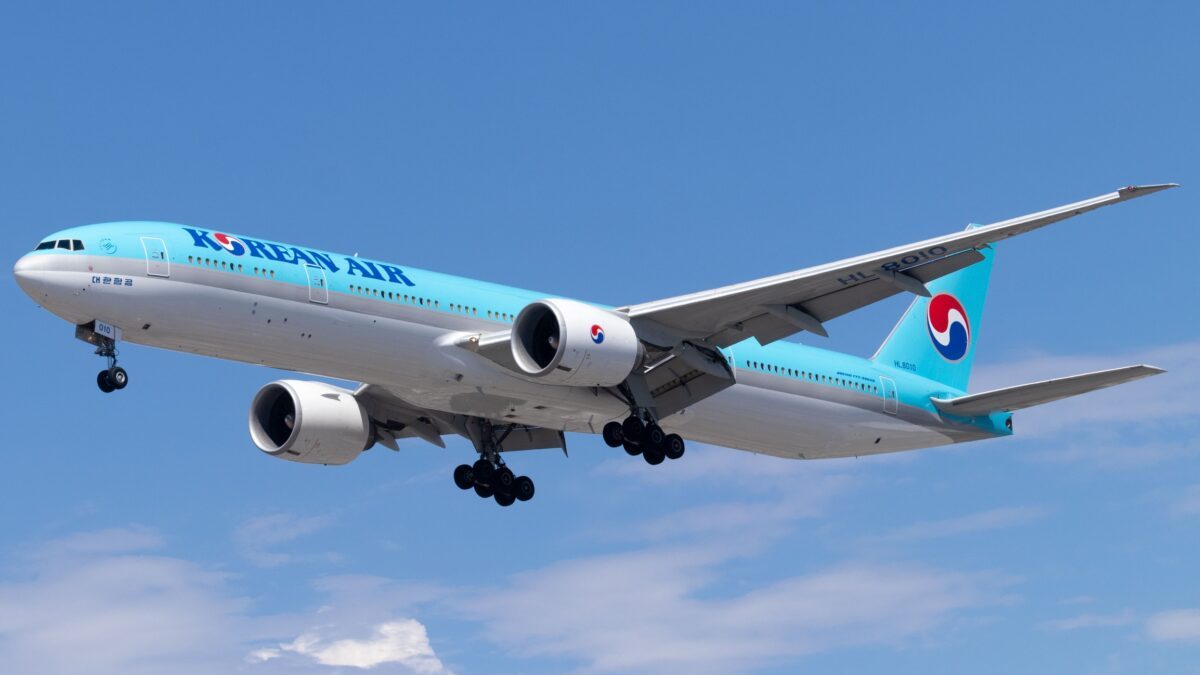
Korean Air will open daily nonstop service between Seoul Incheon (ICN) and Newark (EWR) on May 22, 2027, adding a second airport in the New York metropolitan area to its passenger network.

The airline will operate the route with a Boeing 777-300ER. According to the schedule published by Korean Air, KE97 will leave ICN at 10 p.m. and reach EWR at 11 p.m. local time. KE98 will depart Newark at 1 a.m. and arrive in Seoul at 5:15 a.m. the following day.
Those timings produce scheduled block times of approximately 14 hours to Newark and 15 hours 15 minutes to Seoul during the Northern Hemisphere summer timetable. The late departure from ICN also gives Korean Air much of the day to feed the flight with domestic and regional connections.
Read our stories in your inbox
Two aviation newsletters. Zero fluff.
Korean Air Will Use a Three-Class 777
Korean Air identifies the 277-seat Boeing 777-300ER as the planned aircraft for Newark. The airline’s current 777 fleet guide lists that version with First Class, Prestige Class and Economy Class cabins.
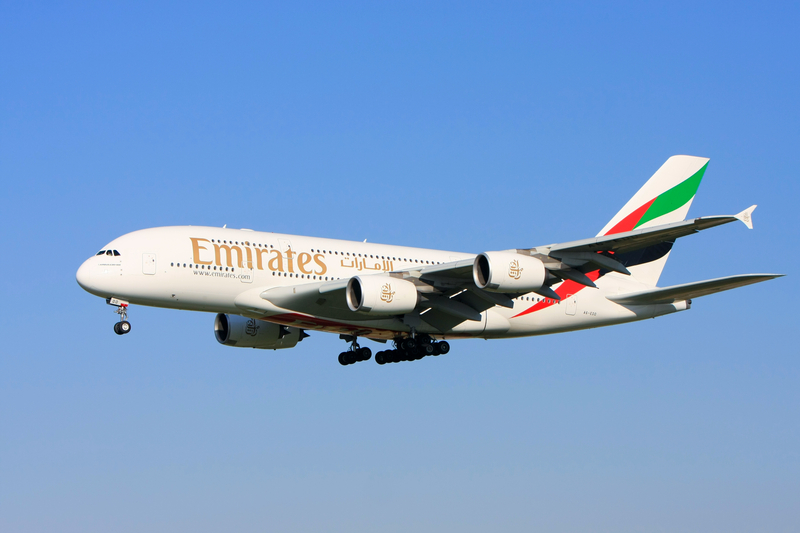
The layout comprises eight First Class seats, 42 Prestige Class seats and 227 Economy Class seats. Korean Air previously detailed the 42-seat business cabin and 227-seat economy section when it temporarily converted aircraft from this subfleet to carry cabin cargo during the pandemic.
The configuration gives the route a relatively substantial premium cabin without sacrificing the lower-deck cargo capacity of the 777-300ER. The type’s combination of passenger volume, belly space and long-range performance has made it a mainstay of Korean Air’s intercontinental operation. Boeing lists a maximum advertised range of up to 7,500 nautical miles for the 777-300ER, comfortably covering the roughly 6,000-nautical-mile great-circle distance between ICN and EWR.
The aircraft choice also distinguishes Korean Air’s product from the twin-aisle fleets used by its two nonstop competitors. More importantly for the commercial proposition, it allows Korean Air to sell a true First Class cabin in a market that includes corporate traffic, premium leisure demand and visiting-friends-and-relatives travel.
Newark Becomes Korean Air’s Second New York-Area Airport
The new flight will complement rather than replace Korean Air’s existing Seoul-New York JFK (JFK) service. By splitting its New York-area operation across JFK and EWR, the airline can address different local catchment areas while retaining its established presence at JFK.
Newark is particularly useful for passengers whose journeys begin or end in northern and central New Jersey, as well as parts of Pennsylvania. It also gives Korean Air access to travelers who prefer EWR for Manhattan trips or domestic connections.
The airport is not new territory for the carrier. Korean Air’s official corporate history records that it first began serving Newark on August 20, 1996. The May 2027 launch will restore Korean Air-operated passenger flights after a lengthy absence, this time in a substantially more competitive market.
Three Airlines Will Compete Between Newark and Seoul
Korean Air will join United Airlines and Air Premia on the nonstop ICN-EWR market. Air Premia’s published schedules identify its flights as YP131 from Seoul and YP132 from Newark, while United confirmed in its third-quarter 2026 results that it had launched nonstop Newark-Seoul service during the quarter.
Air Premia’s presence gives the market a South Korean challenger centered on a simplified two-cabin widebody product. United, meanwhile, can draw on the domestic and international connecting network at its Newark hub. Korean Air enters with a large home-market sales base, a mature ICN connecting operation and a three-class long-haul product.
The resulting contest will extend beyond local passengers traveling solely between South Korea and the New York region. United can channel traffic through EWR, while Korean Air can sell onward journeys across its Asian network from ICN. Air Premia provides another nonstop option for passengers who do not require the wider network or premium cabins of the two global carriers.
Route Launch Follows Asiana Integration Work
The Newark opening will take place several months after Korean Air’s planned operational integration with Asiana Airlines. Korean Air has said the combined airline is due to launch on December 17, 2026, with reservations for Asiana flights departing from that date being moved to Korean Air flight numbers.
The integration gives Korean Air a larger pool of aircraft, traffic rights, airport infrastructure and connecting passengers to manage. Its own investor material has identified schedule optimization, fleet deployment and stronger connections between Asiana’s short- and medium-haul network and Korean Air’s long-haul services as expected sources of merger benefits.
Newark is not presented by Korean Air as a direct consequence of any specific post-merger capacity change. It nevertheless illustrates the network choices available to the enlarged carrier: Korean Air can preserve JFK as its established New York station while opening another gateway aimed at New Jersey traffic and additional connecting flows.
Korean Air also places the new route within its transpacific joint venture with Delta Air Lines. The carrier says the partnership connects more than 260 destinations in the Americas and more than 60 in Asia. Delta does not operate a Newark hub, so the immediate value of the new service lies more in the broader transpacific network and Korean Air’s ICN connectivity than in a large Delta-operated feed operation at EWR.
Bottom Line
Korean Air’s Newark decision adds meaningful capacity to a market that has changed quickly. EWR-Seoul has moved from a niche alternative to JFK into a three-carrier battleground involving the dominant airline at Newark, an independent South Korean widebody operator and South Korea’s enlarged flag carrier.
Passengers in New Jersey gain the clearest advantage. Korean Air can now compete for customers who may previously have chosen United or Air Premia for the convenience of EWR even when they preferred Korean Air’s network or onboard product. The 277-seat 777-300ER also gives the airline a distinct proposition, with First Class, substantial business-class capacity and strong belly-cargo capability on a long transpacific sector.
The next point to watch is how Korean Air balances Newark against JFK after the Asiana integration. Maintaining both gateways would signal that the combined airline sees enough local, connecting and premium demand to support a broader New York-area footprint rather than consolidating its operation at a single airport.