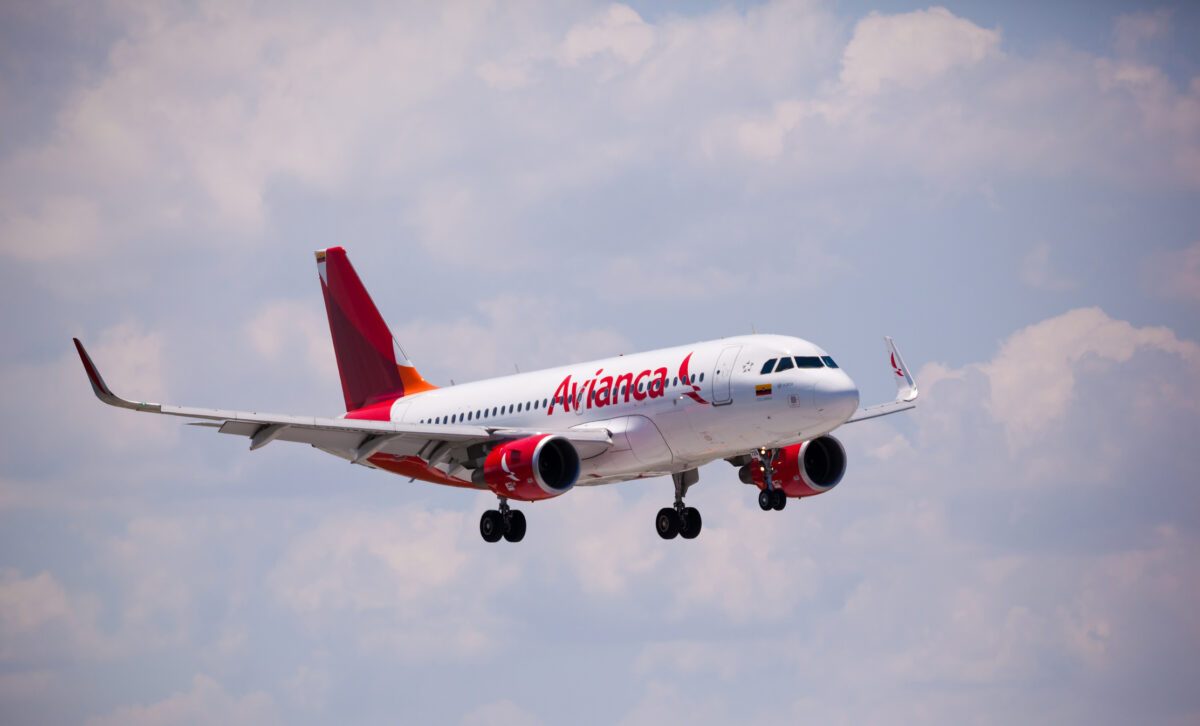
Avianca is deploying more than 126,000 flights and over 22 million seats between October 2026 and March 2027, combining seven seasonal routes with frequency increases across Colombia, Central America, North America, South America and Europe.

The figures cover Avianca’s entire six-month schedule rather than incremental capacity. The airline plans to serve 86 destinations in more than 25 countries through a network exceeding 155 routes, broadly matching the scale described in its corporate network information.
Most of the seasonal flying starts in December, when holiday and visiting-friends-and-relatives demand supports additional nonstop services from Avianca’s Central American operation and secondary Colombian cities. More than 20 routes will receive either temporary or permanent frequency increases.
Read our stories in your inbox
Two aviation newsletters. Zero fluff.
Seven seasonal routes start or return in December
The winter additions are concentrated in three areas: Guatemala City (GUA), San Salvador (SAL), and the Colombian cities of Cartagena (CTG) and Pereira (PEI). The schedule is:
- Las Vegas (LAS)–San Salvador (SAL): three weekly flights from December 1.
- Guatemala City (GUA)–Chicago O’Hare (ORD): daily from December 2.
- Guatemala City (GUA)–San Francisco (SFO): four weekly flights from December 2.
- San Salvador (SAL)–Montreal (YUL): four weekly flights from December 2.
- Pereira (PEI)–New York JFK (JFK): four weekly flights from December 6.
- Cartagena (CTG)–Santiago (SCL): three weekly flights from December 15.
- Cartagena (CTG)–New York JFK (JFK): four weekly flights from December 16.
The Guatemala services extend a seasonal strategy Avianca has already tested in the market. The carrier operated GUA–SFO four times weekly during summer 2026 using 180-seat Airbus A320s, according to its announcement marking the route’s June launch. Bringing it back for the year-end peak allows Avianca to reuse an established schedule and sales base rather than open an entirely untested station pair.

Chicago adds a higher-frequency counterpart from Guatemala. Avianca’s booking channel already lists the GUA–Chicago market, while the daily schedule gives the route more utility than the lower-frequency seasonal links. It also provides connections over GUA from the airline’s regional network.
The additions from Pereira and Cartagena bypass Bogotá for peak-season traffic to New York. That matters operationally as well as commercially: nonstop flights remove connecting passengers from Bogotá’s domestic-to-international banks while giving two regional Colombian markets direct access to JFK. Avianca is selling both the Pereira–New York and Cartagena–New York itineraries through its own channels.
Cartagena–Santiago, meanwhile, returns as a three-times-weekly seasonal route. The service links two leisure-heavy markets without requiring a connection through Bogotá or Lima and restores a route Avianca also operated during the opening months of 2026.
Barcelona returns to two daily flights for the holidays
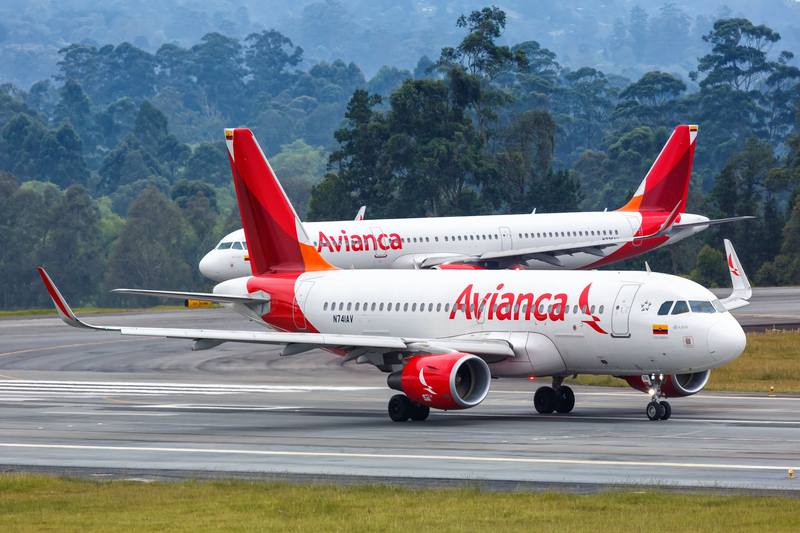
The largest individual frequency change is between Bogotá (BOG) and Barcelona (BCN). Avianca will increase the route from seven to 14 weekly flights between December 6, 2026, and January 31, 2027, creating a twice-daily schedule during the Christmas and New Year peak.

The increase repeats a capacity pattern used during the European summer. Avianca also raised Barcelona to two daily flights from June 2026 as part of a broader transatlantic expansion that reached 67 weekly frequencies. The airline detailed that summer deployment in its European schedule announcement.
Barcelona is operated with the Boeing 787-8, the long-haul type at the center of Avianca’s European network. The additional daily rotation therefore represents a substantial increase in both passenger and belly-cargo capacity compared with a narrowbody frequency change.
Avianca sells its INSIGNIA business-class product on Boeing 787 flights to Barcelona, Madrid, Paris and London. The current product includes fully flat seats with 180-degree recline, while the airline plans to begin introducing a new suite-equipped cabin during 2027. Details of the existing and planned product are available in Avianca’s premium-cabin update.
The second Barcelona flight also increases connecting options beyond local Bogotá demand. Two daily departures provide more opportunities to feed BCN from Avianca’s Colombian, Andean, Central American and Caribbean network while spreading passengers across separate connection banks at BOG.
Asunción and Montevideo become daily routes
Two frequency increases introduced in the final week of October are permanent rather than seasonal. Bogotá–Asunción (ASU) rose from three to seven weekly flights, while Bogotá–Montevideo (MVD) increased from four to seven. Both now operate daily with 180-seat Airbus A320s.
The changes add 720 one-way seats per week to Asunción and 540 to Montevideo. More important than the raw capacity is the move to a daily timetable. Daily service improves itinerary availability across the week and makes Avianca’s Bogotá connections more competitive for passengers traveling between Paraguay or Uruguay and North America, Central America and the Caribbean.
The A320 is suited to this type of development: it provides enough range for the north-south sectors while keeping each departure at a manageable 180-seat capacity. Avianca can therefore improve schedule quality without committing a widebody or relying on a few larger weekly departures.

More frequencies across the Bogotá network
Avianca is also adding domestic frequencies from Bogotá to Cartagena, Medellín (MDE), Cali (CLO), Pereira, Santa Marta (SMR), Cúcuta (CUC) and Barranquilla (BAQ), along with additional service between San Andrés (ADZ) and Cali.
International increases include Bogotá–Mexico City (MEX) and Washington Dulles (IAD)–San Salvador. Those additions reinforce feed at BOG and SAL while the seasonal nonstops target traffic that can support direct service during the strongest travel weeks.
The combination reflects two distinct uses of capacity. Daily service to Asunción and Montevideo builds the year-round network, while routes such as Pereira–JFK and Cartagena–JFK place aircraft directly into regional markets for a limited demand peak. Barcelona sits between those strategies: it is an established year-round route receiving a second daily frequency only when long-haul demand is strongest.
Bottom Line
Avianca’s winter plan favors measured frequency changes over a broad wave of permanent route launches. Regional Colombian airports gain nonstop access to major international markets during the peak, while Bogotá and San Salvador retain their roles as the network’s principal connection points. That gives Avianca additional holiday capacity without leaving every route in the schedule once demand normalizes.
The fleet split is equally important. The 180-seat Airbus A320 gives Avianca a repeatable unit for seasonal and developing routes across the Americas, while the Boeing 787-8 concentrates the largest increase on an established European market. A second daily Barcelona flight should improve connections as much as it increases local capacity, particularly when the two departures are aligned with different Bogotá arrival banks.
The next indicator will be how much of the seasonal flying survives beyond early 2027. The daily Asunción and Montevideo schedules have already crossed into permanent expansion. Strong performance from Guatemala, Pereira or Cartagena could similarly support longer operating windows, but Avianca’s present plan keeps that capacity focused on the weeks when it is most likely to earn an adequate return.