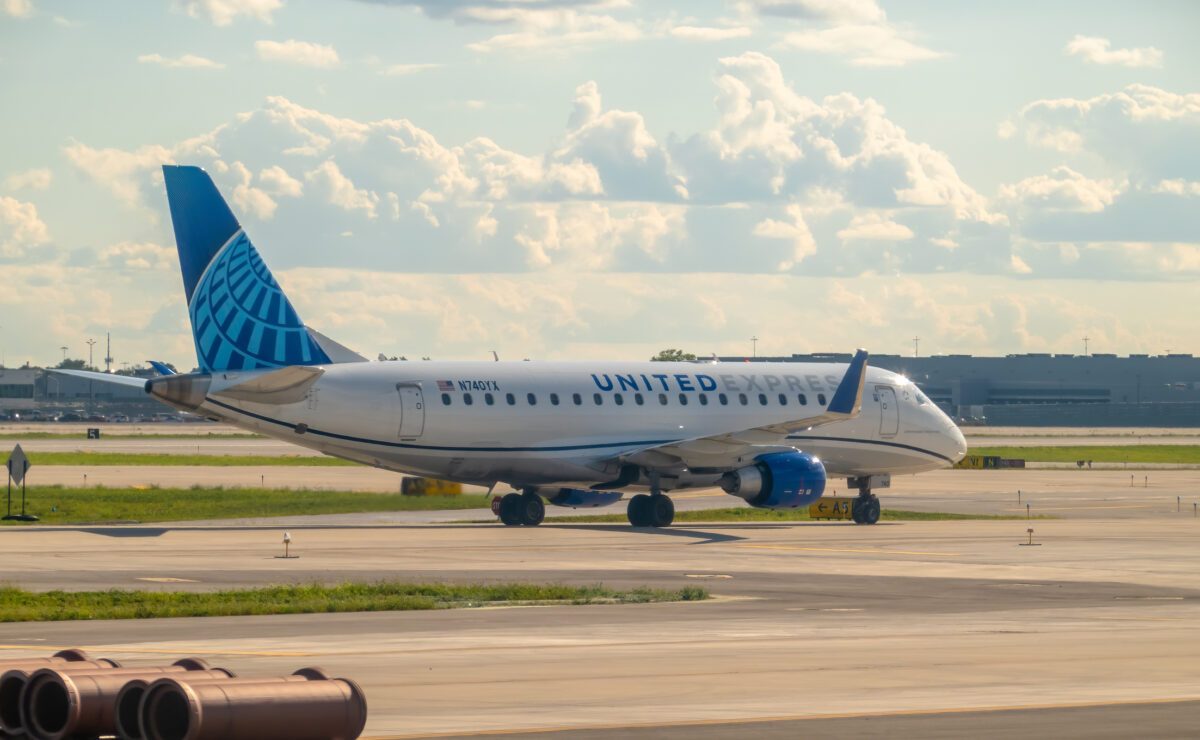
United Airlines is adding another spoke to its massive Chicago O’Hare International Airport (ORD) network, with new nonstop service to Santa Fe, New Mexico, expected to begin in December 2026.

The new Chicago O’Hare (ORD)-Santa Fe Regional Airport (SAF) route is scheduled to operate daily with an Embraer E175, giving United a presence in a market that did not have nonstop Chicago service until American Airlines entered it in late 2025.
But United’s 2026 expansion at O’Hare is more complicated than simply adding up its route announcements. The carrier announced waves of new and returning destinations as it prepared for record growth at ORD, only to later postpone 10 planned routes after the Federal Aviation Administration imposed and then extended operating limits at the airport.
Read our stories in your inbox
Two aviation newsletters. Zero fluff.
After accounting for those postponements and several additional routes added during the year, there are currently 14 new or returning United routes from Chicago O’Hare (ORD) that either launched during 2026 or remain scheduled to begin before the end of the year.
That list stretches from 50-seat regional-jet markets to a daily Boeing 787 flight across the Pacific.
United Will Challenge American Between Chicago And Santa Fe
The latest addition is one of the more interesting markets in the group.
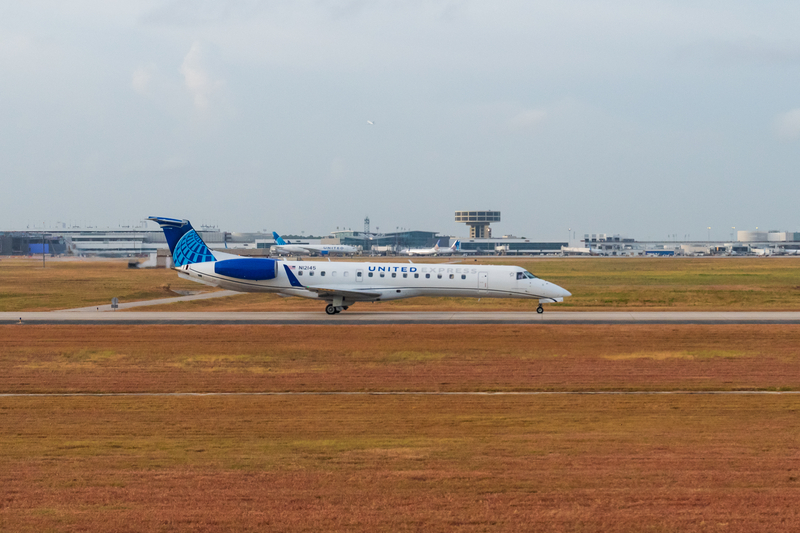
United is expected to begin daily service between Chicago O’Hare International Airport (ORD) and Santa Fe Regional Airport (SAF) in December 2026 using an Embraer E175 regional jet. The route covers roughly 1,070 miles, making it a relatively long sector for a regional aircraft.
American Airlines currently operates the only nonstop service between ORD and SAF, with its schedule using CRJ-700-family regional jets. American began the route in December 2025, meaning Santa Fe went from having no nonstop Chicago service to potentially having both of O’Hare’s dominant hub carriers competing on the route within roughly a year.
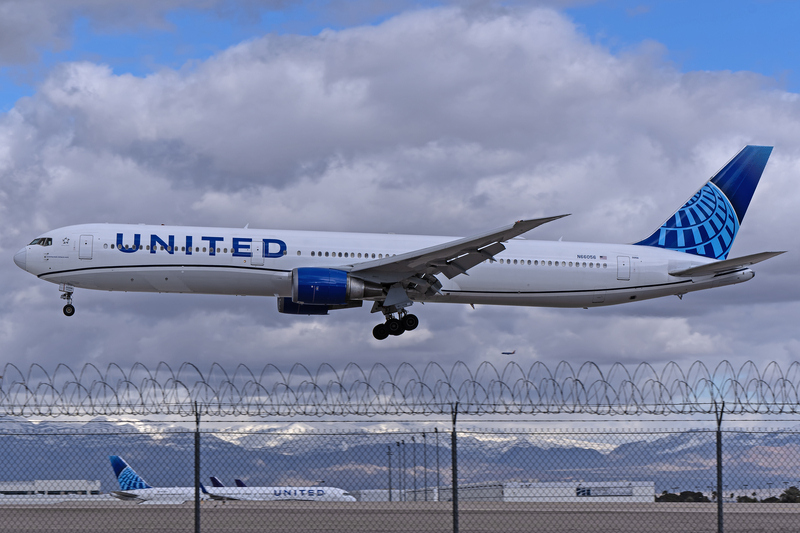
The Embraer E175 is particularly well suited to a market such as Santa Fe. Unlike older 50-seat regional jets, United’s two-cabin E175s offer First Class and Economy seating while providing the range needed to connect smaller Western markets with a major Midwest hub.
For United, the route is about considerably more than local Chicago-Santa Fe traffic. Chicago O’Hare (ORD) is one of the airline’s most important connecting hubs, allowing passengers originating at Santa Fe (SAF) to reach a large portion of United’s domestic and international network with a single connection.
American, of course, can make essentially the same argument. That is what should make the market particularly interesting once United enters.
United’s 14 Active Or Scheduled O’Hare Additions For 2026
United’s original O’Hare growth plan was announced in several stages. The airline first unveiled 10 additional domestic destinations after receiving five more gates at ORD, then continued adding markets during the winter. United’s original O’Hare expansion announcement
The network has changed substantially since then. Taking the latest postponements into account, the current 2026 picture looks like this:
| Destination | Launch/Status | Planned Or Typical Aircraft |
|---|---|---|
| Barkley Regional Airport (PAH), Paducah | February 24 | Bombardier CRJ550 |
| Lynchburg Regional Airport (LYH) | March 24 | Bombardier CRJ200 |
| Santa Barbara Airport (SBA) | April 6 | Boeing 737 family, including 737 MAX 8 |
| North Central West Virginia Airport (CKB), Clarksburg | April 14 | Bombardier CRJ200 |
| Eugene Airport (EUG) | April 30 | Boeing 737 MAX 8 |
| Kearney Regional Airport (EAR) | April 30 | Bombardier CRJ200 |
| Yellowstone Regional Airport (COD), Cody | May 22, seasonal | Embraer E175 |
| Idaho Falls Regional Airport (IDA) | May 23, seasonal | Embraer E175 |
| Monterey Regional Airport (MRY) | May 23, seasonal | Boeing 737 MAX 8 |
| St. George Regional Airport (SGU) | May 23, seasonal | Embraer E175 |
| Lancaster Airport (LNS) | June 2 | Bombardier CRJ200 |
| Narita International Airport (NRT), Tokyo | October 24 | Boeing 787-8 Dreamliner |
| Owensboro-Daviess County Regional Airport (OWB) | October 25 | 50-seat United Express regional jet |
| Santa Fe Regional Airport (SAF) | December 2026 | Embraer E175 |
Not all of these are entirely new markets for United. Several, including Santa Barbara (SBA), Eugene (EUG), Paducah (PAH), Clarksburg (CKB), Kearney (EAR) and Cody (COD), restore routes the airline previously operated.
That distinction matters. Describing all 14 as completely new routes overstates the expansion; a more accurate description is new and returning service being added to United’s ORD network during 2026.
Temporary event-driven flying, including United’s limited Chicago O’Hare (ORD)-Guadalajara International Airport (GDL) service surrounding the 2026 FIFA World Cup, is not included in the list.
FAA Limits Forced United To Rewrite Its O’Hare Growth Plan
What makes United’s 2026 Chicago expansion particularly noteworthy is how much larger it was originally supposed to be.
In January, United said it planned to operate as many as 750 daily flights from Chicago O’Hare (ORD) and serve 222 nonstop destinations during 2026, including 175 domestic and 47 international destinations. The airline described the schedule as the largest ever operated by a carrier at O’Hare. United’s original 2026 O’Hare growth plan
The FAA subsequently determined that airlines’ planned schedules exceeded what O’Hare could reliably handle while major airfield construction was underway.
The agency imposed a limit of 2,708 scheduled airport operations per day at ORD. An operation is either an arrival or a departure. In July, the FAA announced that the scheduling restrictions would remain in place through October 30, 2027. FAA’s statement on the O’Hare operating limits
That forced United to remove 10 planned new ORD markets from its schedule: Bloomington-Normal (BMI), Champaign-Urbana (CMI), Erie (ERI), Kalamazoo (AZO), La Crosse (LSE), Lansing (LAN), Marquette (MQT), Rochester, Minnesota (RST), Tri-Cities, Tennessee (TRI), and Central Wisconsin/Wausau (CWA).
United said it remains interested in operating the routes but hopes to launch them once the FAA restrictions expire.
That is an important piece of context when looking at United’s O’Hare expansion. The airline is still growing and adding destinations, but ORD’s finite number of allowable movements makes every additional flight more valuable.
It also puts additional emphasis on aircraft gauge. When an airline cannot simply add more departures, putting more seats on each available operation becomes an increasingly important way to grow hub capacity.
United Is Using Everything From CRJ200s To The Boeing 787
Few route expansions illustrate the range of United’s fleet strategy as clearly as this one.
At one end are small regional markets such as Lancaster Airport (LNS), Lynchburg Regional Airport (LYH), North Central West Virginia Airport (CKB) and Kearney Regional Airport (EAR), where 50-seat Bombardier CRJ200s allow United Express operators to feed passengers into ORD without requiring enough local demand to support a mainline aircraft.
Lancaster (LNS), for example, began daily United Express service to Chicago O’Hare (ORD) in June using a 50-seat CRJ200 operated by SkyWest Airlines. Lancaster Airport’s United Express service information
Paducah (PAH) has been scheduled with the Bombardier CRJ550, an unusual aircraft developed specifically around United’s regional strategy. Although based on the larger CRJ700 airframe, United configures the CRJ550 with only 50 passenger seats, allowing for a comparatively spacious premium-heavy interior while remaining within regional airline scope limitations.
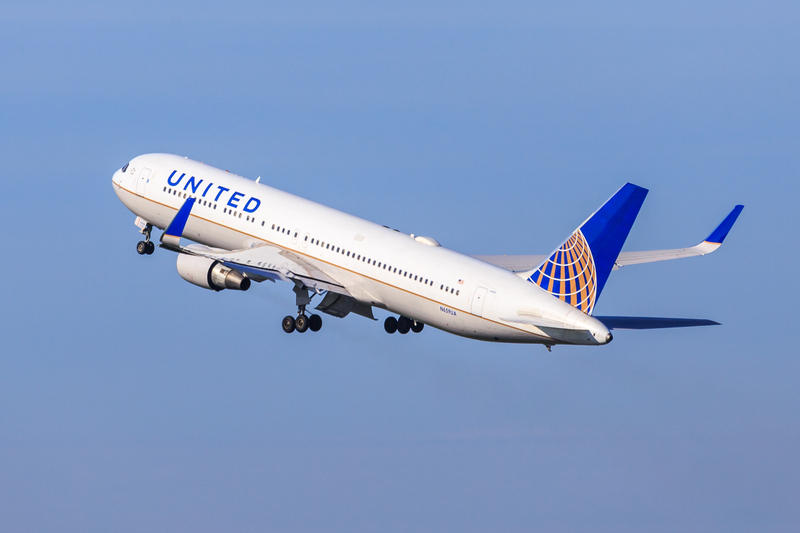
The Embraer E175 occupies the next step up and is being used on longer, thinner markets such as Idaho Falls (IDA), St. George (SGU), Cody (COD) and the planned Santa Fe (SAF) route. Its two-cabin configuration and better passenger experience make it particularly attractive on sectors that can exceed three hours but do not justify a Boeing 737.
Larger markets including Eugene (EUG), Monterey (MRY) and Santa Barbara (SBA) have seen or are scheduled for mainline Boeing 737 service, including the 737 MAX 8.
And then there is Tokyo.
Tokyo Narita Is The Opposite End Of United’s ORD Strategy
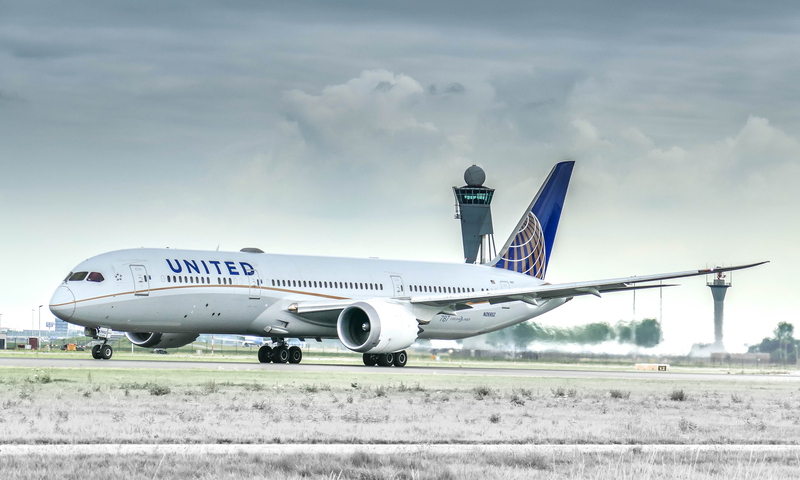
United’s new flight from Chicago O’Hare International Airport (ORD) to Narita International Airport (NRT) is scheduled to begin October 24, 2026, operating daily and year-round with a Boeing 787-8 Dreamliner.
The airline already serves Tokyo Haneda Airport (HND) from Chicago, so Narita gives United another Tokyo gateway while significantly expanding connecting opportunities across Asia through both United and Star Alliance joint-venture partner All Nippon Airways.
United says passengers arriving at Narita International Airport (NRT) will be able to connect onward to 21 destinations across the Asia-Pacific region on United or ANA. United’s Chicago-Tokyo Narita route announcement
Narita International Airport says the Boeing 787-8 assigned to the route will offer 243 seats, including 28 business-class seats, 21 premium economy seats and 194 economy seats. The westbound UA867 is scheduled to leave Chicago O’Hare (ORD) at 11:40 a.m. and arrive at Narita (NRT) at 3:15 p.m. the following day, with a scheduled flying time of 13 hours and 35 minutes. Narita Airport’s detailed schedule and aircraft information
That 787 service sits at the complete opposite end of the network from the CRJ200 routes feeding small communities into Chicago.
Yet both serve the same hub strategy: collect passengers from a vast number of origins, consolidate them at ORD and redistribute them throughout United’s domestic and international network.
Is O’Hare Really The World’s Busiest Airport?
There is one distinction worth making when describing Chicago O’Hare International Airport (ORD) as the world’s busiest airport.
By passenger traffic, it is not.
Hartsfield-Jackson Atlanta International Airport (ATL) remained the world’s busiest passenger airport in 2025 with approximately 106.3 million passengers, while Chicago O’Hare (ORD) handled about 84.8 million.
By aircraft movements, however, O’Hare’s claim is much stronger.
Chicago Department of Aviation data show ORD recorded 857,392 aircraft operations in 2025, up sharply from 776,036 in 2024. Each takeoff or landing counts as one operation. Chicago O’Hare’s official aircraft operations data
That helps explain an apparent contradiction. Atlanta (ATL) processes significantly more passengers, while Chicago O’Hare (ORD) handles an enormous number of regional and mainline flights feeding United and American’s competing hubs.
The large regional operation that makes destinations such as Santa Fe (SAF), Paducah (PAH), Lancaster (LNS) and Kearney (EAR) viable is also one of the reasons ORD generates so many individual takeoffs and landings.
Bottom Line
United Airlines’ 2026 expansion at Chicago O’Hare International Airport (ORD) is considerably more interesting than a simple list of new destinations.
Santa Fe Regional Airport (SAF) is the latest addition, with daily Embraer E175 service expected to begin in December. That will put United directly against American Airlines in a market that had no nonstop Chicago flights until late 2025.
Across the broader network, United’s new and restored ORD services range from 50-seat CRJ200 regional flights to Lancaster (LNS) and Kearney (EAR), to Boeing 737 MAX operations serving larger domestic markets, all the way to a daily 243-seat Boeing 787-8 between Chicago (ORD) and Tokyo Narita (NRT).
At the same time, the FAA’s operating cap has forced United to postpone another 10 routes that had been part of an even more aggressive O’Hare growth plan.
That may ultimately be the biggest story at ORD. United clearly sees substantial room to expand its Chicago hub, but until additional aircraft movements become available, the airline will increasingly have to decide which markets generate the greatest strategic value from each scarce O’Hare operation.