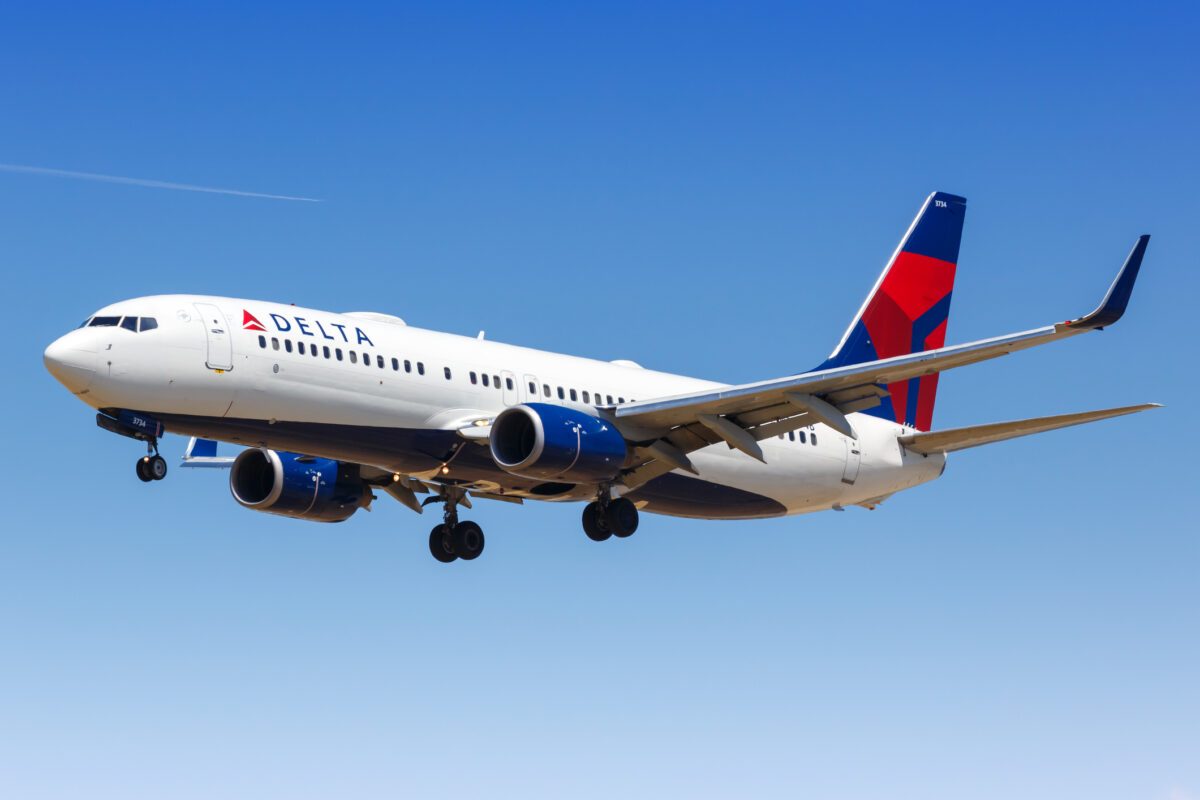
Delta Air Lines is developing plans to return to Venezuela, nine years after ending its last scheduled service to the country.


Alex Antilla, Delta’s vice president for Latin America and the Caribbean, confirmed the airline’s interest during a panel at the CAPA Airline Leader Summit Latin America and Caribbean in Panama City on September 10.
“We have a lot of plans at Delta to serve Venezuela,” Antilla said during the recorded conference session. He described the market’s growth potential as “huge,” while adding that work remained underway and that June’s earthquakes had set the process back.
Read our stories in your inbox
Two aviation newsletters. Zero fluff.
The comments place Venezuela inside Delta’s network-planning process, rather than representing a route launch. They are nevertheless the clearest public indication that the Atlanta-based airline intends to participate in a market that reopened to U.S. commercial service earlier in 2026.
Delta Last Flew From Atlanta to Caracas
Delta’s final Venezuelan route connected Atlanta (ATL) with Caracas (CCS). By its last weeks of operation, the service had been reduced to one round trip each Saturday.

An August 2017 notice to travel agencies moved the outbound and return flights onto the same day and confirmed that service would end after September 16, 2017. Flight DL781 left ATL in the morning and reached Caracas in the early afternoon, with DL802 returning to Atlanta later that day.
The limited final schedule illustrated how far Delta’s presence had contracted before its withdrawal. A restored Atlanta-Caracas route would have a different network proposition: instead of depending primarily on local traffic, Delta could distribute passengers across its largest hub and offer one-stop access from much of the United States.
That connecting reach would differentiate Atlanta from Miami (MIA), where demand is more heavily supported by South Florida’s Venezuelan population. It would also put Delta into direct competition for connecting traffic with United Airlines’ Houston (IAH) service and the extensive Latin American networks available through other regional hubs.
U.S.-Venezuela Market Reopened in 2026
Scheduled service between the United States and Venezuela resumed on April 30, when American Airlines returned to Caracas from Miami. The flight was the first scheduled U.S. commercial passenger service to Venezuela in seven years, according to the U.S. Department of Transportation.
American initially assigned Envoy Air to the daily route using the Embraer 175. The dual-class regional jet allowed the airline to re-enter the market with comparatively restrained capacity while retaining a premium cabin. American subsequently said it was operating as many as two daily Miami-Caracas flights and planned to restore Miami-Maracaibo (MAR) service.
United followed with daily Houston-Caracas flights on August 11. Its Boeing 737 MAX 8 service represents a larger mainline commitment than American’s initial Embraer 175 operation and is designed to draw both local Houston demand and connecting passengers. The route also serves commercial traffic tied to the energy sector, a longstanding component of the Houston-Venezuela market.
The different aircraft strategies show that Venezuela can support more than one type of U.S. operation. The 76-seat Embraer 175 gives American frequency with limited trip capacity, while the Boeing 737 MAX 8 provides United with more seats, cargo capability and range than the route requires, allowing it to integrate Caracas into a standardized mainline narrowbody operation.
Delta would bring another large connecting hub into that structure. Atlanta-Caracas is a conventional narrowbody mission, leaving Delta with several suitable aircraft families if it advances the route. The more important planning questions will be frequency, the balance between local and connecting demand, and how quickly the market can absorb additional capacity.
Earthquake Disrupted the Market’s Recovery
Venezuela’s June 24 earthquakes interrupted the early stages of the U.S. market’s reopening and temporarily closed CCS to commercial flights. American suspended its Caracas operation during the closure and later used a Boeing 737 to carry more than 9,000 pounds of relief supplies from Miami.
The airline’s relief-flight statement said scheduled operations had been suspended through July 10 while the airport remained closed. Antilla’s remarks indicate that the disruption also affected Delta’s planning, even though the airline had not yet announced service.
Airport resilience will be central to any expansion. A carrier opening a station after a nine-year absence must rebuild ground-handling, security, crew-support and commercial arrangements, while satisfying the regulatory requirements of both countries. Disruption at the principal international gateway adds uncertainty to that work and can alter the timing of an otherwise viable route.
Delta Sees Long-Term Demand
Antilla framed Venezuela as an underdeveloped market rather than a short-term reopening opportunity. He noted that Venezuelan and Colombian aviation markets had once been of broadly comparable size, whereas Venezuela now accounts for a fraction of Colombia’s traffic.
That gap is what makes the country attractive to network airlines. Years of restricted connectivity have left substantial visiting-friends-and-relatives demand, while renewed commercial activity can generate higher-yield business traffic. There is also scope for passengers currently using connections outside the United States to shift to nonstop or one-stop U.S. itineraries as more capacity becomes available.
Delta’s approach elsewhere in South America has centered on its joint venture with LATAM Airlines, but Venezuela sits outside the countries covered by that arrangement. A Delta-operated service would therefore stand on its own economics and the strength of Delta’s U.S. network, rather than being jointly planned and revenue-shared with LATAM.
The airline’s decision will offer an early test of whether Venezuela’s recovery can sustain service from three distinct U.S. gateways. Miami provides the strongest local ethnic market, Houston combines energy-sector demand with connecting feed, and Atlanta would rely heavily on Delta’s ability to aggregate traffic across its domestic network.
Bottom Line
Delta’s interest is a significant vote of confidence in the direction of the U.S.-Venezuela market, but the airline has room to be patient. American and United are already producing the operating and demand data that will show how quickly traffic normalizes after years without scheduled U.S. service. Delta can watch booking patterns, yields and airport performance before committing aircraft and station resources.
A return through Atlanta would broaden the market beyond its traditional Miami focus and create another practical one-stop option for Venezuelan communities across the Southeast, Midwest and Northeast. It would also test whether hub connectivity can support Caracas independently of the large local populations and specialized business links underpinning the Miami and Houston routes.
The next meaningful signal will be regulatory action or the appearance of a Delta schedule, rather than another expression of general interest. If Delta proceeds, initial frequency and aircraft assignment will indicate whether it views Venezuela as a cautious restoration market or as a larger long-term opportunity worth rebuilding quickly.