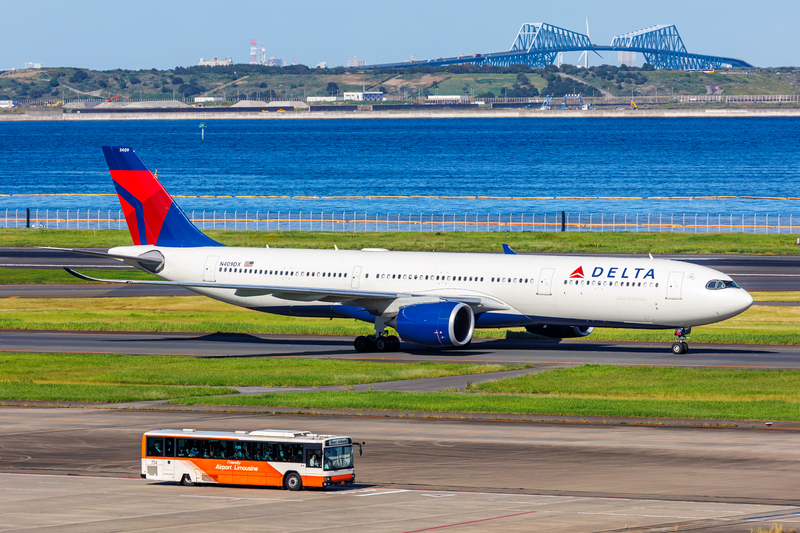
Delta Air Lines has added or restored 23 international routes in the broader run-up to the second quarter of 2026, giving the carrier one of the most dynamic cross-border network updates among the major U.S. airlines this year.

That headline sounds like straightforward growth. The reality is more nuanced.
Delta is not simply expanding everywhere at once. It is making a series of targeted moves across the Atlantic, Latin America, the Caribbean, Canada, North Africa, and the Pacific, while also trimming other flying elsewhere in the network. That means the airline’s international map is changing meaningfully even if its total international operation in Q2 2026 is only slightly smaller year over year.
Read our stories in your inbox
Two aviation newsletters. Zero fluff.
For aviation readers, that is what makes Delta’s latest network update worth examining. This is less a story about raw growth than about strategic reshaping.
Delta’s International Network Is Still Enormous, Even With Slight Overall Contraction
Delta remains one of the three largest U.S. international operators, with roughly 246 daily international departures scheduled in the second quarter of 2026.
Even after adding or restoring 23 routes, the airline’s overall international schedule is fractionally smaller than a year ago. That may seem counterintuitive, but it reflects how major network carriers actually evolve. They do not just add routes. They constantly rebalance frequencies, trim underperforming markets, and redeploy aircraft where margins and strategic value look strongest.
In Delta’s case, that means the map is getting broader in some places while becoming more disciplined in others.
The Short-Haul Additions Are Focused On Leisure And Feed
A large share of Delta’s new international flying is short-haul and leisure-oriented, particularly from major hubs and focus cities where the airline can combine local demand with strong connecting feed.
Among the added or restored shorter international routes are:
- Atlanta Hartsfield-Jackson International Airport (ATL) to Grenada Maurice Bishop International Airport (GND)
- Atlanta (ATL) to Argyle International Airport (SVD) in St. Vincent
- Atlanta (ATL) to Vancouver International Airport (YVR)
- Austin-Bergstrom International Airport (AUS) to Cancún International Airport (CUN)
- Austin (AUS) to Los Cabos International Airport (SJD)
- Boston Logan International Airport (BOS) to Halifax Stanfield International Airport (YHZ)
- Detroit Metropolitan Wayne County Airport (DTW) to Owen Roberts International Airport (GCM) in Grand Cayman
- Detroit (DTW) to Daniel Oduber Quirós International Airport (LIR) in Liberia, Costa Rica
- Indianapolis International Airport (IND) to Cancún (CUN)
- Kansas City International Airport (MCI) to Cancún (CUN)
- Nashville International Airport (BNA) to Cancún (CUN)
- Minneapolis-St. Paul International Airport (MSP) to Lynden Pindling International Airport (NAS) in Nassau
- New York John F. Kennedy International Airport (JFK) to Grand Cayman (GCM)
This list tells you a lot about Delta’s thinking. The airline continues to lean into premium leisure and sun-market demand while also using its domestic network to support cross-border flying from nontraditional gateways. Austin, Indianapolis, Kansas City, and Nashville are not legacy international fortress hubs in the traditional sense. But they are exactly the kind of U.S. points where targeted leisure flying can work if the schedule is disciplined and the local market is strong enough.
Four Of Those Routes Are Completely New To Delta
Not every addition is a simple restart.
Some of the routes are genuinely new to Delta’s network, including Atlanta (ATL) to St. Vincent (SVD), Austin (AUS) to Cancún (CUN), Austin (AUS) to Los Cabos (SJD), and Detroit (DTW) to Liberia (LIR).
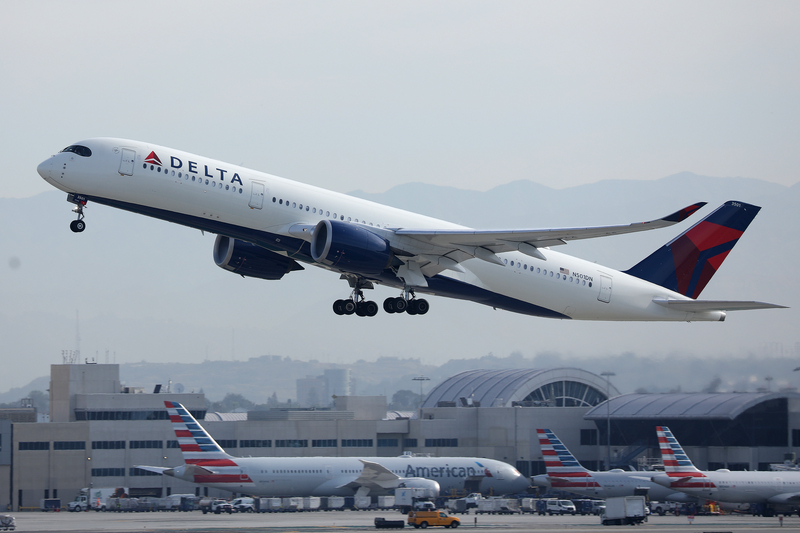
That matters because it shows Delta is still willing to test entirely new city pairs rather than merely reviving pre-pandemic flying. The St. Vincent route is particularly interesting. It is not an obvious high-volume market from Atlanta, which suggests Delta is relying heavily on connecting traffic and broader Caribbean demand rather than just point-to-point volume.
That kind of route can work, but it usually depends on network feed more than local demand.
Vancouver And Halifax Show Delta Still Sees Opportunity In Canada
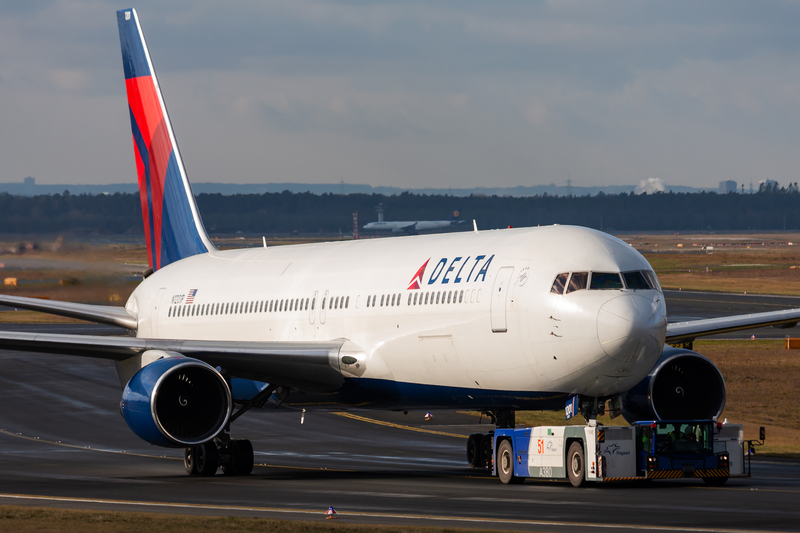
Two of the added short-haul international routes, Atlanta (ATL) to Vancouver (YVR) and Boston (BOS) to Halifax (YHZ), are also notable for different reasons.
Vancouver gives Delta another useful transborder market from a major U.S. hub and adds depth to a city where partnership and competition dynamics are both important. Halifax, meanwhile, is a much more niche route and one that fits Delta’s typical Boston strategy: targeted, high-value additions that strengthen BOS as a transatlantic and northeastern gateway rather than simply a domestic station.
Boston (BOS) to Halifax (YHZ) may not be a headline route on volume alone, but it is precisely the kind of market that can add strategic texture to a focus city.
The Long-Haul Story Is Where Delta Looks Most Ambitious
The long-haul side of Delta’s network change is where the airline looks more assertive.
Two intercontinental routes have already launched:
- Atlanta (ATL) to Marrakech Menara Airport (RAK)
- Los Angeles International Airport (LAX) to Melbourne Airport (MEL)
Both are important, but in different ways.
Marrakech marks Delta’s return to North Africa and gives Atlanta a nonstop link to Morocco that it had never had before. Melbourne, meanwhile, strengthens Delta’s South Pacific position from Los Angeles and adds another ultra-long-haul mission to a market where the airline is clearly trying to remain relevant against intense competition.
These are not routine additions. They are statement routes.
Marrakech Is Strategically More Interesting Than It First Appears
Atlanta (ATL) to Marrakech (RAK) is easy to describe as a leisure route, but that undersells it.
For Delta, Marrakech is part market-opening exercise and part brand statement. It extends the airline’s African footprint, gives the carrier access to one of the fastest-growing leisure destinations on the continent, and restores a North Africa presence absent from the network for years.
The route also reveals Delta’s willingness to tolerate some early uncertainty if the market has strategic value. Morocco is a destination with global appeal, but an Atlanta nonstop still depends heavily on connecting traffic and careful seasonality management. The later switch from the Boeing 767-400ER to the smaller Boeing 767-300ER on the returning winter operation shows Delta is already fine-tuning the route to better match demand.
That is exactly how a sophisticated long-haul network carrier should behave.
Melbourne Strengthens Delta’s Pacific Identity From Los Angeles
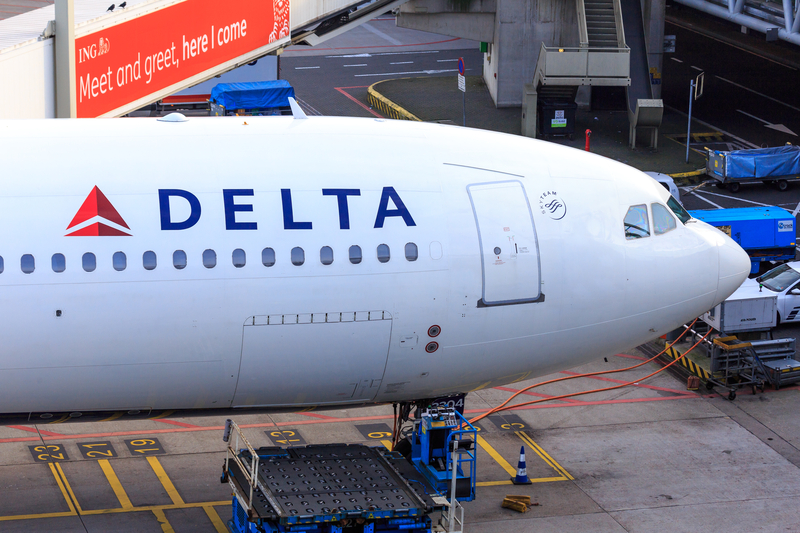
Los Angeles (LAX) to Melbourne (MEL) is different in character but no less important.
This route reinforces Delta’s ambition to be more than a transatlantic carrier with a Pacific side business. Melbourne is one of the most significant long-haul markets Delta could add from LAX, and it gives the airline a stronger foothold in Australia while broadening choice beyond Sydney and Brisbane patterns that dominate many U.S. network discussions.
It also plays to Delta’s strength at LAX, where the airline continues to invest in a premium-heavy, long-haul-capable operation rather than conceding the airport to rivals.
Eight More Long-Haul Routes Arrive In May And June
The biggest burst of long-haul network growth is still to come, with eight more intercontinental routes scheduled to launch in May and June.
Those are:
- Boston (BOS) to Madrid-Barajas Airport (MAD)
- Boston (BOS) to Nice Côte d’Azur Airport (NCE)
- New York-JFK (JFK) to Olbia Costa Smeralda Airport (OLB)
- New York-JFK (JFK) to Francisco Sá Carneiro Airport (OPO) in Porto
- Seattle-Tacoma International Airport (SEA) to Josep Tarradellas Barcelona-El Prat Airport (BCN)
- Seattle (SEA) to Rome Fiumicino Airport (FCO)
- New York-JFK (JFK) to Malta International Airport (MLA)
- Los Angeles (LAX) to Hong Kong International Airport (HKG)
This list says a great deal about Delta’s current priorities. The airline is deepening Europe from Boston and Seattle, selectively expanding the Mediterranean from JFK, and reasserting a Pacific presence from Los Angeles.
That is not random expansion. It is hub-specific strategy.
Boston And Seattle Are Clearly Winning Inside Delta’s Long-Haul Network
Two cities stand out in particular: Boston Logan International Airport (BOS) and Seattle-Tacoma International Airport (SEA).
Boston gains Madrid (MAD) and Nice (NCE), reinforcing BOS as a serious transatlantic gateway rather than merely a secondary coastal focus city. Delta has steadily built Boston into something more substantial, and the new routes fit that trajectory. Madrid brings year-round strategic relevance, while Nice adds a more premium seasonal Mediterranean dimension.
Seattle, meanwhile, adds Barcelona (BCN) and Rome Fiumicino (FCO), which is a strong statement about Delta’s continued confidence in SEA as more than just a transpacific platform. These are high-visibility European markets that help diversify Seattle’s long-haul role and make the airport more valuable inside Delta’s broader network.
JFK’s Mediterranean Push Is Especially Telling
New York-JFK (JFK) to Olbia (OLB), Porto (OPO), and Malta (MLA) may be the most revealing set of additions in the entire list.
These are not generic “big city” routes. They are selective, high-character markets that fit Delta’s premium leisure and seasonal transatlantic strategy. Olbia is especially notable because it gives Sardinia a first-ever scheduled North America link, while Malta becomes another differentiated Mediterranean destination from JFK.
This is a good example of Delta’s current Atlantic philosophy. Rather than simply adding more frequencies on saturated trunk routes, the airline is looking for places where a nonstop can stand out commercially and where premium leisure demand can support a relatively focused schedule.

Hong Kong Is The Big Asia Signal
Los Angeles (LAX) to Hong Kong (HKG) is perhaps the most strategically significant route among the upcoming launches.
Hong Kong is a major global business and connecting market, and restoring or expanding presence there carries importance beyond simple passenger counts. For Delta, the route helps rebuild long-haul relevance from LAX and reasserts the airline in one of Asia’s most globally connected cities.
This is not an easy market, and it will face serious competition. But strategically, HKG matters. It says Delta still wants a meaningful role in premium Asia-Pacific flying from Los Angeles.
Delta’s 23-Route Story Is Really About Selective Confidence
The clearest lesson from Delta’s international route changes is that the airline is not in a broad-based growth spree. It is choosing its spots.
Short-haul additions focus on strong leisure markets and underexploited feed opportunities. Long-haul additions are concentrated in specific gateways where Delta sees strategic value: Boston, Seattle, JFK, Atlanta, and Los Angeles. Some routes are entirely new to the airline. Others are returns with a more disciplined structure than in prior years.
That is why the overall international schedule can be slightly smaller while the route map still feels more adventurous. Delta is not growing for its own sake. It is reallocating toward markets it appears to view as more relevant, more premium, or more resilient.
Bottom Line
Delta’s 23 new and returning international routes in 2026 do not tell the story of an airline chasing size at all costs. They tell the story of a carrier making very deliberate choices.
The short-haul additions strengthen Delta’s leisure and feed proposition from key U.S. cities, while the long-haul launches from Boston Logan Airport (BOS), New York-JFK (JFK), Seattle-Tacoma (SEA), Atlanta (ATL), and Los Angeles (LAX) show where the airline believes it can win strategically. Routes such as Atlanta-Marrakech (RAK), JFK-Malta (MLA), Seattle-Rome (FCO), and LAX-Hong Kong (HKG) are not accidental additions. They reflect a network strategy that is more curated than expansive.
Delta’s international operation may be fractionally smaller in pure Q2 departure terms, but its map is getting sharper, more differentiated, and in some places more ambitious.