Pakistan International Airlines will restore nonstop service between Islamabad (ISB) and Birmingham (BHX) on Dec. 1, returning one of its principal UK routes to the schedule after an absence of more than six years.
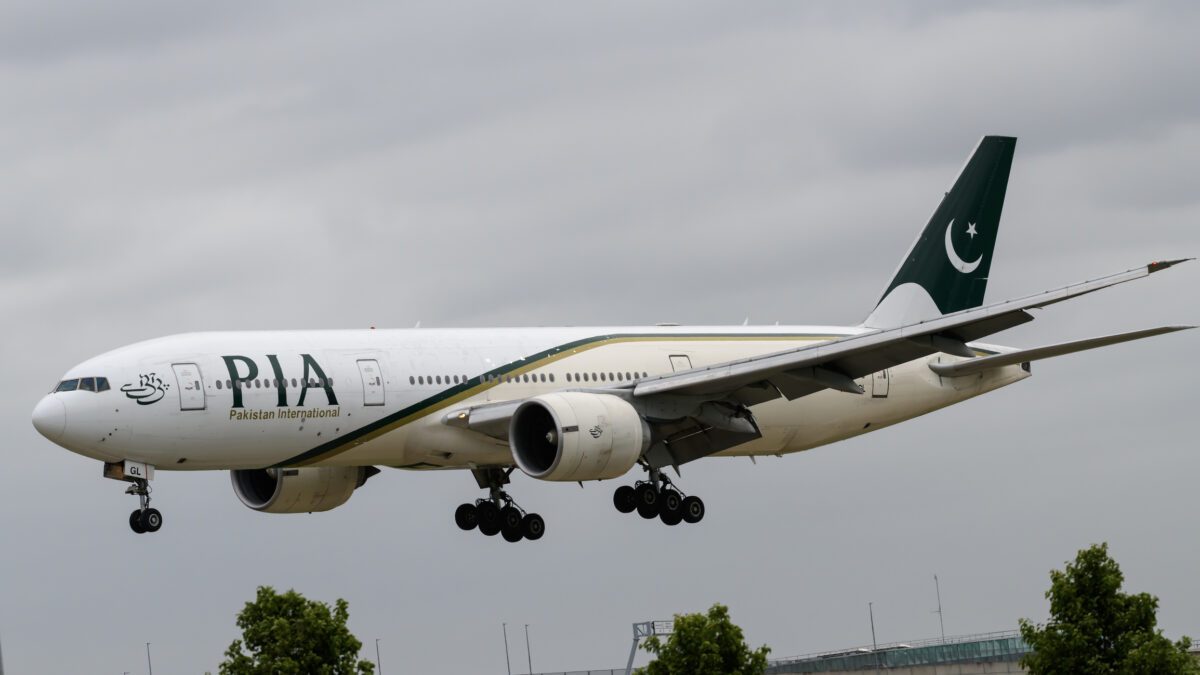
The airline will operate three round trips per week with Boeing 777 aircraft. According to the schedule published by Birmingham Airport, flights from BHX will depart on Tuesdays, Thursdays and Saturdays.
Flight PK791 will leave Islamabad at 12:15 p.m. and arrive in Birmingham at 4 p.m. local time. The return, PK792, is scheduled to depart BHX at 6:30 p.m. and reach Islamabad at 7:15 a.m. the following morning.
Read our stories in your inbox
Two aviation newsletters. Zero fluff.
With Pakistan five hours ahead of the UK during the winter, the timetable produces an 8-hour, 45-minute westbound sector and a 7-hour, 45-minute eastbound flight. The Birmingham departure also provides a practical overnight schedule for travelers continuing beyond Islamabad after arrival.

Large Existing Market Has Relied on Connections
The route is aimed primarily at the visiting-friends-and-relatives market between Pakistan and the West Midlands. Birmingham Airport said more than 178,000 two-way passengers traveled between Birmingham and Pakistan in 2025, despite the lack of a nonstop flight.
Those passengers have been using connecting itineraries or traveling overland to other UK gateways. The airport estimates that more than 320,000 people of Pakistani heritage live in the West Midlands, giving PIA a substantial local catchment without relying heavily on connecting traffic at the Birmingham end.
BHX said the Islamabad service will be the Midlands’ only nonstop link with Pakistan. That distinction is commercially important: a direct operation removes the connection risk, longer journey times and additional baggage handling associated with one-stop itineraries through European, Turkish or Gulf hubs.
The three-day pattern also gives the route a useful baseline frequency without immediately committing PIA to daily capacity. Tuesday, Thursday and Saturday departures distribute the service across the week and keep the longest interval between flights to three days.
For Birmingham, the restoration recaptures a long-haul market that continued to generate significant traffic while PIA was absent. It also adds widebody belly capacity for cargo moving between central England and Pakistan, a component that has already proved material on the airline’s restored Manchester operation.
Birmingham Becomes the Next Step in PIA’s UK Rebuild
PIA’s UK network was interrupted in 2020 after the UK Civil Aviation Authority suspended the airline’s permission to operate its own aircraft to the country. The regulator said at the time that the June 30, 2020, action followed the withdrawal of PIA’s European third-country operator authorization.
The regulatory path reopened on July 16, 2025, when the UK government removed Pakistan from its Air Safety List. The change allowed Pakistani airlines to pursue the separate operator approvals and route permits required to resume commercial service.
PIA subsequently returned to Manchester in October 2025, marking the first stage of the carrier’s wider restoration of UK and European flying. Its initial twice-weekly Manchester-Islamabad schedule has since grown to four flights per week, while a weekly Manchester-Lahore service was added in July 2026.
The response in northern England provides a useful demand indicator for Birmingham. Manchester Airport reported in October that PIA had carried 104,845 passengers during its first year back, alongside 1,541 metric tons of cargo. The airline doubled Islamabad frequency during that period.
PIA also rebuilt its London presence in March 2026. Heathrow’s published launch schedule included three weekly flights to Islamabad and one to Lahore, operated from Terminal 4. Birmingham therefore broadens PIA’s UK coverage beyond the London and northern England markets rather than simply adding more capacity at an existing gateway.
Boeing 777 Provides Capacity and Fleet Flexibility
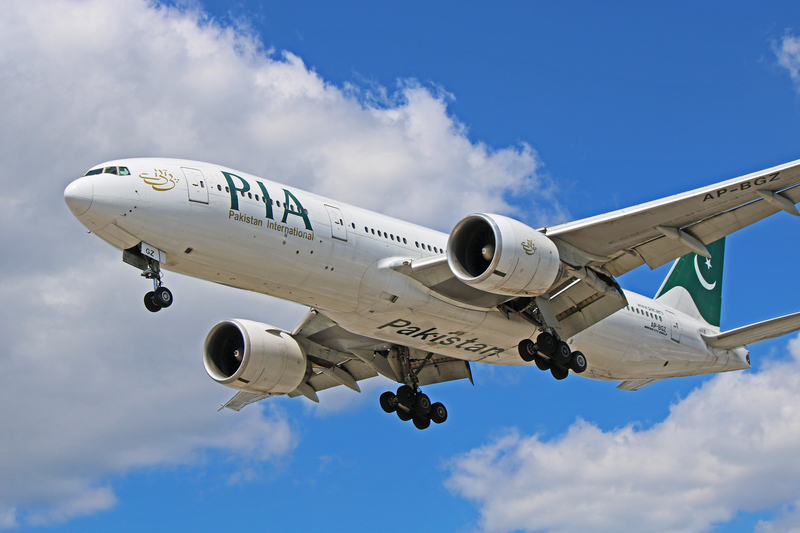
PIA will use the Boeing 777 on the approximately 3,810-mile route. The airline’s published fleet includes the Boeing 777-200ER, Boeing 777-200LR and Boeing 777-300ER, giving it several capacity options for the Birmingham schedule.
PIA’s operational documents show that its Boeing 777-200ER aircraft can be arranged with 307 or 329 passenger seats, while the Boeing 777-200LR can carry 310 passengers in its standard two-class layout. The larger Boeing 777-300ER fleet offers still more capacity, with configurations extending to 393 or 442 seats.
That range allows PIA to match aircraft to seasonal demand, although each subfleet has different capacity and premium-cabin characteristics. The twin-aisle type is also well suited to a market where checked baggage and belly freight can be as commercially important as passenger volume.
At three weekly round trips, Birmingham represents a meaningful but measured deployment of the 777 fleet. The schedule establishes a year-round presence while preserving the option to add frequencies or use the larger 777-300ER during peak travel periods.
Bottom Line
Birmingham gives PIA access to a large market that has already demonstrated its willingness to travel without a nonstop option. The 178,000 passengers who flew indirectly between the airport and Pakistan in 2025 provide a stronger foundation than an entirely new long-haul route would normally have. PIA’s immediate task is to convert that leakage into local bookings without weakening its established Manchester and Heathrow services.
The wider significance is that PIA is rebuilding its UK network around multiple regional catchments rather than concentrating all service at London. Manchester’s first-year performance suggests that restored nonstop flying can generate both strong passenger demand and useful cargo revenue. Birmingham will test whether the same model can be repeated in the Midlands with three weekly widebody rotations.
The first indicators to watch will be aircraft assignment, peak-period load factors and whether PIA increases frequency after the initial operating season. If Birmingham develops along the same lines as Manchester, the airline could eventually have a case for additional weekly service or a second Pakistani destination. For now, the Dec. 1 return restores a strategically important spoke and places PIA back in a market that continued to function throughout its absence.