Riyadh Air has reaffirmed its plan to serve more than 100 international destinations by 2030, with a growing widebody order book intended to support rapid expansion from Riyadh (RUH).
The Public Investment Fund-owned carrier is still near the beginning of that buildout. Its published route map covers 14 destinations outside Riyadh, following the start of three-times-weekly flights to Manchester (MAN) on September 17. Manchester became Riyadh Air’s second point in the United Kingdom after London Heathrow (LHR).
Reaching the stated goal will require the airline to add another 86 destinations in a little over four years, an average of roughly 20 annually. Riyadh Air is preparing for that pace with three aircraft families spanning regional services, long-haul routes and higher-volume intercontinental markets.
Read our stories in your inbox
Two aviation newsletters. Zero fluff.
Network Growth Shifts Toward Asia
Riyadh Air’s recent additions show how the airline is beginning to assemble connecting flows through RUH rather than concentrating solely on high-profile European routes.
Bangkok Suvarnabhumi (BKK) joined the network on September 3, followed by Manila (MNL) on September 9. The carrier’s current schedule lists Bangkok as a daily overnight departure from Riyadh, while Manila also operates daily.
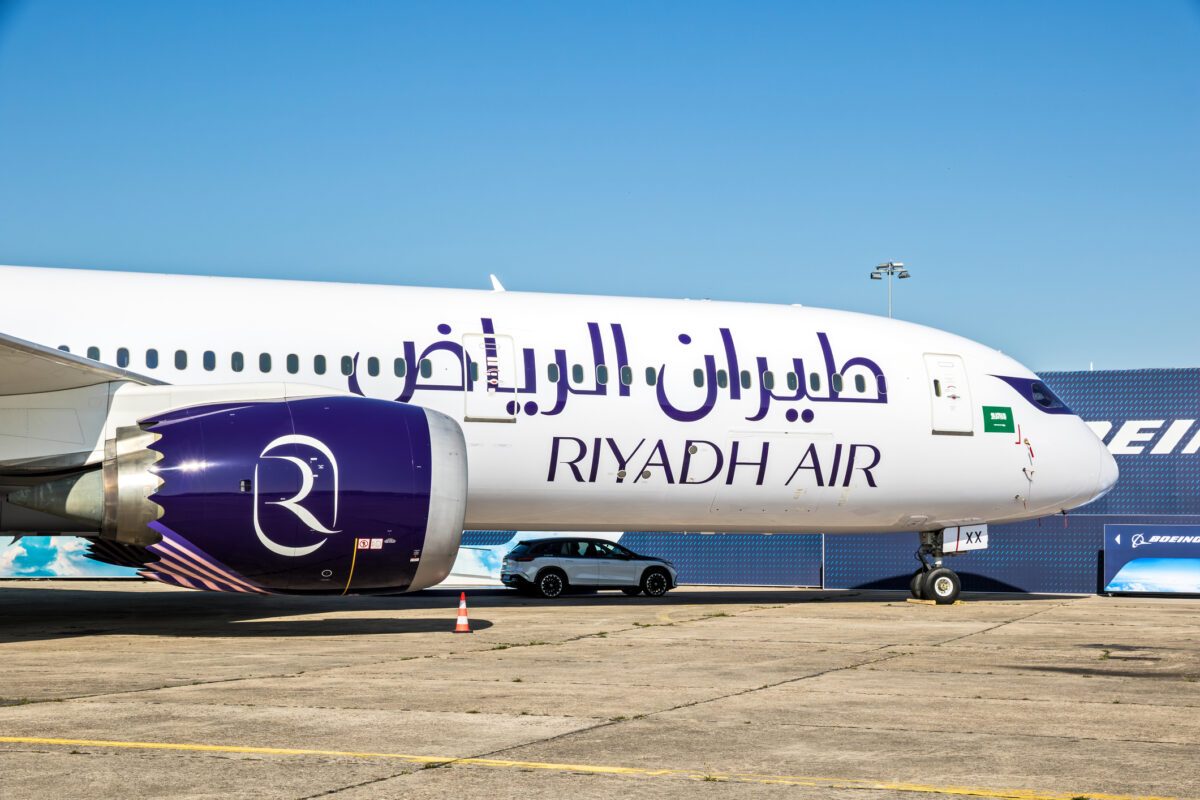
The carrier entered Pakistan in August. According to Riyadh Air’s launch schedule, Islamabad (ISB) receives daily service split between two departure times, while Lahore (LHE) operates three times weekly. All four of the recent Asian routes use Boeing 787-9 aircraft.
The mix is significant. Manila, Islamabad and Lahore offer substantial visiting-friends-and-relatives and labor traffic, while Bangkok combines Saudi outbound demand, inbound tourism and connecting opportunities. Those markets provide traffic beyond the corporate and premium segments associated with Riyadh Air’s initial positioning.
Manchester adds another connecting spoke at the western end of the network. The three weekly flights leave RUH at 1:30 a.m. on Tuesdays, Thursdays and Saturdays, arriving at MAN at 6:40 a.m. The return departure at 8:40 a.m. reaches Riyadh at 5:20 p.m., providing an evening connection window into parts of the airline’s Asian network.
787-10 Adds Capacity to the Dreamliner Fleet
The central element of Riyadh Air’s fleet plan remains the Boeing 787. At the Farnborough International Airshow in July, the airline committed to take 28 additional Dreamliners by exercising options attached to its original 2023 agreement.
The package comprises eight Boeing 787-9s and 20 Boeing 787-10s. Boeing said 11 aircraft had previously appeared in its order book under an unidentified customer. Once the other 17 are finalized, Riyadh Air’s firm Dreamliner total will rise to 67.
Introducing the Boeing 787-10 gives the airline a higher-capacity aircraft without adding a separate flight deck or maintenance platform. Boeing said the -10 will accommodate about 50 more passengers than Riyadh Air’s Boeing 787-9 configuration. That makes it better suited to dense trunk routes where additional seats and lower unit costs matter more than the -9’s maximum range.
The manufacturer lists the Boeing 787-9 with capacity for 250 to 325 passengers in a typical two-class layout and range of up to 8,300 nautical miles. The longer Boeing 787-10 typically carries 300 to 375 passengers and has a published range of up to 7,500 nautical miles.
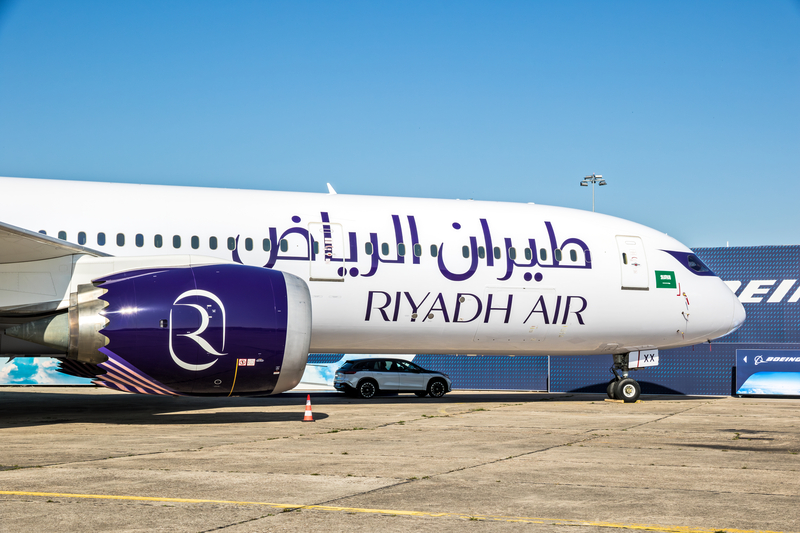
From Riyadh, that still gives the -10 ample capability for much of Europe, Africa and Asia, while the -9 can cover thinner or more distant sectors. Shared cockpit systems, training and maintenance procedures should also allow Riyadh Air to move crews and capacity between the two variants more easily than it could with unrelated aircraft types.
At the time of the July agreement, Riyadh Air had received six Boeing 787-9s. The aircraft operate with Business Elite, Business, Premium Economy and Economy cabins, providing a common onboard product as the airline enters markets with markedly different traffic profiles.
A350-1000s Cover the Upper End of the Network
Riyadh Air separately firmed six more Airbus A350-1000s at Farnborough, raising its firm commitment for the type from 25 to 31 aircraft. The original agreement included purchase rights that could take the fleet to 50.
The Airbus A350-1000 order supplies another capacity and range step above the Dreamliners. Airbus cites a design range of up to 9,700 nautical miles for the aircraft in its announcement, while the type’s larger cabin and Rolls-Royce Trent XWB-97 engines make it suitable for high-volume long-haul services and missions where payload capability is central.
The A350-1000 will also make Riyadh Air the first Saudi operator of the variant. Its role is likely to differ from that of the Boeing 787-10: both bring additional seats, but the Airbus offers greater long-range capability for the airline’s most demanding intercontinental routes.
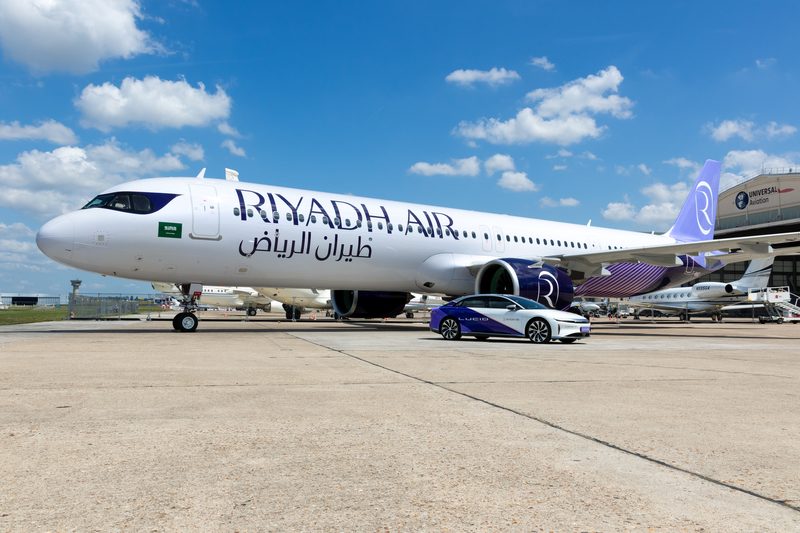
Below the widebodies, Riyadh Air has ordered 60 Airbus A321neo aircraft. That narrowbody fleet will be important if the carrier is to build frequency across the Middle East and nearby international markets without deploying widebody capacity on every route. Riyadh Air now describes its combined portfolio of firm orders and purchase rights as a planned fleet of up to 182 aircraft.
A Target Tied to Saudi Aviation Policy
The 100-destination objective is part of a wider government-backed aviation program rather than a stand-alone airline target. Saudi Arabia’s aviation strategy calls for the country to handle 330 million passengers annually, connect with more than 250 global destinations and process 4.5 million metric tons of air cargo by 2030.
Those goals, set out in the General Authority of Civil Aviation’s state of aviation report, require more capacity from Saudi airlines as well as airport investment and additional bilateral traffic rights.
When it created Riyadh Air in 2023, PIF said the carrier was expected to contribute $20 billion to non-oil economic growth and support more than 200,000 direct and indirect jobs. The fund positioned the airline as a tool for increasing tourism, cargo capacity and international passenger traffic while developing Riyadh as a connecting gateway between Asia, Africa and Europe.
Bottom Line
Riyadh Air’s aircraft commitments now look large enough to support a 100-destination network, but the decisive issue is delivery timing. The carrier must move from six operational Dreamliners to a substantially larger fleet while recruiting crews, opening overseas stations and adding enough schedule depth at RUH to produce viable connections. A broad map with low frequencies will not deliver the same network effect as coordinated banks with daily or multiple-daily service.
The choice of two Dreamliner variants, the Airbus A350-1000 and the Airbus A321neo gives Riyadh Air useful capacity steps. The Boeing 787-9 can develop new long-haul markets, the Boeing 787-10 can add density once demand matures, and the A350-1000 can cover the largest or most distant missions. The A321neo should do much of the work required to feed those widebodies without burdening regional routes with excess capacity.
The next measure of progress will be less about another statement of the 2030 goal and more about the speed and structure of route launches. Manchester and the recent Asian additions show the beginnings of a connecting network. Riyadh Air now has to repeat that expansion at scale while maintaining fleet availability, schedule reliability and disciplined capacity deployment.
Keep reading FlyMag
Get the Daily Brief in the morning or the Route Watch weekly recap on Fridays. Or both.