LOT Polish Airlines has restored scheduled flights between Warsaw Chopin (WAW) and Bangkok Suvarnabhumi (BKK), ending a break of more than 26 years on the city pair.

The inaugural service departed Warsaw on October 7, 2026, reopening a route whose previous scheduled incarnation ended in March 2000. Bangkok becomes the latest long-haul Asian destination in LOT’s network and adds a Southeast Asian market to a portfolio centered on Northeast Asia and India.
LOT estimates a flight time of approximately 10 hours and 20 minutes from Warsaw to Bangkok. The westbound return is scheduled for about 11 hours and 15 minutes.
Read our stories in your inbox
Two aviation newsletters. Zero fluff.
Frequency Builds Through the Winter Schedule
LOT is introducing the service in stages rather than moving immediately to its full winter pattern. Between October 7 and October 25, LO65 leaves WAW at 3:45 p.m. on Mondays, Wednesdays and Saturdays. LO66 departs BKK at 9:05 a.m. on Tuesdays, Thursdays and Sundays.
The transition to the northern winter season begins October 26. During the first week, through November 1, LOT plans five Bangkok-bound flights and four Warsaw-bound flights as the aircraft rotations move into their new pattern.
From November 2, LO65 will operate six times weekly, with Friday the only day without a departure. The Warsaw departure moves one hour earlier to 2:45 p.m. LO66 will leave Bangkok at 9:05 a.m. every day except Saturday.
The increase to six weekly flights puts Bangkok close to a daily operation during Thailand’s principal winter demand period. It also gives LOT more connecting options over WAW than a conventional three- or four-weekly leisure schedule, although the absence of one weekly rotation still creates a less uniform timetable.
Capacity will fall for the 2027 summer season. LOT has scheduled three weekly flights between March 28 and October 28, reflecting the route’s strong seasonal exposure while retaining a year-round presence. The carrier’s booking page markets Warsaw–Bangkok as a year-round service.
The 787-8 Returns LOT to Thailand
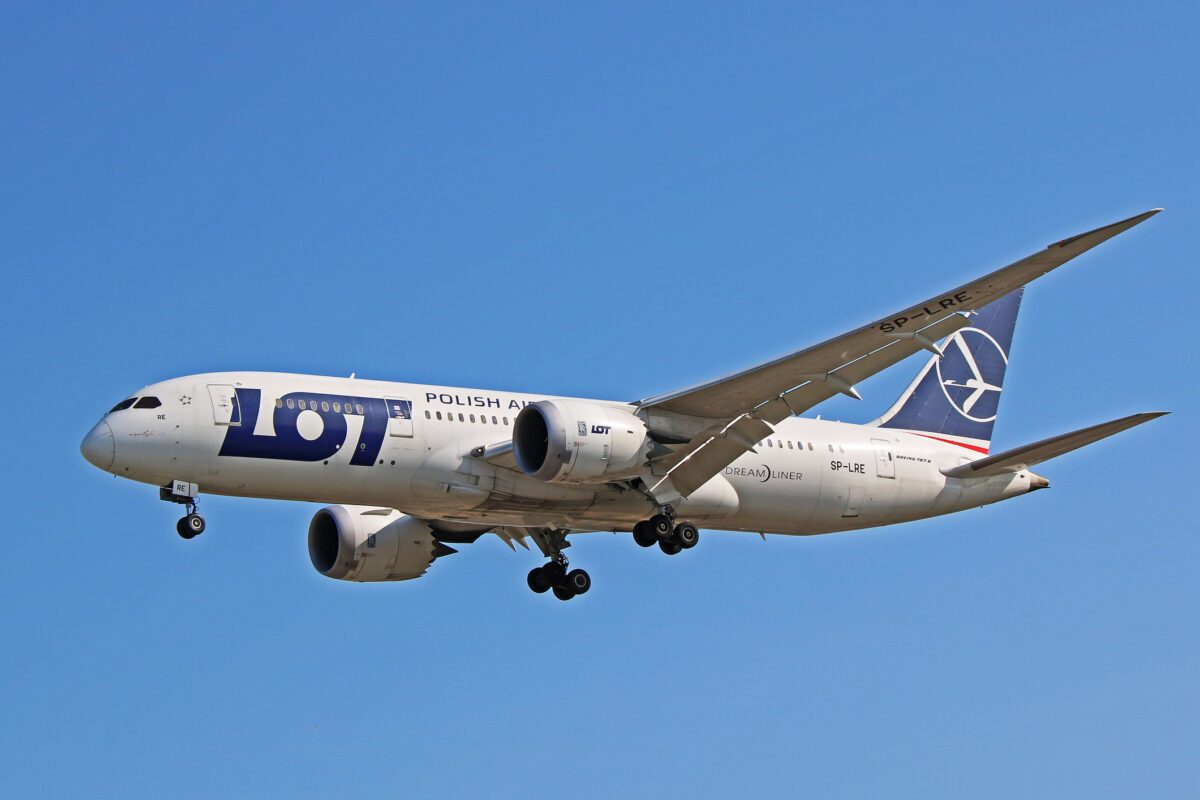
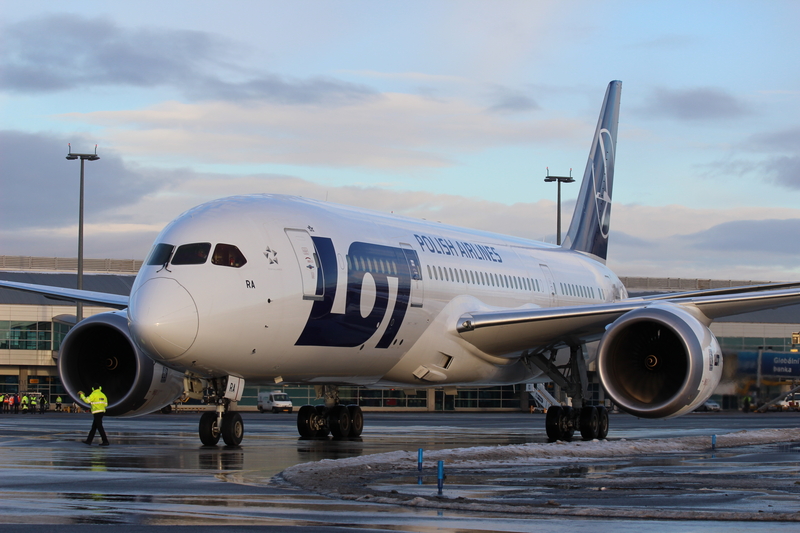
LOT is operating the route with Boeing 787 Dreamliners. Its fleet information specifically lists Bangkok among the destinations served by the Boeing 787-8 Dreamliner, which carries 252 passengers in the airline’s configuration.
The cabin has 18 Business Class seats, 21 Premium Economy seats and 213 Economy Class seats. That layout gives LOT a relatively large economy cabin for Thailand’s leisure-heavy traffic while retaining premium cabins for business demand and connecting passengers from across Central and Eastern Europe.
LOT quotes a range of 13,620 kilometers for the 787-8, leaving ample capability for the WAW–BKK sector. The twinjet’s range and economics allow LOT to operate the route nonstop without the intermediate stops that formed part of its earliest Bangkok services.
The Bangkok launch also comes during an expansion of LOT’s widebody resources. In its June 2026 financial update, the airline said it expected to receive two additional Boeing 787-8s during 2026. Those aircraft are intended to support further long-haul growth as LOT builds toward the fleet and network targets in its 2024–2028 plan.
A Route With Roots in the Il-62 Era
LOT dates its first scheduled Bangkok service to 1977, when it opened a multistop Warsaw–Dubai–Mumbai–Bangkok operation using the Ilyushin Il-62. The arrival of Boeing 767s later allowed the airline to serve Thailand nonstop.
The scheduled route was suspended in March 2000. Its return is therefore a restoration of service to Bangkok, but not to the same airport: Suvarnabhumi opened for commercial flights on September 28, 2006, more than six years after LOT withdrew its previous scheduled operation.
The distinction reflects how much the operating environment has changed. The earlier route belonged to an era when LOT’s long-haul network depended first on Soviet-built four-engine aircraft and later on Boeing 767s. The revived service is structured around a two-engine composite widebody, Warsaw’s expanded connecting bank and a much larger regional feed network.
Bangkok Extends LOT’s Asian Network South
Bangkok broadens LOT’s scheduled Asian long-haul operation beyond Tokyo, Seoul and New Delhi. It is also the first of two Southeast Asian additions currently planned: the airline has scheduled a three-weekly Warsaw–Hanoi service from March 31, 2027.
When Hanoi begins, LOT will have five long-haul Asian cities in its network: Bangkok, Hanoi, New Delhi, Seoul and Tokyo. Bangkok will carry the highest planned winter frequency of the two Southeast Asian routes, while Hanoi is set to operate three times weekly throughout the year.
The additions form part of LOT’s broader growth program. Its 2024–2028 strategy calls for nearly 20 new scheduled destinations, a fleet of about 110 aircraft and 16.9 million annual passengers by 2028. Bangkok is significant within that plan because it requires sustained long-haul aircraft time rather than the smaller commitment needed for a European route.
Bottom Line
LOT’s principal opportunity is not limited to Poland–Thailand traffic. A six-weekly winter service can draw from the carrier’s network across Poland, the Baltic states and Central and Eastern Europe, markets where passengers otherwise connect through larger Western European, Middle Eastern or Turkish hubs. The schedule’s commercial test will be whether LOT can fill that connecting role while maintaining sufficient local demand at both ends.
The sharp change from six weekly flights in winter to three in summer shows that LOT is managing the route as a highly seasonal long-haul market. That approach limits off-peak exposure but places more pressure on aircraft utilization and connection quality once frequency is reduced. Performance during the first full winter will determine whether Bangkok can support a more even year-round schedule.
Bangkok and the forthcoming Hanoi service also signal that LOT is prepared to commit scarce Dreamliner capacity to Southeast Asia. What matters next is whether the expected 787-8 additions arrive on schedule and whether the airline keeps the planned six-weekly Bangkok operation intact through the winter peak. If it does, the route will represent more than a historical restoration: it will be a meaningful expansion of Warsaw’s role as an eastbound connecting hub.
Keep reading FlyMag
Get the Daily Brief in the morning or the Route Watch weekly recap on Fridays. Or both.