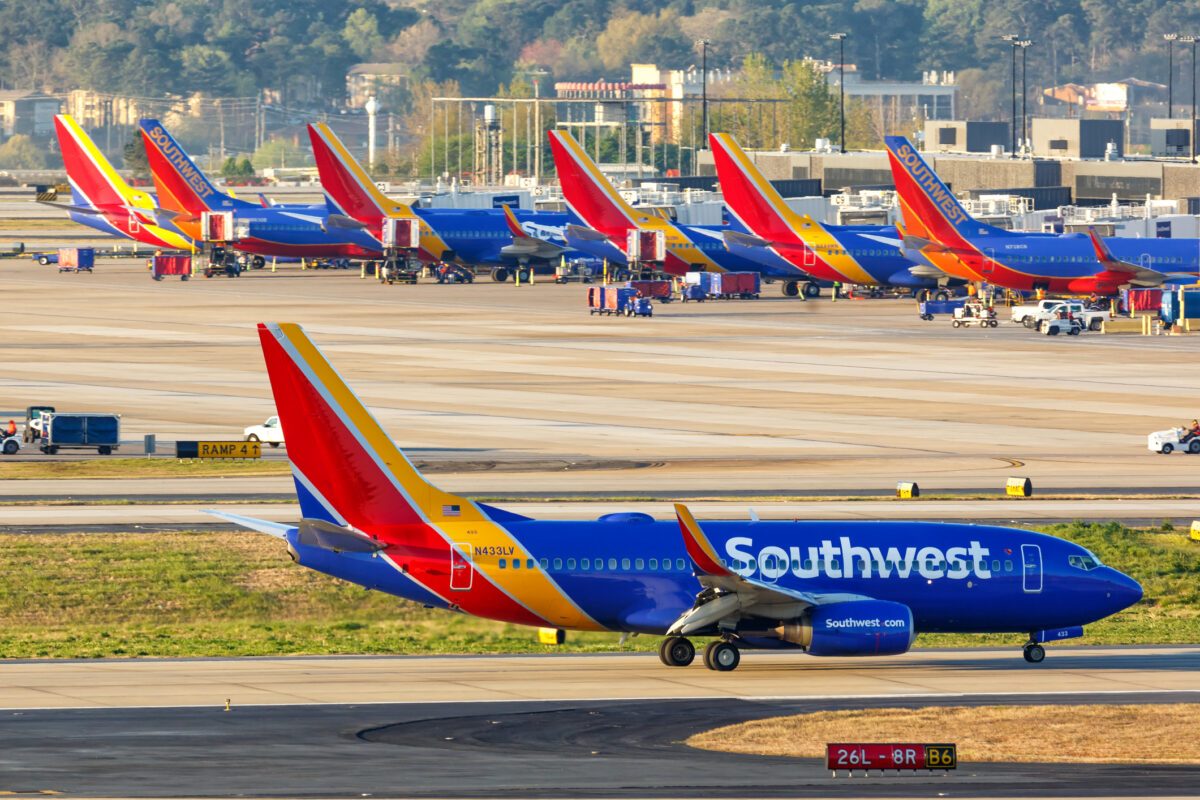
Southwest Airlines has launched a brand campaign built around digital overload, using Rapid Rewards points to turn unread phone notifications and a burnout questionnaire into prompts to book a trip.
The Dallas-based carrier introduced “Enter Airplane Mode” on October 5. The campaign positions travel as a break from crowded calendars, work messages and the expectation of being continuously available, with advertising supported by two loyalty promotions carrying a combined pool of 187 million points.
It is a notable change of emphasis for Southwest. After spending much of the past two years explaining assigned seats, new fare products, bag charges and a redesigned boarding process, the airline is returning to a broader emotional proposition: the reason to fly rather than the mechanics of the ticket.
Read our stories in your inbox
Two aviation newsletters. Zero fluff.
Notifications Become Rapid Rewards Points
The campaign’s principal customer activation is “Notification Vacation.” According to Southwest’s campaign announcement, Rapid Rewards members can upload a screenshot of the notifications on their phone’s home screen and receive between 1,000 and 10,000 points after verification.
Southwest allocated as many as 150 million points to that promotion. Participation is limited to one entry per Rapid Rewards member and is open to adults in the 50 states and Washington, D.C. The points remain subject to daily availability, meaning the pool can be depleted before every eligible member receives an award.
A separate Burnout Quiz provides 500 points for an eligible, verified completion. Southwest has set aside another 37 million points for that offer, also while supplies last. Members can participate in both promotions, but the airline’s references to more than 185 million points describe the aggregate campaign pool rather than an amount available to any individual.
The airline based the campaign on an online survey it sponsored in August 2026. Of more than 2,000 U.S. adults between 18 and 64, 76% said they were experiencing burnout, while 68% viewed a trip as one way to regain control of their time. Those findings provide the advertising premise rather than an independent measure of the broader population’s health.
The television and digital spots were directed by Will Speck and Josh Gordon and voiced by actor Adam Scott. GSD&M created the campaign, with Later handling creator work and Spark Foundry involved in media. The creative uses meetings, traffic, packed schedules and other routine pressures to present a flight booking as the point at which a traveler decides to disconnect.
A Loyalty Campaign as Much as a Brand Campaign
“Enter Airplane Mode” arrived less than six months after Southwest appointed Sabrina Callahan as its first chief digital and marketing officer. The airline said when it announced Callahan’s appointment that the role would combine marketing and digital platforms, linking brand communications more closely with booking, check-in and other customer interactions.
The new campaign follows that structure. Its advertising creates the emotional trigger, while the promotions direct customers into Rapid Rewards and Southwest-controlled digital channels. Rather than distributing points through a conventional flight or credit card bonus, Southwest is awarding them for an interaction that can introduce less frequent customers to the loyalty program.
That matters because Rapid Rewards has become an increasingly important commercial lever. Southwest said in its second-quarter results that the program had grown to nearly 100 million members. New enrollments increased 35% from the same quarter a year earlier, while the airline recorded its highest number of tier qualifiers.
Notification Vacation therefore gives Southwest more than a short-term publicity device. It can produce loyalty registrations, authenticated member activity and direct engagement at a time when the airline is placing more commercial weight on Rapid Rewards, its Chase credit card relationship and personalized digital sales.
A New Message for a Changed Southwest
The campaign is being introduced after the most extensive product revision in Southwest’s history. Assigned and extra-legroom seating began on January 27, 2026, replacing the open-seating system that had defined the airline for more than five decades. Boarding priority is now determined by seat location, fare, loyalty status and credit card benefits.
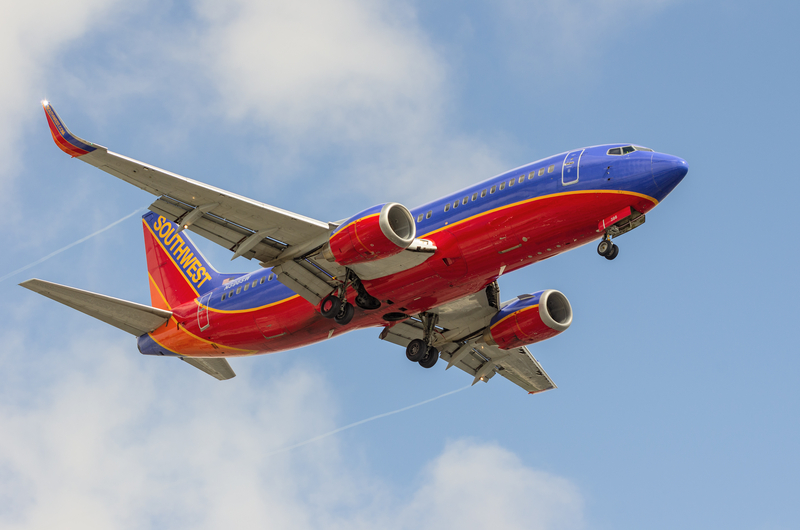
Southwest also introduced bag charges for most customers in 2025, renamed its entry-level product Basic and revised the treatment of flight credits. Its higher fares, eligible loyalty members and certain cardholders retain checked-bag benefits. The airline continues to emphasize that it does not charge conventional change fees, although fare differences and Basic-fare restrictions can apply.
In its latest annual report, Southwest said the changes were intended to attract customers who previously avoided the airline because they could not reserve a seat. They also created new revenue from seating, fares and ancillary products. “Enter Airplane Mode” moves the public conversation away from those individual changes and toward a more durable travel theme that is not dependent on a particular fare rule.
Airplane Mode Meets a More Connected Boeing 737 Fleet
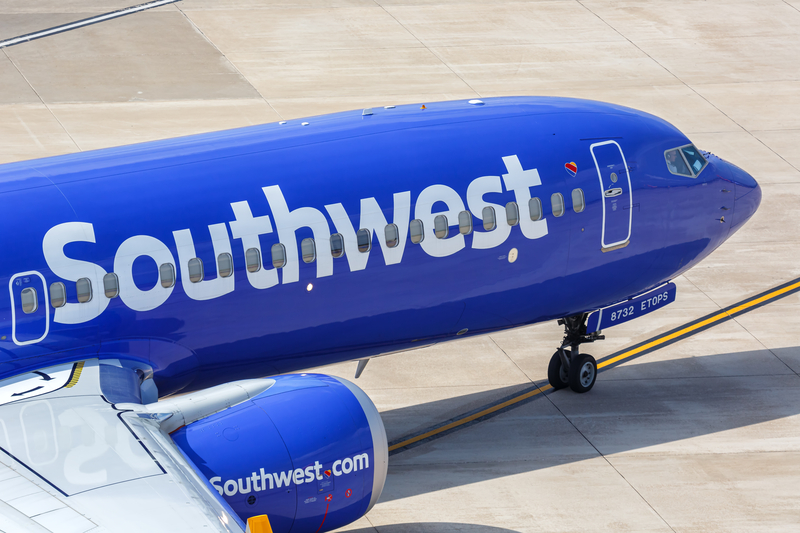
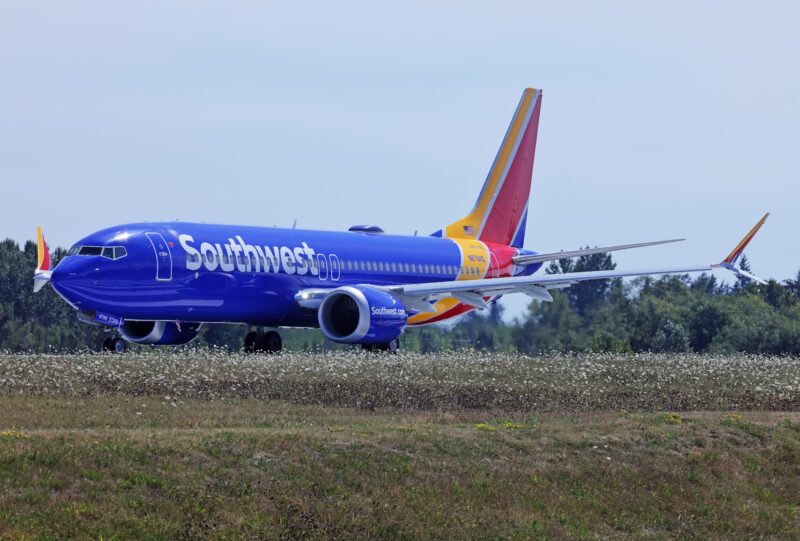
The invitation to disconnect comes as Southwest invests heavily in keeping passengers connected onboard. Free Wi-Fi is available to Rapid Rewards members on equipped aircraft through T-Mobile, and the carrier has begun fitting its Boeing 737 fleet with Starlink.
Southwest planned to have Starlink on more than 300 aircraft by the end of 2026, part of a broader cabin program that includes in-seat power, larger overhead bins, device holders and new Recaro seats. The airline’s Starlink rollout plan explicitly promotes streaming, messaging, gaming and work from takeoff to landing.
That apparent tension gives the campaign a useful second reading. Southwest is not asking passengers to become unreachable once onboard; it is selling the choice to disconnect. The same aircraft can support a work session, live entertainment or a deliberate break from both.
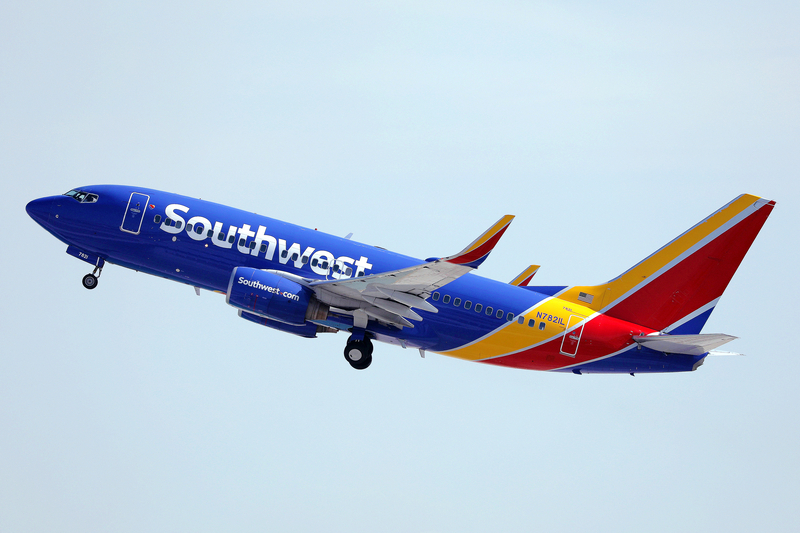
The carrier ended the second quarter with 803 aircraft after receiving 13 Boeing 737-8s and retiring 10 older jets during the period. Southwest expected 64 737-8 deliveries during 2026 while retiring about 60 aircraft. The newer 737-8 is central to the cabin and connectivity upgrades, while the Boeing 737-700 fleet lost six seats per aircraft to create the new extra-legroom section.
Bottom Line
Southwest is trying to establish an identity that can survive the loss of some of its best-known product distinctions. Open seating and universally free checked bags provided simple, concrete reasons to choose the airline. Assigned seats, segmented benefits and bag charges make Southwest easier to compare with other large U.S. carriers, leaving the brand to carry more of the differentiation.
“Enter Airplane Mode” addresses that problem by shifting the promise from airline policy to control over time. The points promotions also make the campaign measurable: Southwest can track participation, new Rapid Rewards members and subsequent booking behavior instead of relying only on advertising reach. What matters next is whether the burnout theme continues after the initial points pools are exhausted and whether Southwest can connect it to a customer experience that feels meaningfully easier than its competitors’.
The connectivity investment does not undermine the message as much as it broadens it. A modern narrowbody cabin is expected to support work and entertainment, but the campaign argues that passengers should decide when to use those capabilities. For Southwest, the larger task is proving that its remodeled Boeing 737 product can offer that choice without making the airline’s once-distinctive brand feel interchangeable.
Keep reading FlyMag
Get the Daily Brief in the morning or the Route Watch weekly recap on Fridays. Or both.