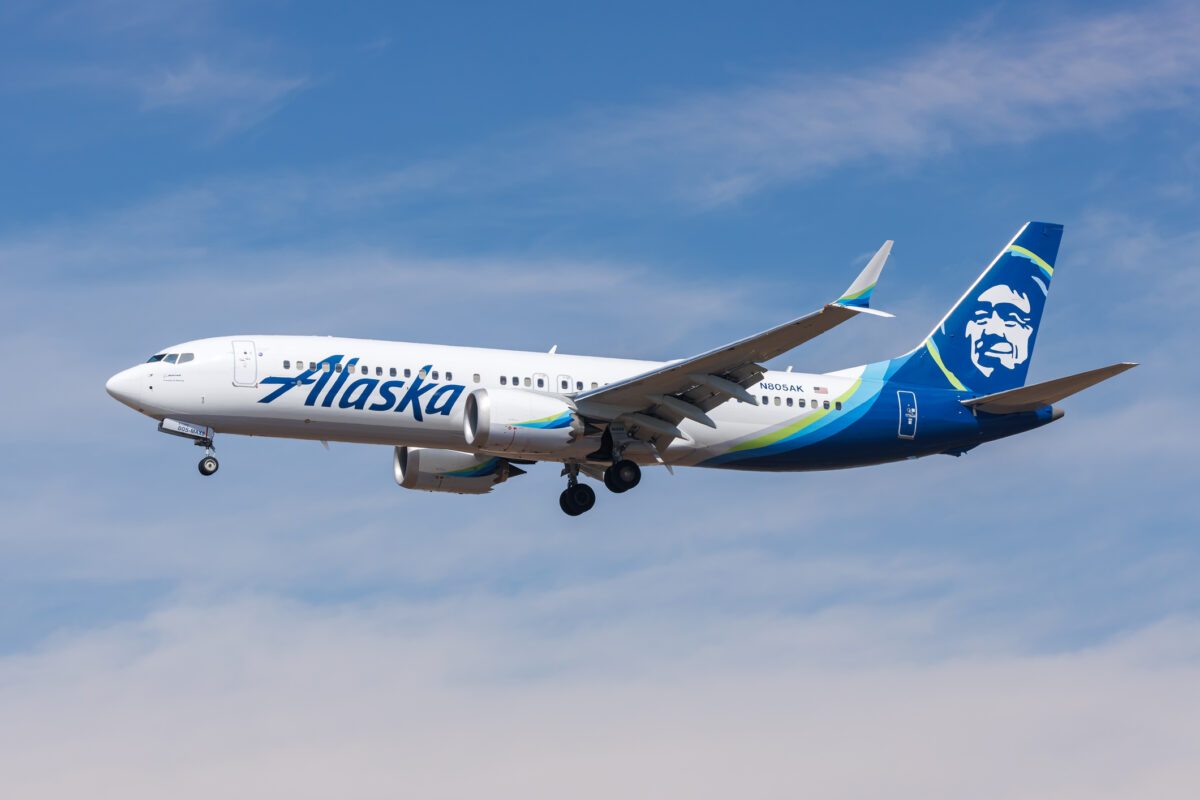
Alaska Airlines has completed its first season of nonstop service between Seattle-Tacoma (SEA) and Reykjavik-Keflavik (KEF), a transatlantic mission that placed the Boeing 737 MAX 8 at the edge of the carrier’s scheduled network.
The airline began daily eastbound flights on May 28, 2026, with the first return leaving Iceland the following day. The Port of Seattle confirmed the inaugural departure and the use of a Boeing 737 MAX 8, independently establishing the launch. Alaska’s season ran through September 7 from Seattle and September 8 from Keflavik.
Alaska marketed the service as the longest nonstop Boeing 737 flight operated by a U.S. carrier. The airline said the route covered just over 3,600 miles, or approximately 3,130 nautical miles, linking its Seattle hub with an Icelandair connecting bank at KEF.
Read our stories in your inbox
Two aviation newsletters. Zero fluff.
Flight Times Reached Nearly Eight Hours
Flight AS354 left Seattle at 6:35 p.m. and arrived in Iceland at 9 a.m. the following morning. That produced a scheduled elapsed time of seven hours and 25 minutes.

Edelweiss Pulls Back on Long-Haul Growth as U.S. Cuts and Oman Exit Reset the Network
The westbound AS355 departed Keflavik at 12:45 p.m. and reached Seattle at 1:40 p.m. local time, giving it a scheduled duration of seven hours and 55 minutes. Alaska’s archived AS354 flight information and AS355 flight information show both sectors operating with the 737-8 during the final days of the season.
The difference between the two schedules reflects the more demanding westbound transatlantic sector. At nearly eight hours, the return also took Alaska’s narrowbody onboard product into territory more commonly associated with widebody flying.
Alaska initially announced Seattle-Reykjavik in August 2025, then published the operating dates and daily schedule when sales opened. The carrier offered free Wi-Fi on the route and arranged access to Icelandair’s Saga Lounge at KEF for eligible First Class passengers and higher-tier Atmos Rewards members.
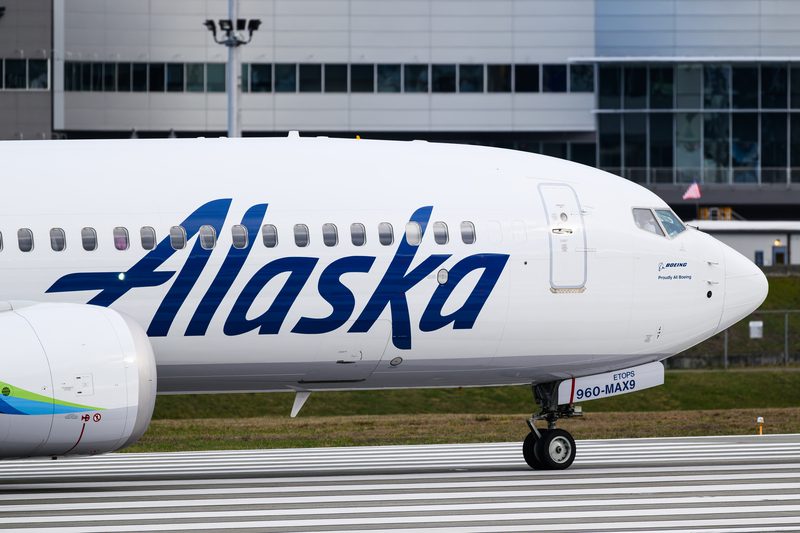
Why Alaska Used the Boeing 737 MAX 8
The 737 MAX 8 is the smaller and longer-range of the two MAX variants currently operating in Alaska’s fleet. Boeing publishes a maximum range of 3,500 nautical miles for the type, compared with 3,300 nautical miles for the larger 737 MAX 9.
That capability made the MAX 8 the practical narrowbody choice for a route of approximately 3,130 nautical miles. It also allowed Alaska to enter a highly seasonal transatlantic market without committing the capacity of a Boeing 787-9 or an Airbus A330 inherited through its combination with Hawaiian Airlines.
According to Alaska’s current fleet listing, its 737 MAX 8s operate in either a 159-seat layout with 12 First Class, 36 Premium Class and 111 Main Cabin seats, or a 161-seat configuration with 16 First Class, 36 Premium Class and 109 Main Cabin seats. The airline had 20 examples in service as of July 2026.
The lower-density configuration is relevant on a mission of this length. Alaska has been refitting the first group of MAX 8s to add four First Class seats while retaining 36 Premium Class positions, increasing the aircraft’s premium mix rather than relying exclusively on Main Cabin volume for a long, seasonal sector.
The 737-8 is powered by CFM International LEAP-1B engines and has a maximum takeoff weight of 182,200 pounds. Its combination of range and a smaller cabin gives Alaska a way to test long, comparatively thin markets that would be difficult to support with a widebody throughout an entire season.
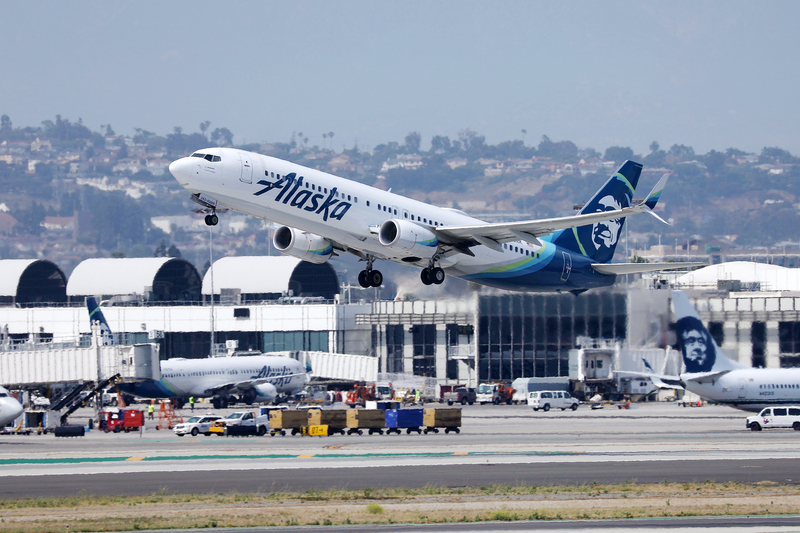
Keflavik Added a Connecting Role
Reykjavik was not solely a point-to-point leisure route. Alaska highlighted Icelandair’s schedule of more than 35 daily departures from Iceland when it opened bookings, giving passengers options beyond KEF to destinations across Europe.
The arrangement also worked in the opposite direction. Alaska could feed the Seattle departure from its West Coast, Alaska and Hawaii networks, while Icelandair supplied access to European origins that could not support their own nonstop service to the Pacific Northwest.
That connecting proposition separated Reykjavik from Alaska’s larger European additions at London and Rome. Those markets support more local demand and wider-gauge flying, while KEF offered a geographically favorable transfer point that could be served with the lower trip cost of a single-aisle aircraft.
The route nevertheless represented a substantial change in how Alaska deploys its core Boeing fleet. The airline has long used 737s on extended overwater services to Hawaii and across the continental United States, but Seattle-Reykjavik moved the type into scheduled transatlantic flying and established a new upper limit for its narrowbody network.
Bottom Line
Seattle-Reykjavik showed how Alaska can use the 737 MAX 8 as more than a domestic and Hawaii workhorse. A 159- or 161-seat narrowbody gives the airline a lower-risk tool for building international routes where summer demand is strong but a widebody would add too much capacity. That flexibility matters as Alaska expands Seattle into a global gateway while reserving its limited 787 fleet for larger markets.
The route also set a demanding benchmark for Alaska’s narrowbody product. A westbound schedule of seven hours and 55 minutes puts seat comfort, catering, connectivity and premium service under greater scrutiny than a typical mainland sector. The airline’s decision to offer free Wi-Fi and expand First Class on the MAX 8 indicates that it recognizes the difference, even though the aircraft remains a conventional two-cabin narrowbody.
The next test is whether Reykjavik becomes a repeatable seasonal component of Alaska’s network. A return would reinforce KEF’s value as both an Iceland destination and a connecting point, while any change in frequency, season length or aircraft assignment would offer a useful measure of how the first summer performed. More broadly, the route demonstrates that Alaska is prepared to pair its widebody expansion with selective long-range MAX flying rather than treat the two fleets as separate network strategies.
Keep reading FlyMag
Get the Daily Brief in the morning or the Route Watch weekly recap on Fridays. Or both.