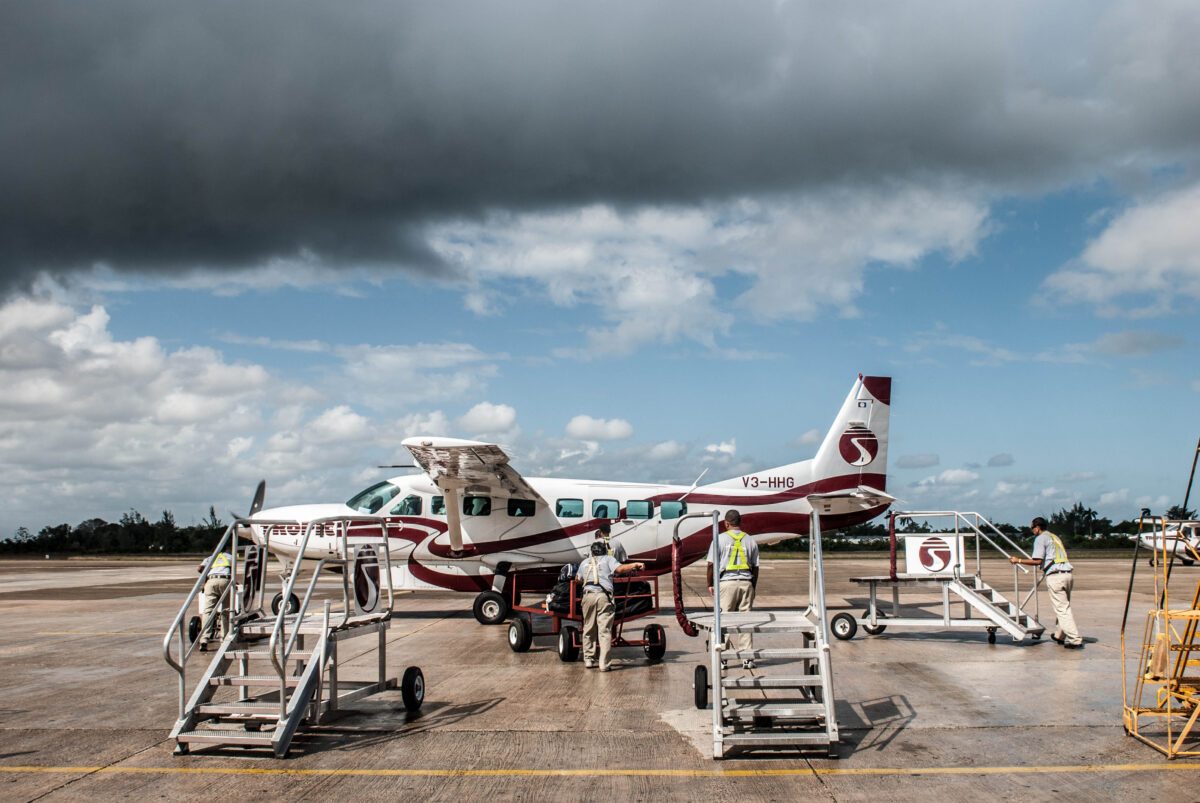
Tropic Air will close its station at Punta Gorda (PND) and withdraw scheduled service from the southern Belize community effective November 1, 2026.

The carrier announced the closure following a review of the station’s operational performance. It said Punta Gorda had generated sustained losses that the company could no longer absorb in the current economic and business environment.
Chief Executive Max Greif also cited uncertainty created by proposed changes to Belize’s domestic aviation infrastructure. Tropic Air did not frame the decision as a temporary suspension, instead describing the move as necessary to protect the airline’s long-term stability.
Read our stories in your inbox
Two aviation newsletters. Zero fluff.
Passengers holding reservations affected by the closure have been directed to the airline’s customer care department for confirmed rebooking or refunds.
Withdrawal Cuts Toledo’s Scheduled Air Link
Tropic Air said it had been the only airline serving Punta Gorda for many years, meaning its departure will remove the Toledo District’s scheduled air connection unless another operator enters the market.

The airline’s decision does not close PND itself. The Belize Airports Authority lists Punta Gorda among the public aerodromes it administers, alongside domestic airports at Belize City, San Pedro, Caye Caulker, Placencia, Dangriga and Corozal. The facility can therefore remain available to other authorized commercial, charter and private operations after Tropic Air leaves.
The withdrawal affects more than passenger journeys. Tropic Air says scheduled cargo is an important part of its business, moving mail, packages and perishables on its domestic network. Ending the station operation consequently removes both scheduled passenger capacity and the airline’s established cargo channel from Punta Gorda.
The Belize Tourism Industry Association responded by calling for coordinated action from the government, the Belize Tourism Board and local stakeholders. The association acknowledged the difficulty of sustaining a route without sufficient demand but warned that the consequences extend to residents, businesses and public services as well as tourism.
BTIA said Toledo needs greater destination visibility and stronger demand generation if commercially sustainable connectivity is to return. That places the immediate focus on whether public agencies and private-sector partners can develop a supportable market rather than simply recruiting another airline to inherit the same economics.
Closure Follows Major Fleet Renewal
The Punta Gorda exit is a network retrenchment rather than a broad reduction in Tropic Air’s flying capability. Founded in 1979, the carrier says it operates more than 200 scheduled flights a day across Belize and neighboring international markets.
In January, Tropic Air completed a five-aircraft fleet renewal program with the delivery of V3-HJE, a factory-new Cessna Grand Caravan EX. The airline said that delivery brought its all-Caravan fleet to 15 aircraft.
The Cessna Grand Caravan EX is closely matched to Belize’s domestic network. It can carry up to 14 occupants and combines a large passenger and cargo cabin with short-field performance. Textron Aviation lists a takeoff ground roll of 1,399 feet, a maximum cruise speed of 185 knots and a maximum range of 912 nautical miles under specified conditions.
Those capabilities make the single-engine turboprop suitable for linking small coastal and island aerodromes with Belize City (BZE). They do not, however, remove the commercial pressure associated with a lightly used station. A small aircraft limits the number of seats exposed on each departure, but viable scheduled service still depends on sufficient passenger and cargo volume across the day to support the aircraft, crews and ground operation.
Tropic Air’s decision illustrates that distinction. The company has continued investing in aircraft, technology and operational reliability while deciding that one station no longer meets its financial threshold. Modern equipment can reduce maintenance exposure and improve dispatch reliability, but it cannot create local demand.
The Search for Replacement Connectivity
The closure leaves policymakers and the tourism sector with less than a month between the announcement and the final day of operation. Any replacement service would need to address the underlying demand problem identified by both Tropic Air and BTIA, whether through a different schedule, a lower-frequency operation, commercial support or broader efforts to increase travel to Toledo.
The continued availability of PND preserves the infrastructure needed for an eventual return of scheduled flights. The immediate challenge is establishing a service model that can cover its operating costs without relying on an airline to accept continuing losses.
Tropic Air, meanwhile, can redeploy aircraft and personnel elsewhere in its network after November 1. The airline thanked its Punta Gorda employees and the wider community but did not indicate that the station would reopen if market conditions improve.
Bottom Line
For Tropic Air, the closure is evidence of a more disciplined approach to network economics following a substantial investment in new aircraft. The carrier gains the ability to direct Caravan capacity toward markets where frequency, passenger volume and cargo demand produce stronger returns. That matters for an operator whose domestic network depends on numerous small stations rather than a few high-volume routes.
Toledo carries most of the downside. Losing scheduled air service reduces the district’s access to Belize City and removes a transport option used not only by tourists but also by businesses, residents and shippers. The decision signals that owning and maintaining an airport is not enough to guarantee connectivity: local demand must support the recurring cost of airline operations.
The next development to watch is whether Belize’s government, tourism agencies and airport authority produce a coordinated response before or after the November 1 closure. A replacement airline would be the clearest outcome, but its schedule and commercial structure will matter as much as its identity. Without a model that changes the economics Tropic Air encountered, any restored service could face the same pressure.
Keep reading FlyMag
Get the Daily Brief in the morning or the Route Watch weekly recap on Fridays. Or both.