United Airlines used its summer 2027 network announcement to add two Pacific routes, but not the one that had become the most obvious gap in its West Coast map.

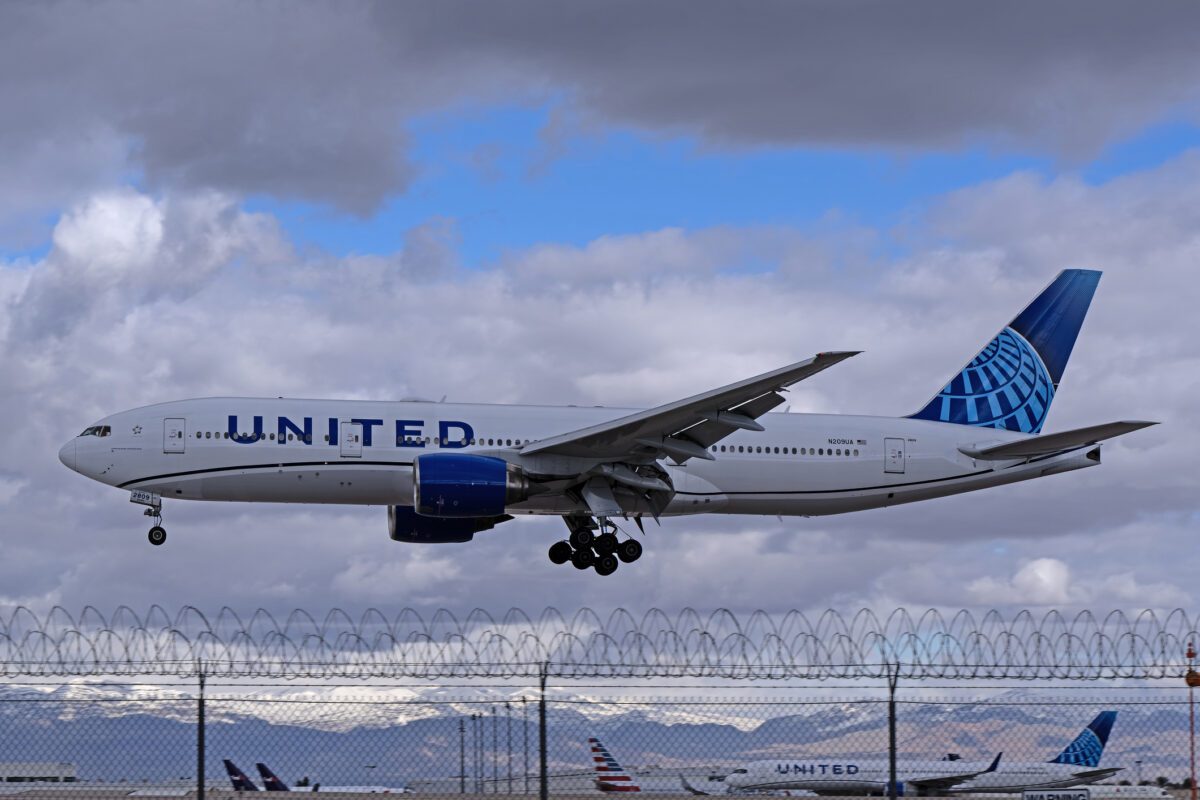
The carrier will begin daily service from Los Angeles (LAX) to Osaka Kansai (KIX) on March 27, 2027, while San Francisco (SFO) to Naha (OKA) will operate three times weekly with a Boeing 777-200ER. Los Angeles to Seoul Incheon (ICN), however, was absent from the 13-route package United announced on August 25.
The omission matters because Asiana Airlines, United’s Star Alliance partner in South Korea, is approaching the end of its independent existence. Its disappearance will remove the alliance’s nonstop operator from the large LAX-ICN market and end a long-standing source of connecting inventory for United customers at both ends of the route.
Read our stories in your inbox
Two aviation newsletters. Zero fluff.
United had not publicly committed to launching LAX-ICN as part of the 2027 announcement. The expectation was nevertheless grounded in the changing competitive structure of the South Korean market, United’s recent expansion at ICN and the carrier’s decision to allocate additional long-haul capacity to LAX.
Asiana’s Exit Creates a Clear Network Gap
Asiana will leave Star Alliance at 11:59 p.m. Korea time on December 16, 2026. The integrated Korean Air is scheduled to begin operating the following day, placing the former Asiana operation inside Korean Air’s SkyTeam-aligned business.
That transition has particular significance at Los Angeles. LAX currently lists Korean Air, Asiana and Air Premia among its international tenants, and all three operate in the Los Angeles-Seoul market. Once the integration is completed, the two large Korean full-service operations will sit within the same airline group, while Air Premia remains the independent challenger.
For Star Alliance, the change removes its home-market member in South Korea. United will still serve Seoul from San Francisco and from Newark (EWR), where it began service in September 2026, but neither flight replaces a nonstop from Southern California. A Los Angeles passenger using the alliance will instead need to connect through another United gateway or travel on a non-alliance operator.
The timing helped make LAX-ICN a logical candidate for speculation. United knew Asiana’s departure date before unveiling its 2027 program, and South Korean authorities had already approved the integration. The Korean competition framework also requires Korean Air and Asiana to make slots, traffic rights and related operational support available to replacement airlines on affected overlap markets. That process was designed to preserve competition, though it did not amount to a public United commitment to serve Los Angeles-Seoul.
United Chose Osaka Instead
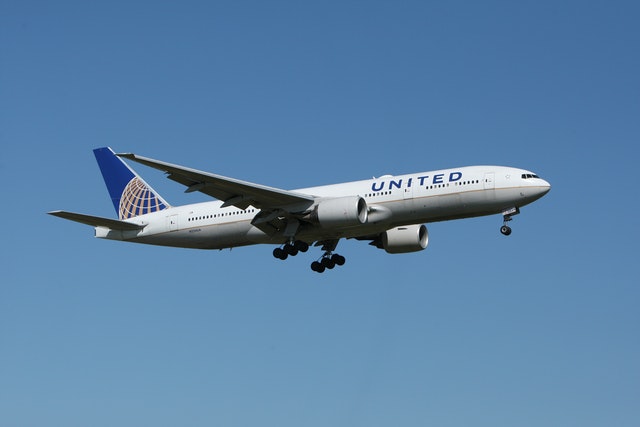
United’s actual Los Angeles addition was KIX, giving the airline a second mainland U.S. gateway to Osaka alongside SFO. The daily service also complements United’s Guam-Osaka operation and strengthens its position in Japan, where its network combines mainland widebody flying with regional services through Guam and Tokyo Narita.
Osaka fits United’s established Pacific strategy. The airline has a joint venture with All Nippon Airways, giving it a stronger commercial framework in Japan than it will have in South Korea after Asiana’s exit. KIX also offers a different traffic mix from Tokyo, including substantial leisure demand and access to the Kansai region.
Naha is the more unconventional addition. United scheduled SFO-OKA three times weekly with the Boeing 777-200ER, making it the only U.S. airline offering a nonstop between the continental United States and Okinawa. Using a 777 rather than a smaller long-range narrowbody gives United room for passenger demand, military-related traffic and belly cargo while keeping the service at a limited weekly frequency.
Together, Osaka and Naha show that United was willing to deploy additional Pacific capacity in 2027. The decision was therefore not a blanket pause on Asian expansion. It was a choice to deepen the airline’s Japanese network rather than open a third U.S. gateway to Seoul.
The A321XLR Was Not the Constraint
The Newark event also introduced United’s first Airbus A321XLR, but that aircraft has little bearing on LAX-ICN. United’s initial XLR assignments are concentrated across the Atlantic, including new routes to Luxembourg, Toulouse, Ibiza, Valencia and Marseille, followed by planned service from Washington Dulles (IAD) to Amsterdam and Dublin.
United’s configuration includes 20 Polaris suites and 12 Premium Plus seats, giving the aircraft 32 premium seats in total. The cabin also introduces privacy doors in Polaris, Starlink connectivity and an Economy Plus option built around an open middle seat and shared table.
Airbus advertises a range of up to 4,700 nautical miles for the A321XLR, with a 101.5-ton maximum takeoff weight and an integrated rear center fuel tank. That makes it a useful instrument for thinner transatlantic markets, but not United’s solution for a long North Pacific sector such as Los Angeles-Seoul. Any LAX-ICN launch would require space in the airline’s widebody plan rather than another A321XLR delivery.
Seoul Can Still Appear Later
Network announcements are snapshots rather than final schedules. United could still add LAX-ICN separately, particularly as the consequences of Asiana’s December integration become clearer and the airline assesses booking performance on its new Newark-Seoul service.
There are also reasons to wait. Los Angeles is already a heavily served Seoul market, and United would enter against Korean Air, Asiana’s successor capacity and Air Premia. It would need to balance local demand against connections over LAX, where United’s domestic hub is smaller than its operation at SFO. A new Seoul flight would also compete internally for widebody aircraft with routes to Japan, China, Australia and Europe.
For now, United’s published summer 2027 plan leaves the gap intact. The airline added Osaka, opened Okinawa and expanded its Seoul footprint from the East Coast, but it did not use its largest international route announcement to restore a Star Alliance-operated nonstop between Southern California and South Korea.
Bottom Line
The immediate beneficiary of United’s decision is its Japan franchise. Osaka adds another daily spoke from LAX into a market supported by United’s All Nippon Airways joint venture, while Naha extends SFO’s role as the carrier’s principal mainland Pacific gateway. Both routes build around commercial structures United already controls or understands well; LAX-ICN would be a more direct competitive move into a market being reshaped by the Korean Air-Asiana integration.
The omission also shows that losing an alliance partner does not automatically produce replacement metal. United can continue carrying Southern California-Seoul traffic over SFO and EWR, but that is a weaker proposition for local passengers and leaves Star Alliance without a nonstop in one of the largest U.S.-Korea markets. What matters next is whether United treats that as a permanent network choice or simply a matter of widebody timing.
The signals to watch are United’s 2027 aircraft allocations, any reduction in former Asiana capacity after December 17, and regulatory transfers tied to the Korean merger remedies. If United eventually announces LAX-ICN, it is likely to arrive as a targeted Pacific move rather than as an extension of the A321XLR-led expansion unveiled at Newark.