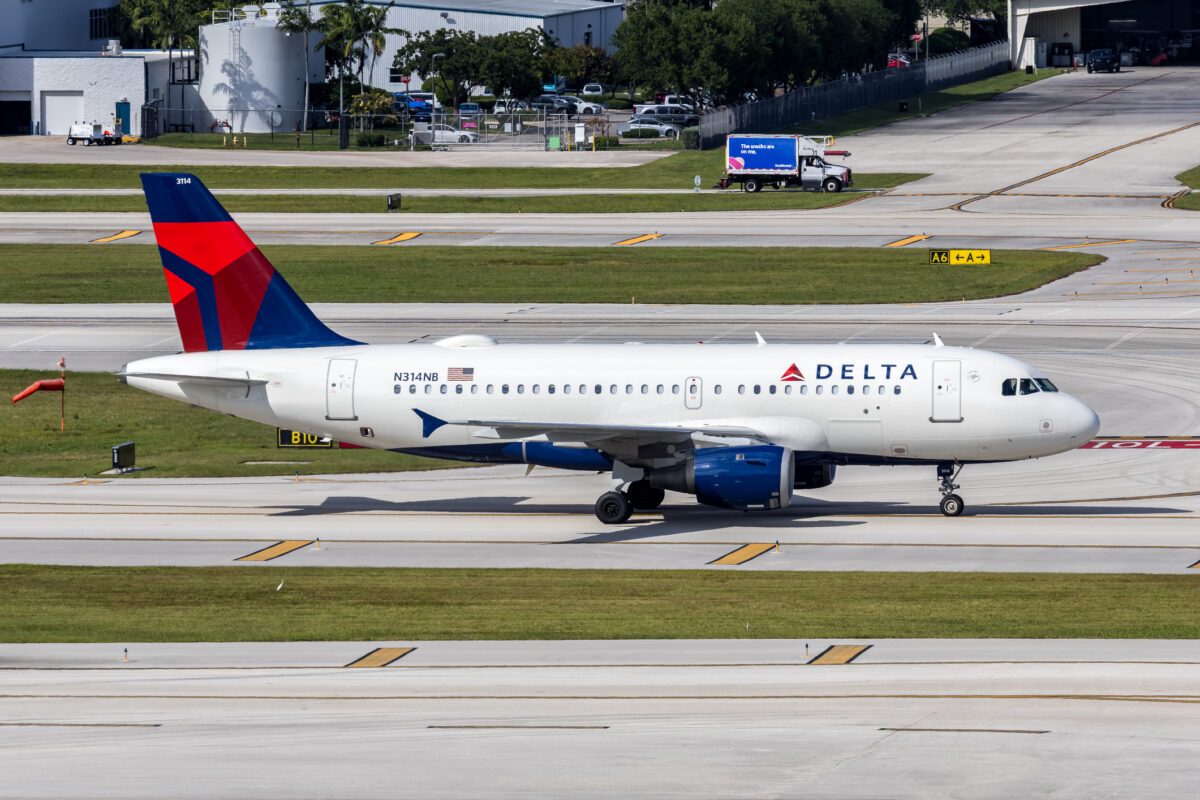
A Delta Air Lines Airbus A319 approaching Los Angeles International Airport (LAX) went around Saturday morning after an earthquake shook the airport and prompted controllers to suspend the landing attempt.
Delta Flight 1972 was arriving from Kansas City International Airport (MCI) when the earthquake struck at approximately 9:30 a.m. Pacific time on November 28. The aircraft was close to touchdown when the tower instructed its crew to go around.
The A319 climbed away and returned for another approach, landing safely at LAX at about 10:01 a.m. Delta said Flight 1628, a Boeing 737 arriving from Seattle-Tacoma International Airport (SEA), also conducted a precautionary go-around. Both flights landed safely shortly afterward, and the airline said airport operations resumed normally without lasting effects.
Read our stories in your inbox
Two aviation newsletters. Zero fluff.
Earthquake Struck Just Offshore
The U.S. Geological Survey placed the earthquake’s epicenter about 4 miles west-southwest of Manhattan Beach, close to the southern edge of the Los Angeles airport complex. It occurred at 9:30:29 a.m. Pacific time at a reviewed depth of about 7.6 miles.
Initial automated alerts estimated the earthquake at magnitude 5.2, the figure circulated in the first reports from the airport. The USGS subsequently assigned the event a reviewed magnitude of 5.0 after processing additional seismic data. Its ShakeAlert system issued its first message about five seconds after the earthquake began.
The proximity of the epicenter meant LAX experienced noticeable shaking almost immediately. The airport sits roughly 5 miles north of Manhattan Beach, making its runways, terminals and control tower among the major aviation facilities closest to the earthquake.
Tower Sends Delta 1972 Around
Video and air traffic control audio recorded near LAX show the tower issuing the go-around instruction as the earthquake was in progress. The A319 was established on final approach and continued straight ahead into the climb rather than touching down while the airport’s condition was being assessed.
A go-around in those circumstances is a precautionary maneuver rather than evidence of a problem aboard the aircraft. The immediate operational question following significant ground movement is whether the landing environment remains suitable. Runway pavement, lighting, signs and navigation equipment all need to remain reliable through touchdown and the high-speed rollout that follows.
The FAA’s Aeronautical Information Manual directs a pilot to execute a missed approach when instructed by air traffic control. The crew then follows the published procedure or alternative headings and altitudes assigned by the controller before being sequenced for another approach.
That makes a go-around the straightforward option when a controller has an immediate reason to question runway availability. It removes the aircraft from a rapidly narrowing decision window and gives airport personnel and controllers time to confirm that arrivals can continue.
The A319 Operating Flight 1972
Flight-tracking records identify the aircraft as N362NB. The FAA registry lists it as a 2003-built Airbus A319-114 powered by CFM International CFM56 engines and registered to Delta Air Lines.
Delta’s Airbus A319-100 configuration accommodates 132 passengers: 12 in First Class, 24 in Delta Comfort+ and 96 in Main Cabin. The airline publishes a range of 2,835 miles for the type, comfortably covering the approximately 1,360-mile Kansas City-Los Angeles sector.
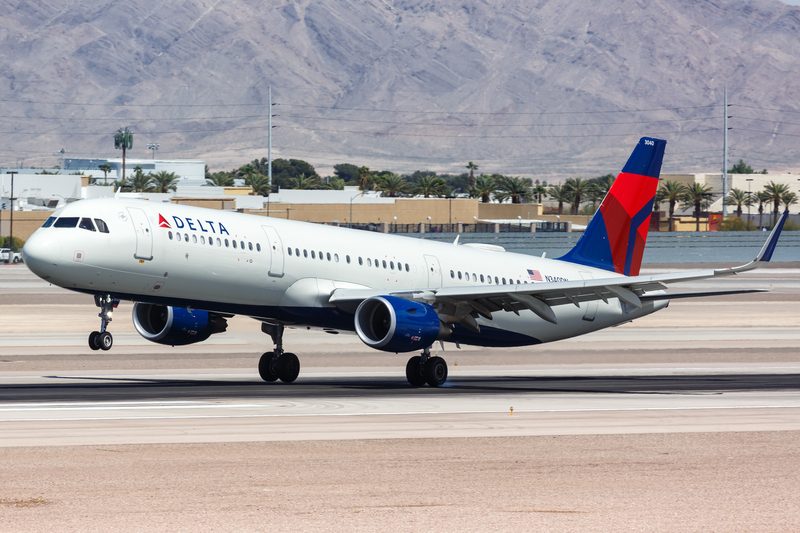
The A319 remains useful on domestic routes that require mainline capacity but do not consistently support a larger A320 or A321. Its relatively compact size also gives Delta flexibility on frequencies linking its coastal gateways with medium-sized business markets such as Kansas City.
Delta listed 57 A319s in its fleet as of June 30, 2026. The carrier’s aircraft have three cabins, seatback entertainment, in-seat power and Delta Sync Wi-Fi. N362NB is among the older aircraft in that group, having entered service in 2003.
Two Arrivals Affected
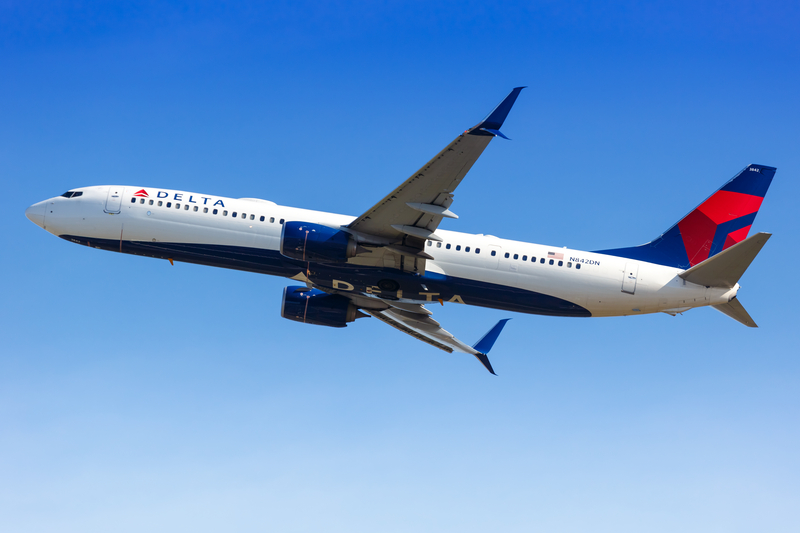
Delta’s confirmation that Flight 1628 also went around shows that the tower’s response was not limited to the aircraft captured prominently on video. The Seattle flight was approaching LAX on a Boeing 737-800 when it was similarly taken out of the arrival sequence.
The two flights approached from different origins but reached Los Angeles during the same narrow operational window. Flight 1972 had departed Kansas City later than scheduled, while Flight 1628 was arriving from Seattle near its planned morning arrival time.
Both aircraft remained airborne long enough to be repositioned for another approach. Delta characterized the maneuvers as precautionary and reported no continuing disruption after the flights landed.
Bottom Line
The episode shows the value of preserving options late in an approach. The earthquake did not create a mechanical problem aboard the A319, but it introduced immediate uncertainty about the surface the crew was about to use. Sending the aircraft around transferred the operation from a time-critical landing phase to a controlled climb, where controllers and the flight crew had room to reassess.
For LAX, the brief interruption also demonstrated how a major airport can absorb an unexpected local event without developing a prolonged traffic-management problem. Two aircraft had to repeat their approaches, but the response did not turn into a diversion program or a wider breakdown in the arrival flow. Delta’s mix of short-haul mainline aircraft gave both flights sufficient operational flexibility to remain in the sequence and land after the immediate concern passed.
The distinction between the preliminary magnitude 5.2 alert and the reviewed magnitude 5.0 measurement is worth retaining in the record. More important operationally was the earthquake’s location: close enough to LAX that controllers experienced the shaking as an active arrival was nearing the runway. In that setting, the go-around was not an extraordinary maneuver. It was the safest and least disruptive way to buy time.