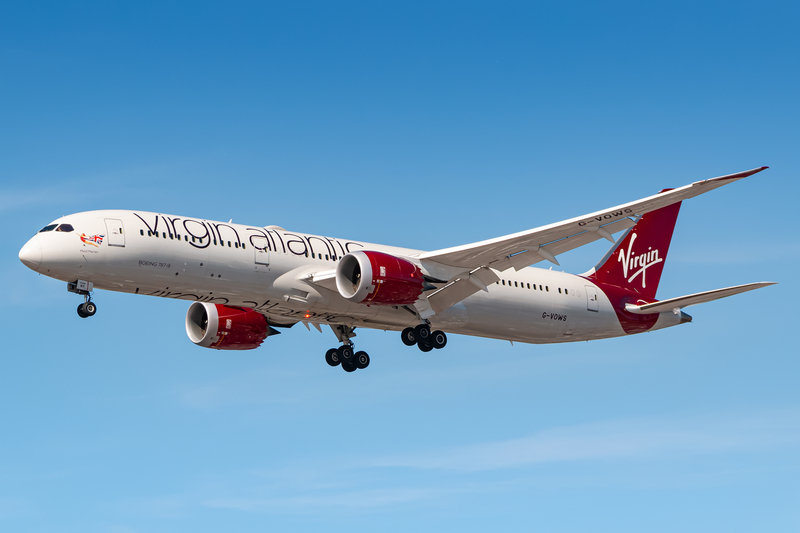
Virgin Atlantic’s Summer 2026 California changes look simple on the surface: San Francisco International Airport (SFO) gets an Airbus A350-1000 on one Heathrow rotation, while one Los Angeles International Airport (LAX) rotation moves to the Boeing 787-9.

But the real story is not the aircraft swap alone. It is what that swap does to the premium cabin.
For passengers booking specifically onto Virgin Atlantic’s VS19/20 to SFO, the airline is now offering a meaningfully stronger Upper Class product from May 16. On the Los Angeles side, VS141/142 moved from the A350-1000 to the 787-9 from March 29, bringing back a much older Upper Class seat on that particular rotation.
Read our stories in your inbox
Two aviation newsletters. Zero fluff.
That distinction matters because these are not equivalent premium experiences. One feels like Virgin’s current-generation flagship. The other remains one of the weaker premium hard products across the North Atlantic.
San Francisco Gets the Better Hardware
The clearest winner in this reshuffle is SFO, but it is important to say exactly why.
Virgin Atlantic is putting its 335-seat Airbus A350-1000 onto VS19/20 from May 16, while a separate daily Heathrow–San Francisco frequency, VS41/42, remains on the Boeing 787-9. So San Francisco is not becoming an all-A350 market. What it is getting is one daily flight with Virgin’s better long-haul premium seat.
That matters because the A350-1000 is where Virgin Atlantic looks most like the premium airline it wants to be. In the 335-seat layout, the aircraft has 44 Upper Class seats, 56 Premium seats, and 235 Economy seats. More importantly, the Upper Class Suite is a much more modern proposition than the airline’s legacy 787 seat.
On the A350, every Upper Class seat faces the window, the screen is much larger, storage is better, and privacy is improved through retractable privacy screens and a more modern suite layout. It does not have doors, which is an important correction to some looser online descriptions, but it still feels materially more private and current than the 787’s older herringbone design.
Los Angeles Is Not Losing All Its Premium Strength, But One Flight Is
The Los Angeles story needs a similar correction.
It is too broad to say that Virgin Atlantic is simply “downgrading Los Angeles.” What is actually happening is narrower and more precise: VS141/142 shifts from the A350-1000 to the 787-9 from March 29, while VS23/24 remains a daily 787-9 seasonal service from April 20. Another Heathrow–Los Angeles frequency, VS7/8, is not part of that same simple swap and remains separate in the schedule.
So this is not a full LAX-wide product collapse. It is a downgrade on a specific rotation that matters because it removes one A350 option and replaces it with the older Dreamliner cabin.
For passengers, however, that still matters a lot. If you book the wrong Virgin Atlantic Los Angeles flight in Summer 2026, you may find yourself on one of the airline’s least competitive long-haul Upper Class products instead of one of its best.
Why the 787-9 Still Feels So Dated
Virgin Atlantic’s Boeing 787-9 remains a perfectly serviceable aircraft, but its Upper Class hard product has aged badly compared with what passengers now expect in premium transatlantic travel.
The cabin has 31 Upper Class seats and 35 Premium seats in the current layout. The problem is not flat-bed capability. The problem is geometry. The herringbone design faces passengers toward the aisle rather than the window, privacy is limited, storage is poor, and the overall cabin feels like a relic from a previous business-class era.
Virgin’s own plans make clear that it knows this. From 2028, the 787-9 fleet will undergo a full cabin redesign, increasing Upper Class to 44 seats and Premium to 56 while introducing a new-generation cabin inspired by the airline’s newer products. But until that happens, the gap between the A350 and 787 remains very visible.
That is why this aircraft allocation matters. Virgin is effectively deciding where its best premium hardware earns the best return before the older aircraft are fixed.
Why San Francisco Was the Obvious Winner
The commercial logic behind the move is not difficult to read.
San Francisco remains one of the strongest premium-heavy transatlantic markets in Virgin Atlantic’s U.S. portfolio. The city’s deep ties to technology, life sciences, and high-value corporate travel make it exactly the kind of destination where a stronger Upper Class product can command more pricing power.
Los Angeles is also premium, of course, but it is a broader and more mixed market. It has strong premium leisure demand, entertainment traffic, and general London–California volume, but it does not necessarily depend on the same concentration of high-yield corporate travel that makes SFO so attractive for a flagship seat.
That is why this looks less like a vote against Los Angeles and more like a resource-allocation decision. Virgin has a limited amount of top-tier hardware, and San Francisco appears to be where it thinks that hardware pays best.
This Also Fits Virgin’s Bigger Premium Push
The wider context is that Virgin Atlantic has made premium the center of its fleet and product story.
The airline has already said its future aircraft deliveries will carry more premium seats, and it has confirmed that its 787-9 retrofit from 2028 will turn the aircraft into a much more premium-heavy platform. It has also highlighted how strongly premium demand is performing across the network.
That makes the California swap more revealing than it first appears. Virgin is not just moving airplanes around. It is rationing premium quality until the fleet becomes more consistently competitive.
For now, that means some routes and some flights get the future version of Virgin Atlantic, while others still get the legacy version.
Bottom Line
Virgin Atlantic’s Summer 2026 California changes are not a simple case of San Francisco being upgraded and Los Angeles being downgraded across the board.
The more precise takeaway is this: one Heathrow–San Francisco rotation, VS19/20, gets the 335-seat Airbus A350-1000 from May 16, while one Heathrow–Los Angeles rotation, VS141/142, moved to the Boeing 787-9 from March 29. For passengers booking those specific services, the cabin difference is substantial.
The A350 gives San Francisco the better Upper Class experience — more private, more modern, and more in line with what Virgin Atlantic wants its premium brand to be. The 787 still has a credible Premium cabin and the benefits of the Dreamliner airframe, but its Upper Class seat now feels unmistakably behind the market.
For aviation readers, that is the real story. Virgin is not just shifting capacity. It is deciding where its best premium seat matters most.
Keep reading FlyMag
Get the Daily Brief in the morning or the Route Watch weekly recap on Fridays. Or both.