TAROM has taken delivery of its first Boeing 737 MAX 8, opening a new phase in the Romanian flag carrier’s fleet renewal and restructuring program.

The aircraft was formally presented in Bucharest on September 12 after a delivery flight from Seattle through Keflavik (KEF). TAROM accepted the jet in Seattle on September 3, assigning separate crews to the Seattle-Keflavik and Keflavik-Bucharest sectors.
Named Mircea Lucescu after the Romanian football coach, the aircraft is the first of four 737 MAX jets scheduled to join TAROM through 2027. Two are being supplied by CDB Aviation, with the second expected at the end of September. The remaining pair is due in 2027 under separate financing arrangements.
Read our stories in your inbox
Two aviation newsletters. Zero fluff.
The delivery also gives TAROM its first new Boeing aircraft, rather than a used or previously operated example. The airline said it plans to deploy the 737-8 primarily between Bucharest (OTP) and major European capitals.
A delayed start to the CDB Aviation lease
CDB Aviation and TAROM signed leases for two 737 MAX 8s in July 2024. At the time, the lessor said both aircraft would come from its direct Boeing orderbook and carry 189 passengers.
The original delivery window was December 2025 through January 2026, meaning the first handover occurred roughly eight months later than initially planned. The revised timetable now places both CDB aircraft with TAROM during September 2026.
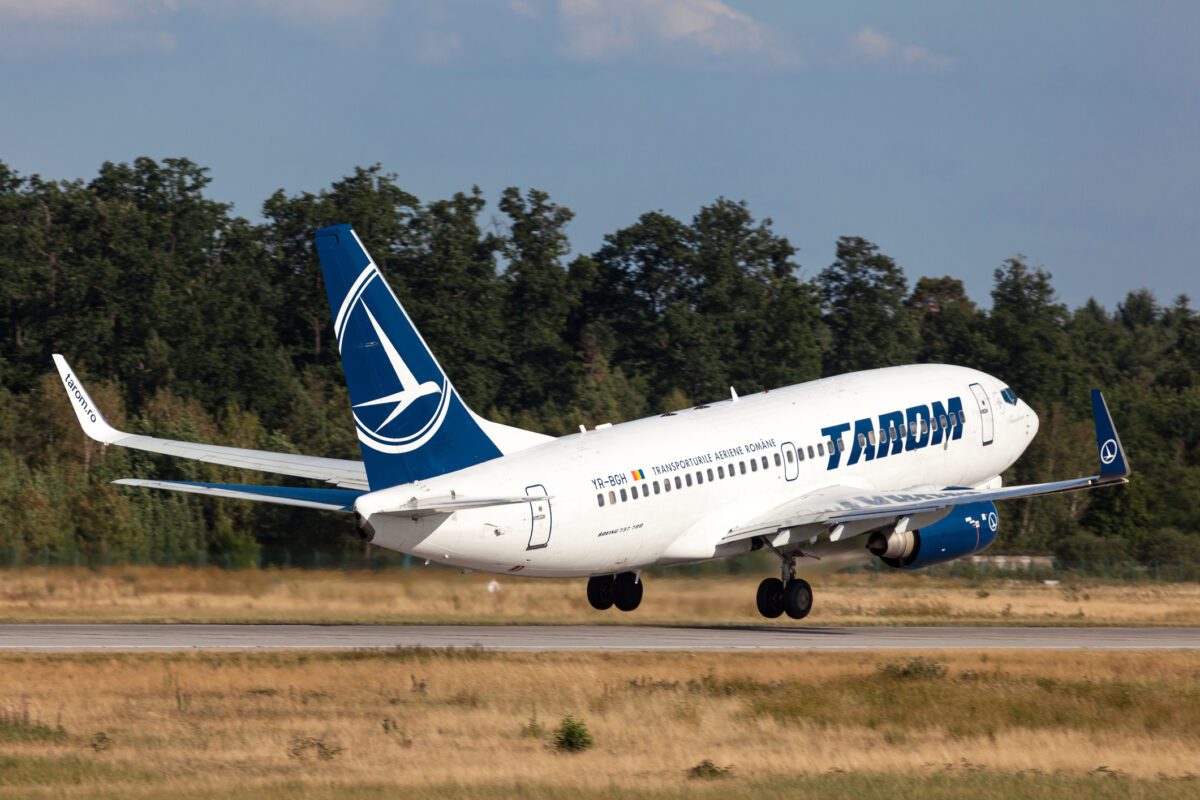
The lease agreement with CDB Aviation was structured around fleet standardization as well as replacement. TAROM already operates 737-700s and 737-800s, making the MAX an evolutionary addition to its narrowbody operation rather than a move to a new aircraft family.
That commonality should limit some of the complexity associated with introducing a completely different narrowbody platform, although the MAX still requires its own pilot differences training, engineering preparation and maintenance approvals. TAROM sent flight, cabin and technical personnel to Seattle for the delivery, including engineers responsible for documentation, components, line maintenance and the MAX introduction project.
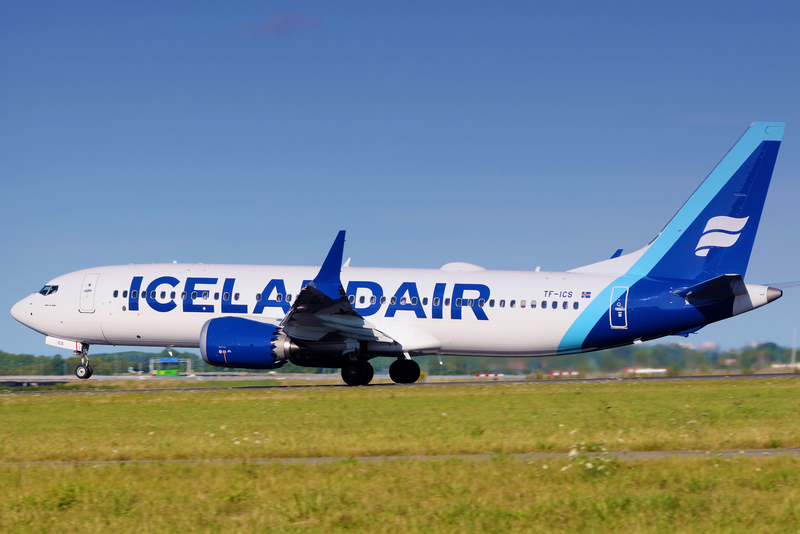
The airline’s published fleet information lists two 737-700s configured for 116 passengers and four 737-800s. Two of the 737-800s have 160 seats across business and economy cabins, while the other two use a 189-seat layout. The incoming MAX therefore matches the capacity of TAROM’s densest 737-800s while bringing newer engines, aerodynamics and cabin systems.
The 737-8 fits TAROM’s European network
TAROM’s 737-8s are powered by CFM International LEAP-1B engines and feature the Boeing Sky Interior, including LED lighting and larger pivoting overhead bins. According to the airline, the cabin also has redesigned sidewalls and larger windows.
Boeing gives the 737-8 a range of up to 3,500 nautical miles, or 6,480 kilometers, depending on configuration and operating conditions. That is considerably more than required for TAROM’s planned services from Bucharest to European capitals. The range instead gives the airline payload and scheduling flexibility while leaving open the possibility of longer missions within its narrowbody network.
The more important measure for TAROM is operating cost. Boeing says the 737-8 uses 20% less fuel and produces 20% fewer carbon emissions than the aircraft it is designed to replace. The manufacturer also claims a 50% smaller noise footprint. Those figures are particularly relevant to an airline attempting to improve economics without rebuilding its network around additional capacity.

The 189-seat configuration will also raise the number of seats available compared with TAROM’s 116-seat 737-700s and its two-class 737-800s. Realizing the resulting unit-cost benefit will depend on how consistently the airline can fill that capacity, particularly outside peak travel periods.
Fleet renewal is tied to TAROM’s restructuring
The MAX program sits inside a wider restructuring process backed by the Romanian government and reviewed under European Union state-aid rules.
In April 2024, the European Commission approved up to €95.3 million in restructuring aid for TAROM. The package combined the cancellation of debt associated with earlier rescue aid and a capital injection.
The Commission identified fleet renewal, operating rationalization and cost reduction as central elements of the plan. Its approval also imposed safeguards intended to limit competitive distortions, including reductions in TAROM’s fleet, route count and overall market capacity through December 31, 2026.
That makes the arrival of the MAX different from a conventional growth order. The new aircraft are intended to improve the economics and reliability of a smaller operation, replacing older or less efficient capacity rather than simply adding seats across the network.
TAROM has already simplified its fleet substantially. Its current core operation is built around Boeing 737 narrowbodies and ATR 72 turboprops, following the withdrawal of types including the Airbus A318 and earlier ATR variants. The 737 MAX continues that process on the jet side of the fleet.
The second CDB Aviation 737-8 is expected to arrive before the end of September. TAROM then plans to complete the four-aircraft program during 2027, after the formal restructuring period ends.
Bottom Line
The 737 MAX will matter to TAROM only if the airline converts its technical advantages into a more dependable schedule and lower cost per seat. The aircraft is well matched to the stage lengths in TAROM’s European network, but its 189-seat cabin also creates a revenue-management challenge on routes where the airline previously used smaller 737-700s or two-class 737-800s.
The immediate indicators will be the pace at which the first two aircraft enter regular service, their initial route assignments and the retirement decisions that follow. The larger test comes in 2027, when TAROM expects to have all four MAX aircraft and will be operating beyond the capacity restrictions attached to its restructuring period. By then, the airline should be able to show whether fleet simplification has produced a durable operating improvement rather than a temporary modernization milestone.