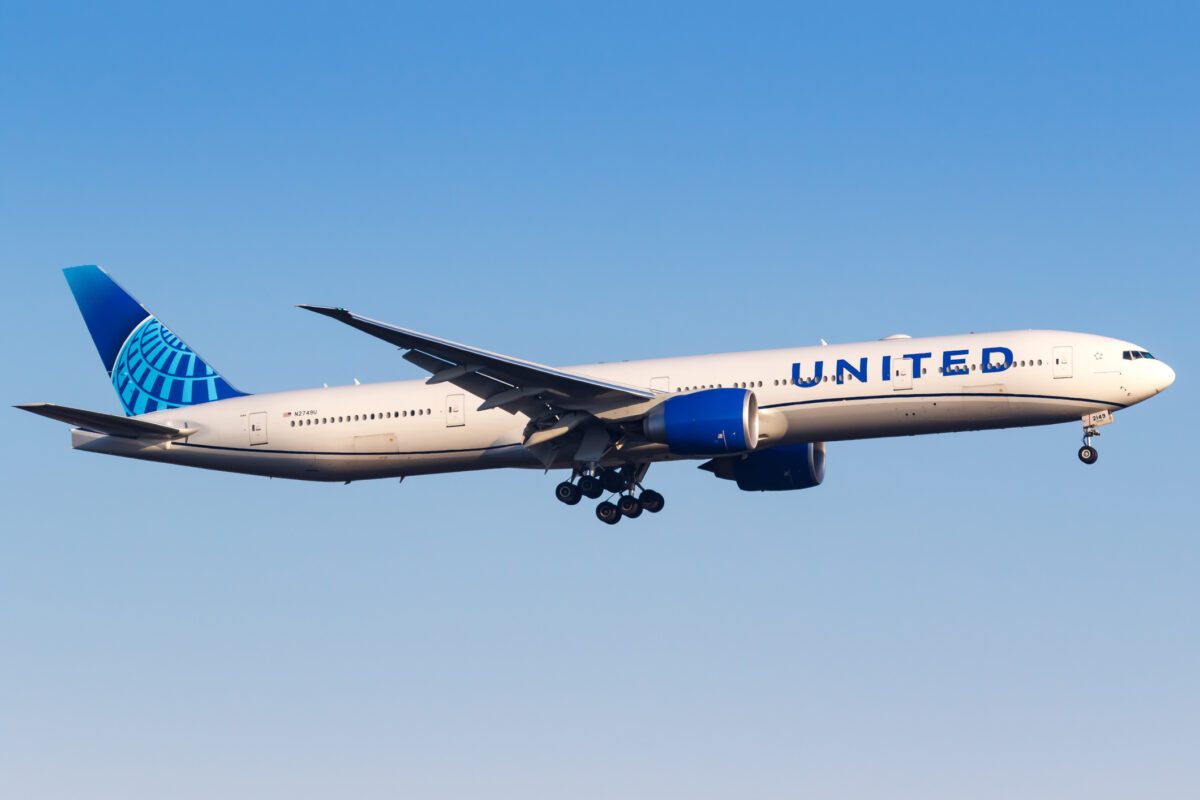
United Airlines has ended scheduled long-haul service to 24 overseas airports since 2006, but the figure does not represent a single network cut or a new round of cancellations.

FlyMag reviewed the US Department of Transportation’s T-100 International Segment database, United’s network announcements and company material covering the combined United-Continental network. The resulting list stretches across two decades and includes services that lasted one season, routes inherited through the Continental merger, pandemic-era suspensions that never returned and more recent experiments in secondary international markets.
Europe accounts for 15 of the 24 destinations. Another five are in Africa and Asia, while four are in the Middle East. Most of the European routes operated from Newark (EWR), while Washington Dulles (IAD) supported the Middle Eastern services and San Francisco (SFO) was the departure point for United’s three discontinued routes to interior China.
Read our stories in your inbox
Two aviation newsletters. Zero fluff.
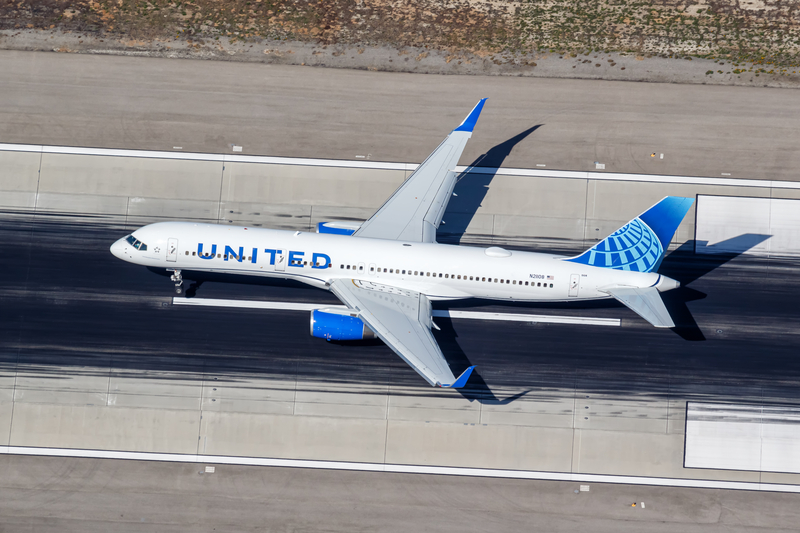
United’s 15 Former European Destinations
The European list is heavily influenced by the former Continental network. A United merger-era network presentation identified Copenhagen, Belfast, Birmingham, Hamburg, Manchester, Oslo, Stockholm and Stuttgart among Continental’s distinctive European destinations in 2010.
Several were classic Boeing 757-200 transatlantic markets: cities large enough to support a nonstop to the New York area, but generally too thin for year-round widebody capacity. United progressively withdrew from many of those markets as its Atlantic network changed and the 757 fleet aged.

- 2012: Copenhagen (CPH) from EWR and Moscow Domodedovo (DME) from IAD.
- 2013: Istanbul Atatürk (IST) from EWR.
- 2014: Stuttgart (STR) from EWR.
- 2016: Newcastle (NCL) and Oslo (OSL), both from EWR.
- 2017: Belfast International (BFS) and Birmingham (BHX), both from EWR.
- 2018: Hamburg (HAM) from EWR.
- 2019: Prague (PRG) from EWR.
- 2020: Berlin Tegel (TXL) from EWR and Manchester (MAN) from EWR and IAD.
- 2022: Bergen (BGO) from EWR.
- 2025: Stockholm Arlanda (ARN) and Tenerife South (TFS), both from EWR.
Berlin requires context. TXL closed in 2020, and United now serves the German capital through Berlin Brandenburg (BER). The list therefore records the end of service to a specific airport rather than United’s withdrawal from Berlin.
Bergen and Tenerife belonged to United’s post-pandemic push into thinner leisure destinations. The airline announced both in its summer 2022 transatlantic expansion. Bergen received a three-times-weekly Boeing 757-200, while Tenerife was also assigned the 757. Bergen lasted one season. Tenerife returned for subsequent summers before disappearing after 2025.
Stockholm followed a different path. United first served the city in 2005, suspended the route during the pandemic and restored Newark-Stockholm in May 2023. Its second run ended after the 2025 season.
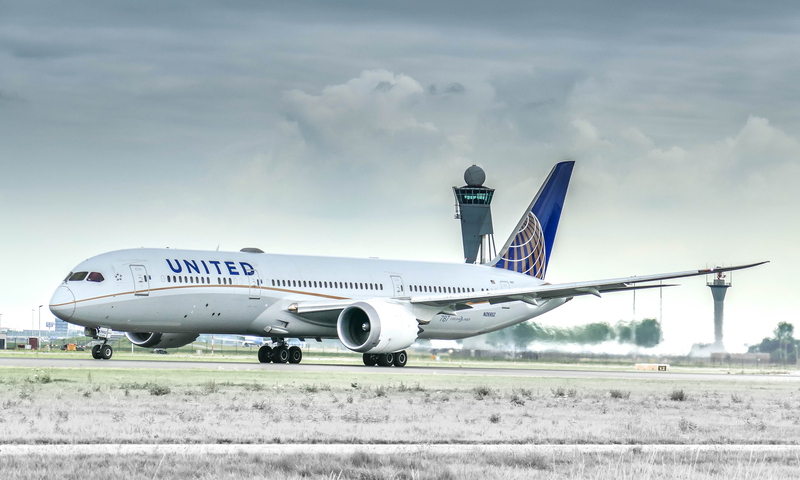
Five Exits Across Africa and Asia
United’s three discontinued mainland China destinations reflected an earlier strategy of using the Boeing 787 to open interior Chinese markets from SFO. Chengdu (CTU) began in 2014, followed by Xi’an (XIY) and Hangzhou (HGH) in 2016.
- 2017: Hangzhou (HGH) and Xi’an (XIY), both from SFO.
- 2020: Chengdu (CTU) from SFO.
- 2022: Mumbai (BOM) from EWR.
- 2026: Dakar (DSS) from IAD.
Xi’an was designed as a seasonal, three-times-weekly Boeing 787-8 route. Hangzhou used the larger Boeing 787-9 on a three-times-weekly schedule. United’s 2016 China network announcement described the two cities as its fourth and fifth mainland Chinese destinations from San Francisco. Neither route survived beyond 2017.
Chengdu had more staying power, operating until the disruption of US-China flying in 2020. Although it appeared in later planning, United did not restore the route.
Mumbai ended under different circumstances. United suspended the EWR service in 2022 as airspace restrictions made the operation significantly longer and more expensive. The airline continues to serve Delhi, but Mumbai has not returned to the United-operated network.
Dakar was the shortest-lived recent addition. Announced as a year-round, three-times-weekly IAD route, it began in May 2025 and operated with the Boeing 767-300ER. United had presented Dakar as part of a broader African build-up when it announced its summer 2025 expansion. Scheduled service ended in January 2026.
Four Former Middle Eastern Stations
United’s four other discontinued points were tied to an earlier Dulles strategy centered on government, energy and connecting traffic through the Middle East.
- 2014: Doha (DOH), served as a one-stop extension through Dubai.
- 2016: Kuwait City (KWI) and Bahrain (BAH).
- 2024: Amman (AMM).
In 2013, United described IAD as its principal Middle Eastern gateway, with nonstop flights to Kuwait and Dubai and one-stop service to Bahrain and Doha. The services used the Boeing 777-200ER. Bahrain operated as an extension of the Kuwait flight, while Doha was linked through Dubai rather than flown nonstop from the United States.
Amman was the most recent independent route. United launched the three-times-weekly IAD service in May 2022 with a Boeing 787-8, giving the carrier a capital-to-capital link with Jordan. The route was suspended in 2024 amid regional security concerns and has not returned.
The List Is Historical, Not a Current Network Cut
The 24 airports should not be read as evidence that United is retreating from long-haul flying. The opposite is true: the airline said in August 2026 that it had added 58 international destinations since 2017 and now served more than 160 international points.
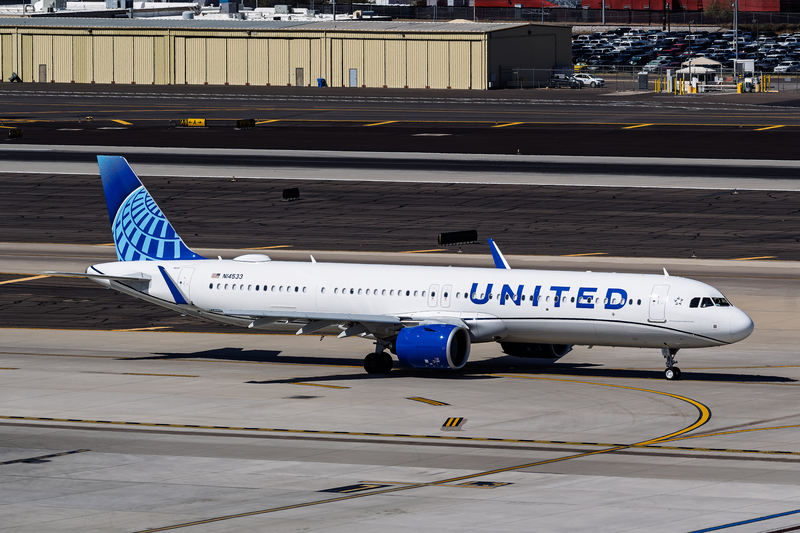
Its summer 2027 program adds another 10 cities. Five — Luxembourg, Toulouse, Ibiza, Valencia and Marseille — will use the Airbus A321XLR. United’s aircraft has 20 Polaris suites, 12 Premium Plus seats and 16 more premium seats than its Boeing 757-200.
The A321XLR has a published range of up to 4,700 nautical miles and is designed for long sectors that cannot consistently support a widebody. That makes it the direct successor to the 757’s route-development role and gives United another way to revisit the type of secondary European market represented throughout the historical list.
Bottom Line
The list shows the amount of churn behind a large international network. United’s scale gives it room to test seasonal and secondary markets, but it also produces more visible withdrawals when individual experiments do not earn a repeat season. Bergen, Xi’an and Dakar were short trials; Birmingham, Belfast and Hamburg were mature Continental routes that eventually lost their place in the combined carrier’s network.
The arrival of the Airbus A321XLR changes the economics behind the next set of decisions. United can deploy a premium-heavy aircraft with materially fewer seats than a Boeing 767 while retaining enough range for much of Western Europe from EWR and IAD. That reduces the capacity risk attached to markets such as Luxembourg, Toulouse and Valencia and may make former destinations including Copenhagen, Oslo or Stuttgart candidates for reconsideration under different operating economics.
What matters next is not whether every new destination survives indefinitely. United is deliberately using fleet flexibility and seasonality to build a broader network than a strategy based only on year-round trunk routes would permit. Some routes will graduate to longer seasons or larger aircraft; others will join this list. The withdrawal of an individual market is part of that model rather than evidence that the wider international strategy has stalled.
Keep reading FlyMag
Get the Daily Brief in the morning or the Route Watch weekly recap on Fridays. Or both.