AirAsia and Pegasus Airlines have launched a codeshare centered on Istanbul Sabiha Gökçen (SAW), creating protected connections between the AirAsia network in Asia-Pacific and Pegasus’ extensive operation across Türkiye and Europe.
The agreement is AirAsia’s first codeshare. Sales opened on September 2, 2026, initially covering itineraries from Kuala Lumpur (KUL) to five Pegasus destinations beyond SAW. AirAsia said the partnership would eventually support more than 100 connecting routes across the two airline groups’ networks.
Unlike a separately ticketed connection, the new itineraries are sold under one booking and include checked baggage transfer to the final destination. The airlines will also handle disrupted connections within the booking, an important distinction for a low-cost, long-haul journey involving two operators.
Read our stories in your inbox
Two aviation newsletters. Zero fluff.
Five Routes Form the Initial Codeshare Network
The first AirAsia-marketed connections pair AirAsia X’s KUL-SAW flight with Pegasus services to London Stansted (STN), Moscow Vnukovo (VKO), Ankara Esenboğa (ESB), Zurich (ZRH) and Athens (ATH).
AirAsia describes those cities as the opening phase rather than the final footprint. Its announcement of the agreement says the combined network will progressively make more than 100 routes available, connecting Pegasus’ European feed with AirAsia services through Kuala Lumpur.
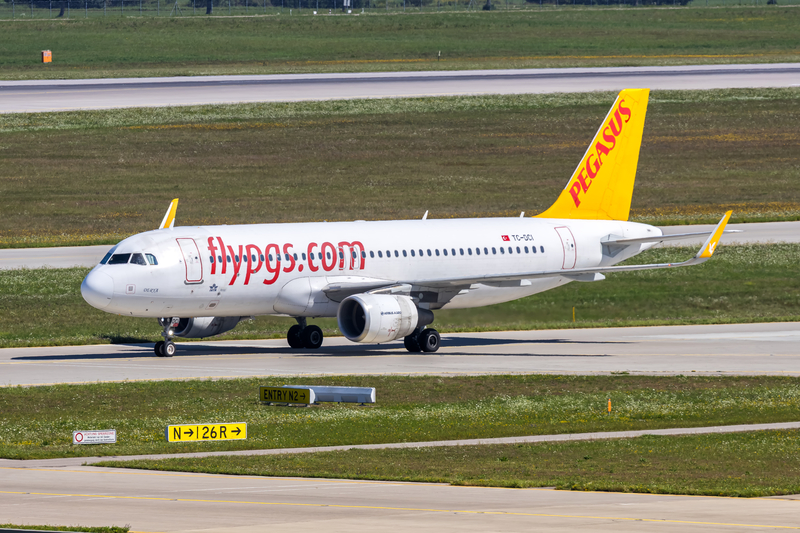
Pegasus is also selling the AirAsia X-operated SAW-KUL sector through its own channels. Passengers originating elsewhere in the Pegasus network can connect at SAW, while travelers arriving in Malaysia can continue over AirAsia’s established Fly-Thru network.
The Pegasus account of the partnership puts its network at 161 destinations in 57 countries. AirAsia says its own Asia-Pacific network exceeds 140 destinations, giving both airlines considerably more potential behind-gateway coverage than the five itineraries offered at launch.
AirAsia X Will Make Istanbul a Daily Route
The partnership depends on the Kuala Lumpur-Istanbul trunk route operated by AirAsia X. The long-haul airline began flying between KUL and SAW on November 14, 2025, initially scheduling four round trips per week.
AirAsia now plans to increase the route to daily service by February 2027. That represents a 75% frequency increase and, using the airline’s 377-seat Airbus A330-300 configuration, would provide roughly 274,000 seats annually across both directions if the same aircraft gauge is retained.
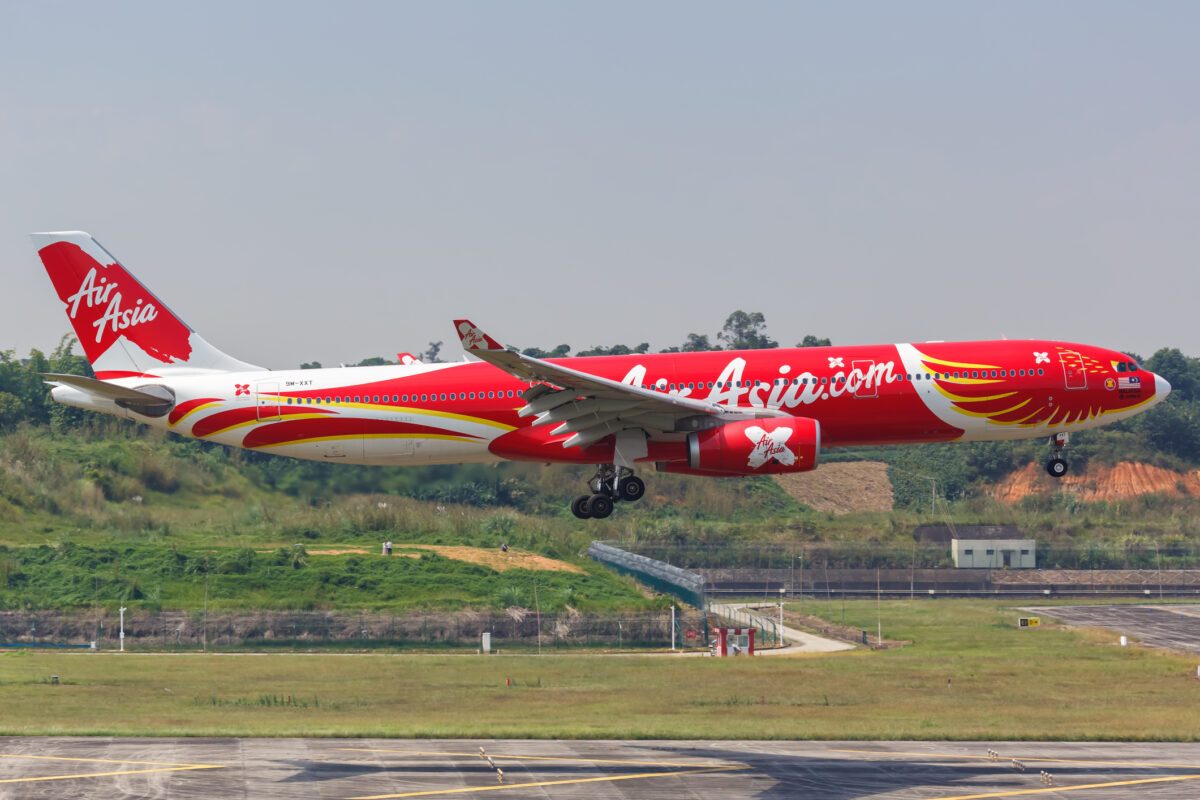
The A330-300 is central to AirAsia X’s high-density, long-haul model. Its maximum 377-seat layout has 12 Premium Flatbed seats and 365 economy seats, including the carrier’s Quiet Zone. The widebody’s combination of capacity and range allows AirAsia X to operate the approximately 5,200-mile sector while concentrating feed from the wider AirAsia network at KUL.
When AirAsia X opened the Istanbul route, it estimated that four weekly flights would offer more than 150,000 seats per year. Moving to daily service gives the airlines a departure on every day of the week, making it easier to build regular connection banks at SAW and reducing the schedule gaps inherent in the original four-weekly pattern.
Codeshare Passengers Must Check In at the Airport
AirAsia’s codeshare passenger guidance confirms that travelers receive one booking reference for the complete itinerary. Checked baggage is tagged to the final destination, and passengers do not normally need to collect it during the SAW transfer.
The process is not yet fully integrated across the airlines’ digital systems. Online and kiosk check-in are unavailable for the codeshare itineraries, requiring passengers to use the operating airline’s counter at their first departure airport. Boarding passes for both sectors are issued during that check-in process.
Seat selection is available through AirAsia for AirAsia-operated sectors, but not currently for the Pegasus segment, where seats are assigned at airport check-in. Meals for the Pegasus flight must be ordered separately through the Pegasus website using the Pegasus booking reference. Additional checked baggage also cannot currently be bought through AirAsia MOVE after booking and must instead be handled at the departure airport.
The agreement nevertheless provides protection during irregular operations. If an AirAsia delay causes a passenger to miss the Pegasus connection at SAW, AirAsia’s published policy directs the traveler to the Pegasus transfer desk for rebooking on the next available flight. Accommodation and applicable assistance are provided under the relevant recovery policy when an overnight stay is required.
Sabiha Gökçen Adds a New Long-Haul Role
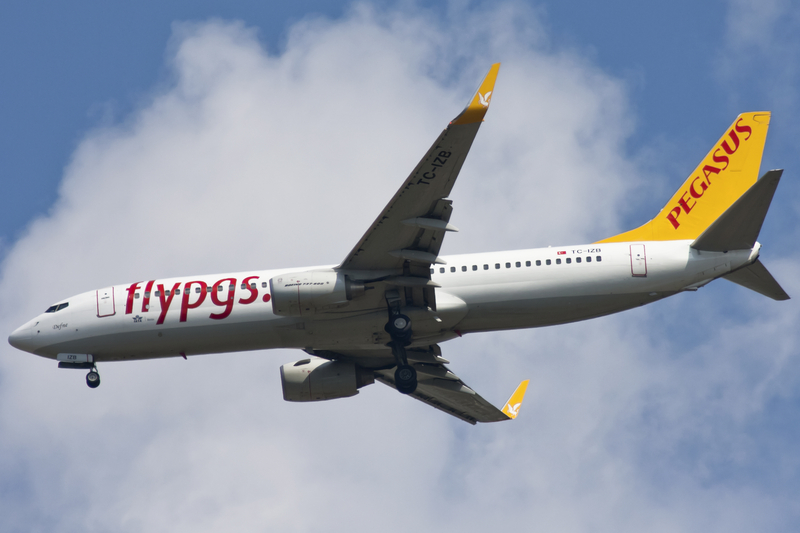
The codeshare gives Pegasus its first direct network bridge from SAW into Southeast Asia. The airline’s operation remains overwhelmingly narrowbody: its fleet totaled 129 aircraft on March 31, 2026, including 68 Airbus A321neos, 46 Airbus A320neos, six A320ceos and nine Boeing 737-800s.
That mix provides substantial short- and medium-haul capacity behind the AirAsia X arrival. The 239-seat A321neo is particularly important to Pegasus’ growth, offering more seats and lower unit costs than the airline’s smaller A320-family aircraft while remaining suited to high-volume European and regional sectors.
SAW handled 49 million passengers in 2025, according to Malaysia Airports traffic figures, an increase of 17.5% from the previous year. Its scale, Pegasus connectivity and location on Istanbul’s Asian side make it a logical transfer point for AirAsia, without requiring either airline to establish a new European operating base.
Bottom Line
AirAsia gains a European distribution and feed partner without committing its own widebody fleet to multiple thin destinations beyond Istanbul. Pegasus, in turn, gains access to Kuala Lumpur and a large collection of Southeast Asian markets that would be difficult to serve economically with its narrowbody fleet. The arrangement is therefore more consequential than the modest five-city launch map suggests.
The planned move to daily KUL-SAW service will determine how competitive the proposition becomes. Frequency matters on a connecting route: daily flying gives both airlines more flexibility to align schedules, recover disrupted passengers and sell trips that do not require long gaps between available travel dates. It also raises AirAsia X’s exposure on a long sector where sustainable connecting traffic will be as important as local Malaysia-Türkiye demand.
The next measure of progress will be how quickly the airlines move beyond the initial destinations and improve digital servicing for mixed itineraries. Airport-only check-in and fragmented ancillary management are workable at launch, but a network intended to exceed 100 connecting routes will need deeper systems integration. If that follows, the Pegasus agreement could become the model for AirAsia’s shift from a collection of affiliated low-cost carriers toward a broader partner-based network.
Keep reading FlyMag
Get the Daily Brief in the morning or the Route Watch weekly recap on Fridays. Or both.