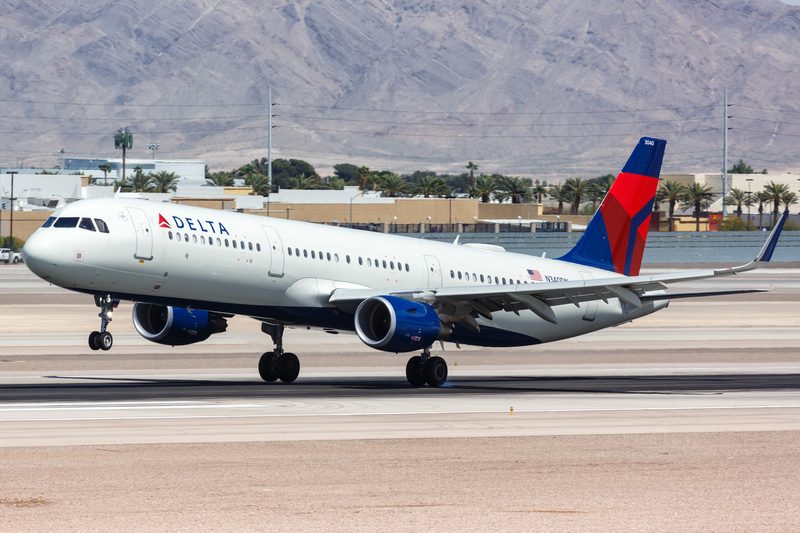
A Delta Air Lines Boeing 757-200 returned to New York John F. Kennedy (JFK) on Thursday morning after its flight crew reported a cabin pressurization problem.

Flight DL791 had departed for Phoenix (PHX) with 155 passengers and six crew members aboard. The pilots declared an emergency to obtain priority handling from air traffic control and turned the aircraft back toward New York.
The Federal Aviation Administration said the 757 landed safely at JFK at about 10:25 a.m. local time on September 10. The agency described the report as a possible pressurization issue and said it would investigate.
Read our stories in your inbox
Two aviation newsletters. Zero fluff.
Delta said the aircraft taxied normally to the gate after landing. No injuries were reported.
Aircraft Taken Out of Service for Inspection
Delta said the crew followed standard procedures and returned to JFK after identifying the cabin pressurization issue. Maintenance personnel were assigned to evaluate the aircraft, while the airline worked to place passengers on other flights to Phoenix.
The emergency declaration gave DL791 priority within the New York air traffic system. Such a declaration allows controllers to protect the aircraft’s route and provide the crew with the handling required by the circumstances; it does not, by itself, establish the severity or cause of the underlying fault.
The FAA’s initial description and Delta’s statement establish that the issue involved cabin pressurization, but the precise component or system behavior will depend on the maintenance inspection and the regulator’s follow-up. There was no evacuation after landing, and the aircraft reached its gate under its own power.
Pressurization systems regulate the movement of conditioned air through an aircraft to maintain a safe cabin altitude as the airplane climbs. The FAA’s guidance on airborne emergencies notes that transport aircraft have multiple sources of pressurized air and defined crew procedures for cases in which normal cabin pressure cannot be maintained.

A reported pressurization problem can cover a range of conditions, from abnormal indications or degraded automatic control to an inability to hold the required cabin altitude. The response depends on the indications presented to the pilots, the aircraft’s altitude and whether backup modes restore normal operation. Returning to the departure airport also places the aircraft at a Delta hub with maintenance and passenger-recovery resources.
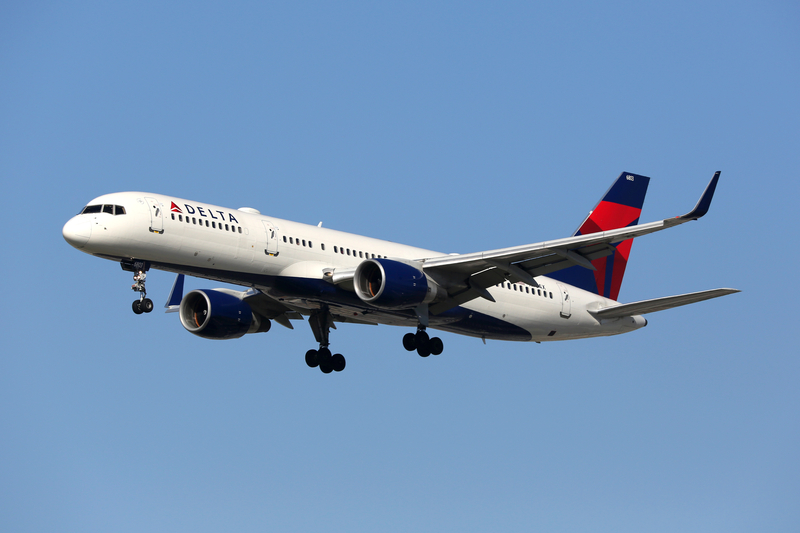
The 757 Remains an Important Delta Workhorse
DL791 was operated by a Boeing 757-200, a type Delta continues to use extensively on longer domestic sectors and high-volume routes from its hubs. The narrowbody combines transcontinental range with more capacity than Delta’s smaller single-aisle aircraft, making it well suited to a market such as JFK-Phoenix.
Delta lists four principal passenger configurations for the model. Its domestic 75D, 75G and 75H layouts accommodate between 193 and 199 passengers in Delta First, Delta Comfort+ and Main Cabin. The premium-focused 75S configuration has 168 seats, including 16 lie-flat Delta One seats.
The carrier’s 757-200 specifications give the aircraft a cruising speed of 525 mph. Published range varies by configuration from 3,370 miles to 4,705 miles, comfortably covering Delta’s principal domestic and selected international missions.
Delta Passenger’s Tarmac Outburst In Atlanta Could Bring Serious Federal Consequences
The 155-passenger load on DL791 was therefore below the capacity of any of Delta’s standard domestic 757-200 layouts. Delta did not identify the specific cabin configuration assigned to Thursday’s flight.
The 757 also occupies a distinctive place in Delta’s fleet planning. According to the airline’s current Boeing 757 fleet profile, Delta operates 67 757-200s alongside 16 longer 757-300s. The airline received its first 757 in 1984 and took delivery of the 500th example built by Boeing in 1992.
That longevity has made the 757 one of Delta’s most recognizable aircraft, but it also places the type among the carrier’s older fleets. Delta’s 2025 annual report showed that its 757-200s had an average age of 27.1 years at the end of that year. The airline owned all 76 aircraft then listed, with no 757 purchase commitments because Boeing ended production more than two decades ago.
The reduction from 76 aircraft at the end of 2025 to the 67 now listed by Delta reflects the continuing drawdown of the subfleet as newer aircraft enter service. Delta has nevertheless retained the 757 because its capacity, range and airfield performance remain valuable across parts of the network.
FAA Investigation Underway
The FAA will examine the circumstances surrounding the return, including the crew’s report and information provided by Delta. Maintenance records and findings from the aircraft inspection will determine what corrective work is required before the 757 can reenter service.
The agency’s accident and incident statements are preliminary and subject to change. Thursday’s event ended with a routine taxi to the gate, allowing Delta to handle the disruption through its normal maintenance and customer-recovery processes rather than an airfield evacuation or remote deplaning.
Bottom Line
For Delta, the immediate operational consequence is limited to the inspection of one aircraft and the recovery of a single transcontinental flight. The more significant point is that JFK gave the airline the maintenance depth and schedule breadth needed to substitute capacity and reaccommodate passengers without leaving the aircraft at an outstation.
The event also illustrates why the 757 remains difficult to replace on a one-for-one basis. Delta can deploy nearly 200 seats on a long domestic sector while retaining the performance characteristics that have kept the type useful for more than four decades. New-generation narrowbodies offer lower fuel and maintenance costs, but Delta is managing the transition while still drawing substantial network value from its remaining 757s.
Attention now turns to the maintenance finding, the aircraft’s return-to-service timeline and any additional action identified by the FAA. One pressurization return does not establish a broader fleet issue, but reliability and parts support will become increasingly important as Delta reduces the number of 757-200s in active service and transfers more flying to newer aircraft.