American Airlines has launched service at Lincoln Airport (LNK), giving southeast Nebraska a new connection to two of the carrier’s most important hubs and adding competition to a market that has spent years rebuilding its air service.

The new flights began June 4, 2026, with American adding twice-daily service between Lincoln (LNK) and Dallas/Fort Worth International Airport (DFW), plus once-daily service between Lincoln (LNK) and Chicago O’Hare International Airport (ORD). A third route, seasonal winter service between Lincoln (LNK) and Phoenix Sky Harbor International Airport (PHX), is scheduled to begin December 17.
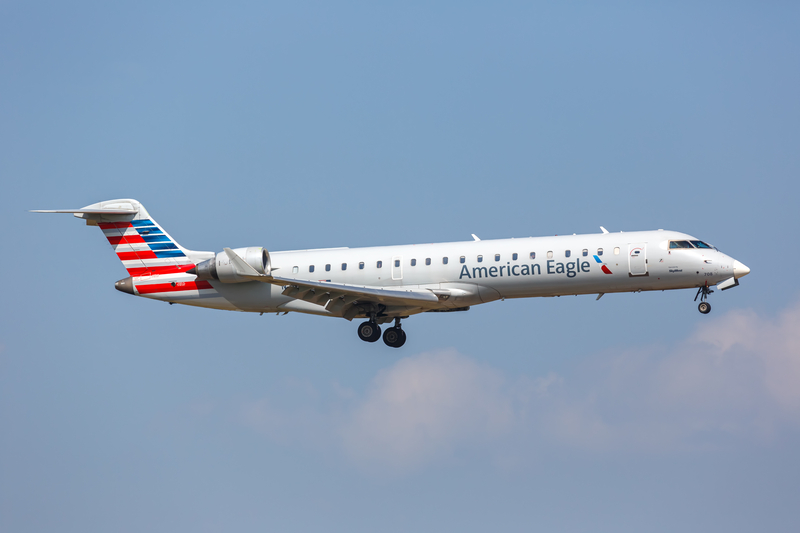
All three routes are scheduled with Bombardier CRJ-700 regional jets operating under the American Eagle brand. The aircraft gives American a dual-class regional product that fits Lincoln’s market size while still offering access to the carrier’s broader domestic and international network.
Read our stories in your inbox
Two aviation newsletters. Zero fluff.
For Lincoln, this is more than a new airline logo at the terminal. American’s arrival gives the airport a second traditional network carrier, restores more competitive hub access, and provides local travelers with a stronger alternative to driving to Omaha Eppley Airfield (OMA).
American Adds DFW And ORD From Lincoln
American’s initial Lincoln schedule is built around two major connecting hubs.
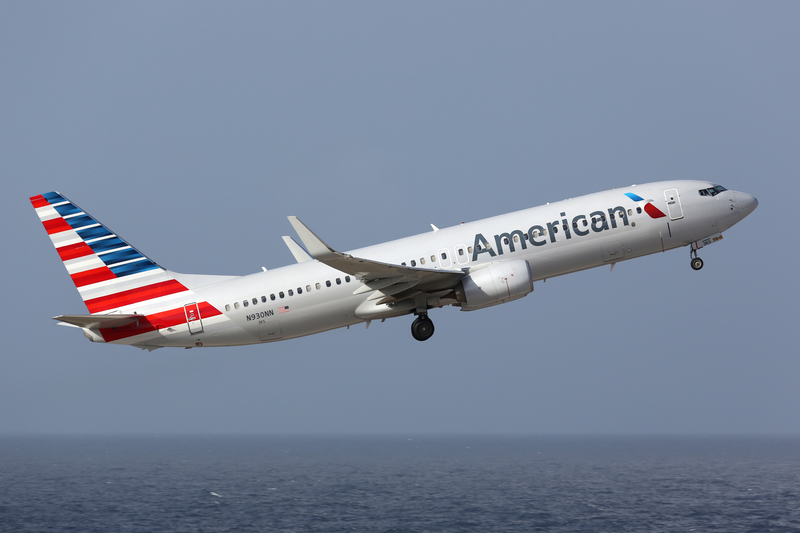
Dallas/Fort Worth (DFW) is American’s largest hub and one of the most powerful connecting airports in the world. From DFW, Lincoln travelers can connect across the southern and western United States, Latin America, Mexico, the Caribbean, and long-haul international markets.
Chicago O’Hare (ORD) gives Lincoln a second major hub option, especially for travelers heading to the Midwest, Northeast, Europe, and American’s broader oneworld network. American has been growing at ORD, and the Lincoln route fits its broader effort to add smaller U.S. markets to the Chicago hub.
The launch schedule gives Lincoln travelers three daily American departures: two to Dallas/Fort Worth and one to Chicago. That is a meaningful addition for a smaller airport because it improves both schedule utility and connection flexibility.
The Phoenix (PHX) flight scheduled for December adds another useful hub, particularly for winter leisure demand, western U.S. connections, and travelers heading to Arizona, California, the Mountain West, and Mexico.
The CRJ-700 Is The Right Aircraft For The Market
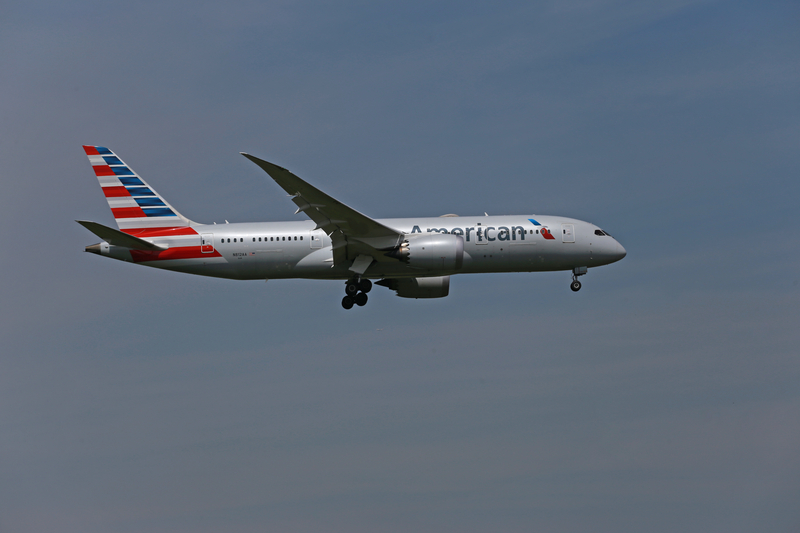
American is using the Bombardier CRJ-700 on the Lincoln routes, a practical aircraft choice for a market like LNK.
The CRJ-700 is a regional jet, but in American Eagle service it offers a more complete product than smaller 50-seat aircraft. It includes a First Class cabin and a Main Cabin, with some aircraft also offering Main Cabin Extra seats. That gives American a premium cabin option for business travelers, AAdvantage elites, and connecting passengers while keeping total capacity modest.
That matters because Lincoln is not a large hub airport. A mainline Boeing 737 or Airbus A320 would likely be too much aircraft for most daily hub flying from LNK. The CRJ-700 allows American to offer frequency and connectivity without oversupplying the market.
The aircraft also fits the stage lengths. Lincoln (LNK) to Dallas/Fort Worth (DFW) is long enough to benefit from a jet product but short enough to be well within the CRJ-700’s normal operating profile. Lincoln (LNK) to Chicago O’Hare (ORD) is a shorter regional hub route, and Lincoln (LNK) to Phoenix (PHX) will be a longer seasonal winter sector but still appropriate for the aircraft.
For passengers, the CRJ-700 means no middle seats in the main cabin because of the aircraft’s 2-2 economy layout. That is a small but real comfort advantage compared with larger narrowbodies.
Why DFW Is The Most Important Addition
Dallas/Fort Worth is the most strategically important new route for Lincoln.
DFW gives LNK access to American’s largest hub, with connections across hundreds of markets. For Lincoln passengers, that can mean easier one-stop access to cities that would otherwise require less convenient routings through Omaha (OMA), Denver (DEN), Chicago (ORD), Minneapolis/St. Paul (MSP), Atlanta (ATL), or other hubs.
The DFW route is also twice daily, which is important. Frequency matters at small and midsize airports because a single daily flight can be difficult to use for business trips, tight connections, or same-day travel. Two daily flights give passengers more flexibility and make the route more useful for both local travelers and connecting itineraries.
For American, DFW is also the easiest hub through which to support a smaller city. The hub has enormous domestic breadth, strong international connectivity, and the scale to absorb regional feed from markets like Lincoln.
That is why DFW is likely to be the backbone of American’s new LNK operation.
ORD Creates Competition With United
The Chicago route is also important because it puts American directly into a market already served by United Airlines.
United currently connects Lincoln (LNK) with Chicago O’Hare (ORD) and Denver (DEN), giving LNK access to two of United’s largest hubs. American’s new ORD service means Lincoln passengers now have a choice of network carriers on the Chicago route.
That competition matters.
For years, Lincoln’s challenge has been retaining local travelers who might otherwise drive to Omaha (OMA), where schedule options are broader and fares can be more competitive. Adding American at ORD gives LNK another major airline option and may help improve fare competition, loyalty choice, and schedule resilience.
It also gives business travelers more flexibility. A traveler loyal to AAdvantage now has a reason to use LNK rather than driving to another airport. A traveler loyal to United still has United. That kind of choice is exactly what smaller airports try to build.
Phoenix Adds A Seasonal Western Gateway
The seasonal Phoenix (PHX) route scheduled for December 17 gives American a third angle at Lincoln.
Phoenix is one of American’s major western hubs and is especially useful during the winter season. It offers connections across Arizona, California, Nevada, the Pacific Northwest, the Mountain West, Hawaii, and parts of Mexico. It also serves a strong winter leisure market, with sun-seeking demand from colder-weather regions.
For Lincoln, Phoenix is not just a warm-weather destination. It is another hub that diversifies connectivity beyond Chicago and Dallas/Fort Worth.
Seasonal service is a sensible way to test the market. If winter demand performs well, American can evaluate whether the route deserves a longer season, more frequency, or a repeat in future winters. If demand is concentrated only around peak periods, the airline can keep the route seasonal and still serve the highest-value travel window.
Lincoln Gets A Second Network Carrier
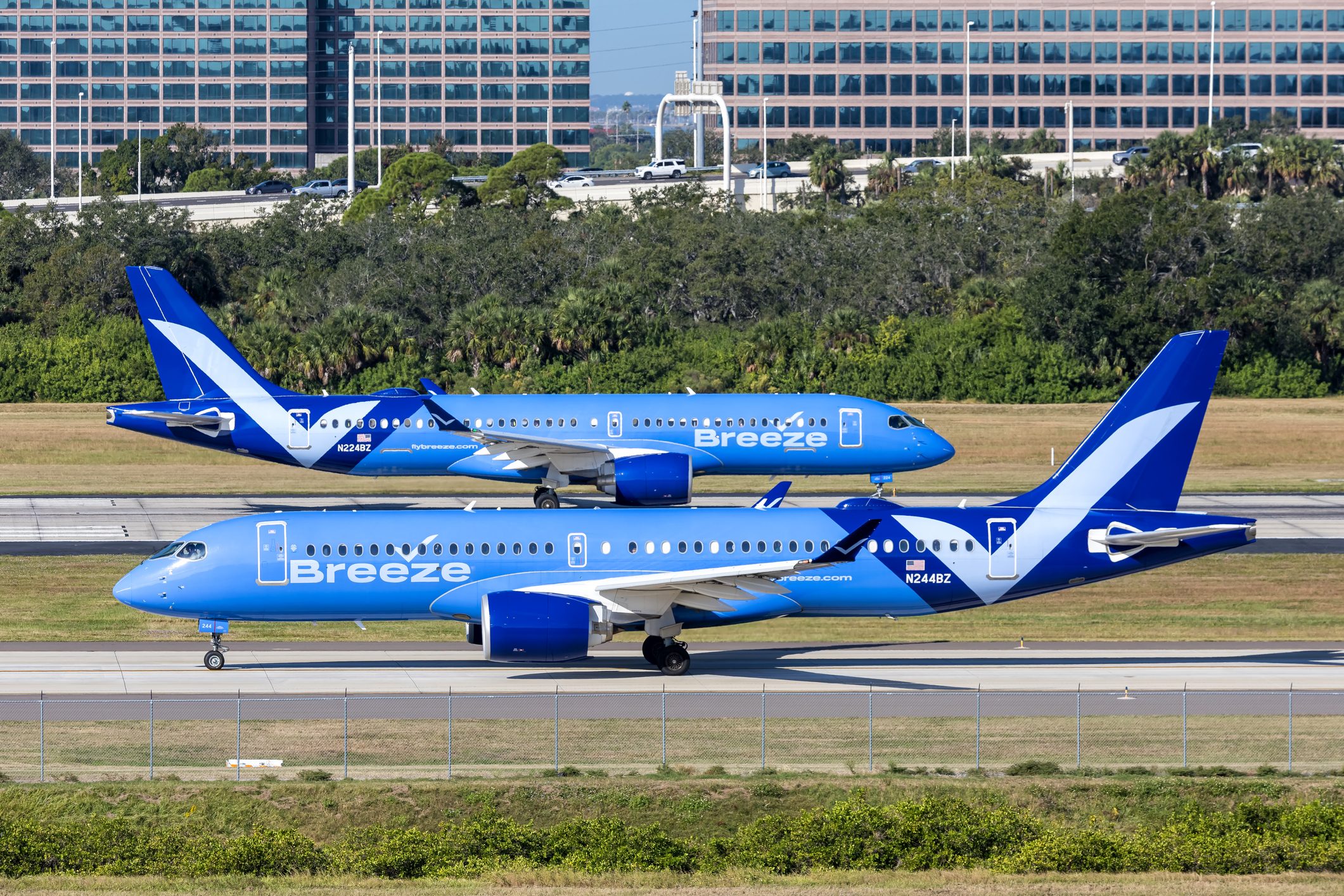
American becomes the third current passenger airline at Lincoln Airport, joining United Airlines and Breeze Airways.
The carrier mix now gives LNK three different airline models. United provides traditional hub connectivity to Chicago (ORD) and Denver (DEN). American adds hub access through Dallas/Fort Worth (DFW), Chicago (ORD), and seasonally Phoenix (PHX). Breeze provides leisure-focused flying to Orlando (MCO), Las Vegas (LAS), and Orange County (SNA), with some service operating as one-stop, no-plane-change itineraries.
That combination is healthier than relying on a single type of service.
Network carriers are important because they connect smaller cities with the global airline system. Leisure carriers are important because they add nonstop options to popular destinations that may not be served through traditional hub economics. Lincoln now has both.
The airport still has work to do, but the addition of American gives the market a stronger foundation.
A Market Rebuilding After Disruption
Lincoln’s commercial air service has had a difficult recent history.
Delta Air Lines suspended Lincoln service during the pandemic period and later ended its remaining flying, leaving United as the airport’s only traditional network carrier for a time. In 2023, Red Way attempted to build a leisure-focused operation from LNK using Global Crossing Airlines-operated aircraft, but that venture shut down within months.
Breeze later brought new leisure routes, and now American is adding conventional hub service. That sequence matters because it shows LNK moving from instability toward a more balanced network.
The airport’s challenge is structural. Omaha (OMA) is roughly an hour away and offers a larger airline schedule, more carriers, and more nonstop destinations. Many Lincoln-area travelers have long been willing to drive to Omaha when fares or schedules are better.
American’s arrival is an attempt to keep more of those travelers local.
The Renovated Terminal Helps The Case
Lincoln Airport’s recent terminal investment also matters.
The airport completed a two-year, $56 million renovation in 2024. The project added new baggage claim belts, relocated customer service and rental car areas, upgraded public spaces, expanded post-security amenities, and improved the passenger experience.
That investment is important because air service development is not only about route incentives and airline meetings. Airlines want to see that an airport can handle growth, provide a good customer experience, and support multiple carriers without operational friction.
Lincoln’s updated terminal gives the airport a stronger platform as it tries to win and retain service.
For travelers, the renovation also strengthens LNK’s main selling point: convenience. A smaller airport only works if it is easy. Shorter walks, simpler parking, faster processing, and a modernized terminal all help Lincoln compete against larger alternatives.
Why This Matters For Southeast Nebraska
American’s launch has regional significance beyond Lincoln itself.
The airport serves Nebraska’s capital city, the University of Nebraska, state government, local businesses, healthcare, agriculture, insurance, manufacturing, and a broader southeast Nebraska catchment. Reliable hub access is important for economic development, university travel, government travel, sports, conventions, and local companies with national or international customers.
DFW and ORD provide two very different forms of connectivity. Dallas/Fort Worth opens broad north-south and international access. Chicago adds Midwest, Northeast, and transatlantic connectivity. Phoenix will add a winter western gateway.
Together, the routes give Lincoln more reach without needing nonstop flights to dozens of cities.
That is how smaller airports build relevance: by securing reliable access to powerful hubs.
The Next Test Is Local Support
The success of American’s Lincoln service will depend heavily on whether local travelers use it.
Small-airport service can be fragile. Airlines will watch load factors, fares, connection performance, local corporate support, and how many passengers choose LNK instead of Omaha (OMA). If Lincoln travelers support the new flights, American has reason to keep and potentially grow them. If passengers continue driving to Omaha, the routes become harder to justify.
That is especially true for the Chicago route, where American competes directly with United. It is also true for DFW, where the route’s value depends on both local Lincoln demand and connecting performance through American’s network.
The seasonal Phoenix route will be another test. If PHX performs well during winter, it could help prove that Lincoln can support more than basic hub connectivity.
Bottom Line
American Airlines has launched service at Lincoln Airport (LNK), adding twice-daily flights to Dallas/Fort Worth (DFW) and once-daily flights to Chicago O’Hare (ORD) from June 4, 2026. Seasonal winter service to Phoenix (PHX) is scheduled to begin December 17.
All three routes are scheduled with Bombardier CRJ-700 regional jets operating under the American Eagle brand. The aircraft gives Lincoln a right-sized dual-class product while connecting the airport to three major American Airlines hubs.
For Lincoln, the launch is a major air-service win. American gives the airport a second traditional network carrier, adds competition with United on the Chicago route, and provides access to American’s largest hub at Dallas/Fort Worth.
The bigger question is whether Lincoln can retain more local travelers who might otherwise drive to Omaha (OMA). If the community supports the new service, American’s arrival could mark a turning point for LNK: not just another inaugural flight, but a real rebuilding step for southeast Nebraska’s commercial air service.
Keep reading FlyMag
Get the Daily Brief in the morning or the Route Watch weekly recap on Fridays. Or both.