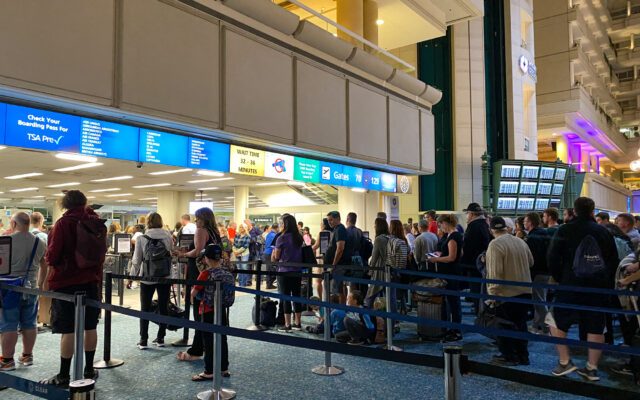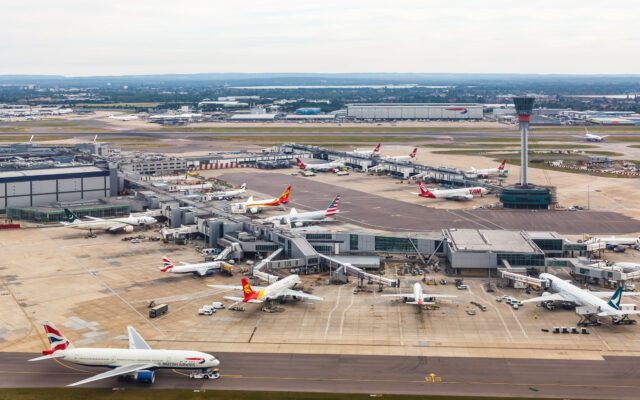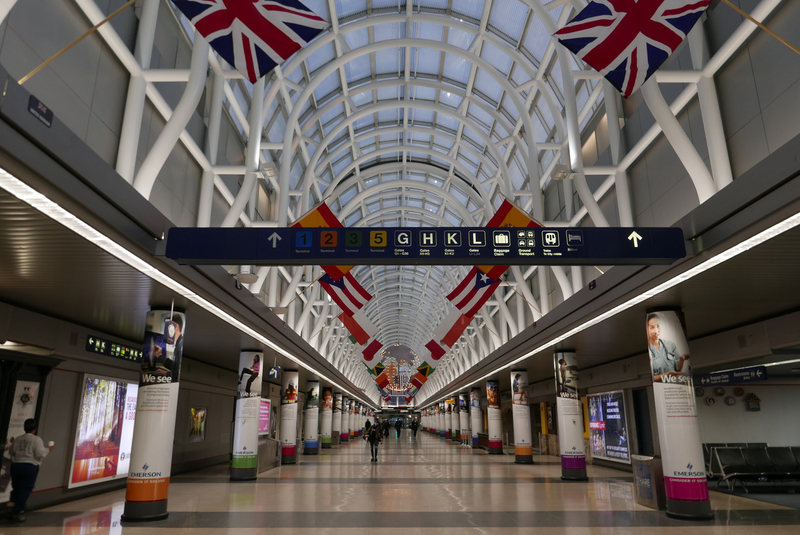
The Federal Aviation Administration has moved to impose a temporary flight cap at Chicago O’Hare International Airport (ORD) for the summer 2026 season, in one of the clearest signs yet that U.S. regulators are no longer willing to let unrealistic airline schedules drive predictable disruption at major hubs.
Under the new limits, ORD will be capped at 2,708 daily operations from May 17 through October 24, 2026. That is a meaningful reduction from the more than 3,080 peak daily flights that had been planned for the summer schedule. For an airport as large and strategically important as O’Hare, the move is significant not just because of the raw number of flights being cut, but because of what it says about the FAA’s current posture: schedule credibility now matters more than theoretical growth.
For airline professionals, that is the real story. This is not simply a delay-mitigation initiative. It is a federal acknowledgment that ORD’s planned summer operation had moved beyond what the airport and air traffic system could realistically absorb.
Read our stories in your inbox
Two aviation newsletters. Zero fluff.
ORD’s Schedule Had Drifted Too Far From What The System Could Handle
Chicago O’Hare International Airport (ORD) is one of the busiest hubs in the world and, by flight volume, the busiest airport in the United States. That scale is exactly what makes it so operationally sensitive.
According to the Department of Transportation and FAA, carriers had planned more than 3,080 flights on peak summer days at ORD in 2026, representing a 14.9% increase over summer 2025. That level of schedule growth was clearly out of line with the airport’s current operating environment, especially after last summer, when fewer than 60% of arrivals and departures were on time.
That statistic is central to understanding why regulators acted. Once on-time performance falls to that level at a major connecting hub, the issue is no longer just passenger inconvenience. It becomes a structural network problem. Delays compound, aircraft rotations slip, crews misconnect, gate utilization degrades, and disruption spreads well beyond the local airport.
In other words, the FAA was not responding to a one-off bad month. It was reacting to a pattern that had already shown the airport was overscheduled.
Why O’Hare Is So Vulnerable To Overscheduling
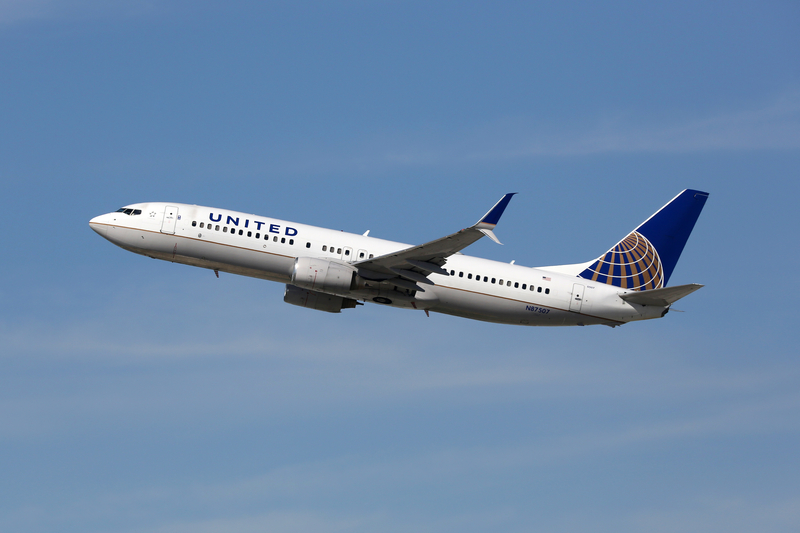
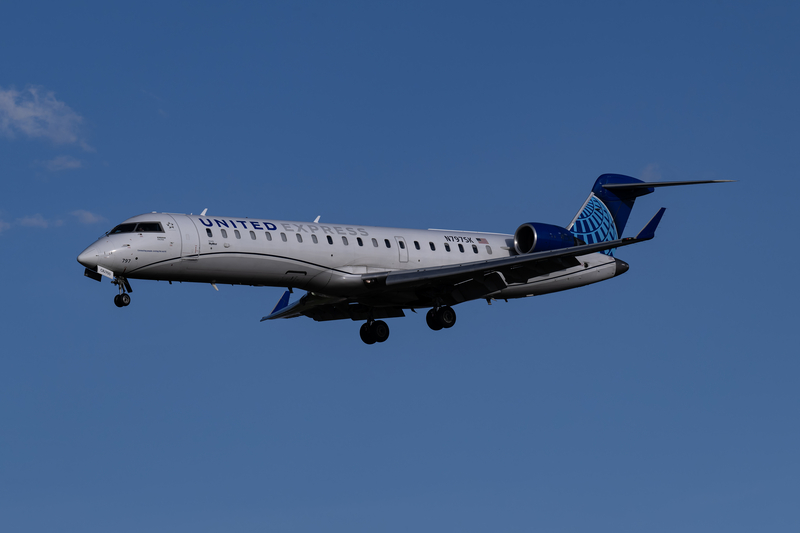
O’Hare’s scale is both its strength and its challenge. The airport is a cornerstone hub for both United Airlines and American Airlines, with large connecting banks, high runway utilization, and dense wave structures that leave little slack in the system.
Unlike a smaller point-to-point airport, ORD does not just process origin-and-destination passengers. It also functions as a major transfer complex, meaning delays in one part of the day can quickly distort the rest of the schedule. A late inbound narrowbody from the East Coast can affect a transcontinental turn, which can then affect a bank of regional connections, which can then create gate and towing conflicts. At a hub this dense, the network consequences of congestion are magnified.

Delta Passenger’s Tarmac Outburst In Atlanta Could Bring Serious Federal Consequences
The FAA also pointed to constrained gate capacity and ongoing taxiway closures from construction as part of the problem. Those issues matter because they reduce the airport’s practical flexibility even if runway demand remains high. An airport can have theoretical airfield capacity that looks sufficient on paper while still underperforming in the real world because aircraft cannot reach gates efficiently, departures cannot sequence cleanly, or taxi flows become too compressed.
This Is Not Just About Weather Or Staffing In Isolation
It is always tempting to explain O’Hare delays as a weather story. Certainly, ORD is vulnerable to thunderstorms, convective activity, winter operations, and the cascading effects of weather across the Midwest. But the FAA’s summer 2026 cap makes clear that the federal view is broader than meteorology alone.
The agency explicitly tied the move to overscheduling, infrastructure constraints, and staffing-related operational limits. That is a more important point than it may first appear.
Airports like Chicago O’Hare International Airport (ORD) are often pushed into disruption by a combination of small constraints rather than one singular failure. Slightly ambitious schedules, a tighter-than-normal gate picture, ongoing construction, ATC workload, and marginal recovery windows can all interact until the hub loses resilience. Once that happens, even manageable weather can trigger network-wide collapse.
The FAA’s remedy is therefore aimed at the root issue: reduce the number of flights to a level that more closely reflects the airport’s actual summer operating envelope.
The 2,708 Daily Limit Is A Capacity Discipline Measure
The cap of 2,708 daily operations is not a symbolic number. It is a schedule-discipline tool.
By limiting the number of departures and arrivals that can be planned into the summer schedule, the FAA is effectively forcing airlines to align their ambitions with system reality. That should improve the odds that remaining flights operate closer to their published times, rather than flooding the airport with more movements than the airfield, gates, taxiways, and controller staffing can support consistently.
For network carriers, this creates a strategic challenge. Airlines generally prefer to protect frequency, maintain bank integrity, and preserve key connecting structures at hubs. When a hard cap is imposed, they must decide whether to trim frequencies, consolidate smaller markets, retime operations, or use larger aircraft to maintain seat volume with fewer movements.
That is where the aviation-business angle becomes particularly interesting. A flight cap does not just reduce operations. It changes competitive choices. At ORD, every slot-like opportunity to operate becomes more valuable when the number of available movements is constrained.
Airlines Agreed To Cut Back, But The FAA Made The Decision
The FAA said airlines agreed to reduce schedules after a series of one-on-one meetings designed to bring the operation back to a more manageable level. That collaborative aspect is important because it suggests carriers recognized the alternative: keep filing unrealistic schedules, then absorb the reputational and financial costs of chronic underperformance.
Still, this was ultimately a regulatory intervention, not simply a voluntary commercial reset. The final order allocates operations based on approved summer 2025 schedules, effectively using last year as the reference point for what airlines can expect this year.
That matters for competitive balance. Any time regulators step in to constrain a major hub, the allocation framework becomes just as important as the cap itself. Basing the operation on previously approved schedules tends to favor incumbency and stability, which is often the practical choice in a short-term operational fix. But it also means growth ambitions have to be deferred, at least for this summer.
The FAA Is Also Trying To Attack The Problem Beyond The Cap
The operation cap is the headline, but it is not the only measure being deployed around Chicago O’Hare International Airport (ORD).
The FAA says it is also bringing in more air traffic controllers, working to improve the speed of controller training, optimizing routes and surrounding airspace, and increasing Collaborative Decision Making calls between the agency, airlines, and the airport during high-risk periods.
Those secondary measures are important because a flight cap alone does not solve the underlying efficiency problem. It reduces demand pressure, but the broader system still needs to process flights more effectively. Additional staffing helps address sector workload and resilience. Route and airspace optimization can improve flow and reduce airborne and ground delays. More intensive CDM coordination can help all stakeholders respond faster when disruption starts to build.
Together, those actions suggest the FAA is treating ORD not as a temporary embarrassment, but as a hub that needs more active operational management through the summer peak.
Why This Matters Well Beyond Chicago
This decision is about more than Chicago O’Hare International Airport (ORD). It is another signal that federal regulators are becoming more willing to step in when airport schedules drift too far from operational reality.
For years, airlines have had strong incentives to publish ambitious schedules at major hubs. A larger schedule can support market presence, improve customer choice on paper, and strengthen connection opportunities in a competitive marketplace. The problem is that schedules only help if they can actually be delivered.
When a hub repeatedly runs below acceptable reliability thresholds, every stakeholder loses. Airlines burn goodwill and money. Airports absorb reputational damage. Crews and controllers operate in a more stressed environment. Passengers see the system as unreliable. The FAA’s move at ORD suggests that, at least in this case, regulators decided the market would not self-correct fast enough.
That is a notable policy stance, especially at one of the country’s most important hub airports.
What Airlines At ORD Are Likely To Do Next
For airlines operating at Chicago O’Hare International Airport (ORD), the focus will now shift from schedule ambition to schedule optimization.
That likely means prioritizing flights with the highest strategic value, preserving the strongest banks, and making tougher decisions on marginal frequencies. Larger-gauge aircraft could become more attractive where practical, since airlines can preserve seat capacity while giving up fewer movements. High-yield business markets and key international feed will probably receive added protection, while thinner domestic frequencies may face greater scrutiny.
From an airport-operations standpoint, the success of the cap will not be measured by how many flights were cut. It will be measured by whether the remaining schedule performs materially better. If on-time performance improves, cancellations fall, and the hub becomes more predictable, the FAA will have made its point.
If not, the industry may start asking whether ORD’s structural constraints require deeper intervention than a single-season scheduling reset.
Bottom Line
The FAA’s temporary summer cap at Chicago O’Hare International Airport (ORD) is a blunt but important admission that the airport’s planned 2026 schedule had outgrown what the system could reliably handle. By cutting daily operations to 2,708 from May 17 through October 24, regulators are forcing airlines to prioritize realistic execution over paper growth.
At a hub as large as ORD, that matters. Overscheduling does not just create delays. It erodes the integrity of the entire operation. The FAA is betting that fewer flights, better aligned with real-world capacity, will produce a more reliable and safer summer for airlines, crews, and passengers alike.
Keep reading FlyMag
Get the Daily Brief in the morning or the Route Watch weekly recap on Fridays. Or both.