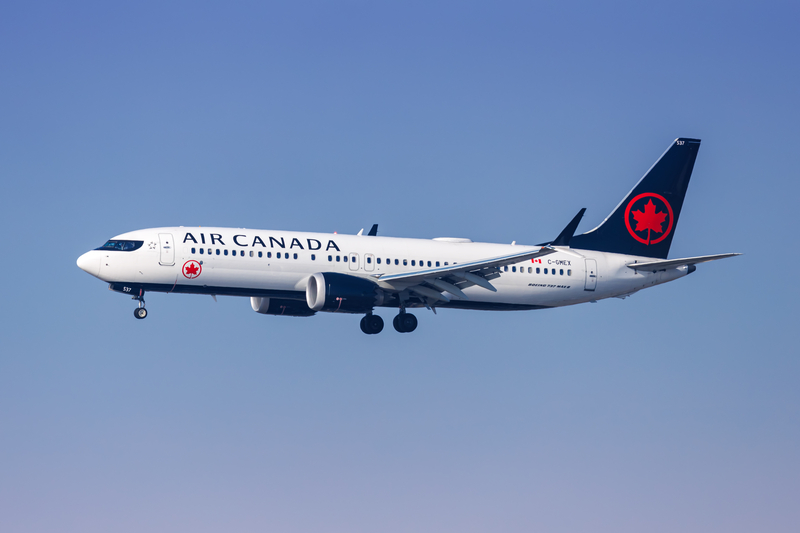
Air Canada is significantly expanding its Boeing 737 MAX 8 transatlantic operation for summer 2026, even as the airline prepares for the arrival of the Airbus A321XLR.

In the third quarter of 2026, Air Canada is scheduled to operate 326 one-way Boeing 737 MAX 8 departures to Europe, up from 249 in the same period of 2025. That is a 30.9% increase in flights. Seat capacity is rising even more sharply, by 34.2%, thanks to cabin reconfiguration as some of the aircraft begin transitioning toward Air Canada Rouge.
That alone is notable. Many expected the incoming A321XLR to begin taking over more of Air Canada’s thinner transatlantic flying. Instead, for now at least, the 737 MAX 8 is doing even more of it.
Read our stories in your inbox
Two aviation newsletters. Zero fluff.
The 737 MAX 8 Remains Central To Air Canada’s Europe Strategy
Air Canada has spent years using narrowbody aircraft across the North Atlantic in a way few major carriers have matched at this scale.
The logic is straightforward. From eastern Canadian hubs such as Montréal-Trudeau International Airport (YUL), Toronto Pearson International Airport (YYZ), and Halifax Stanfield International Airport (YHZ), the Boeing 737 MAX 8 can reach a range of secondary European destinations that would be harder to justify with a larger widebody. That gives the airline a way to build frequency and network breadth without overcommitting capacity.
For summer 2026, that strategy is clearly being pushed further.
Iceland Remains The Anchor
Reykjavík Keflavík Airport (KEF) is once again the cornerstone of Air Canada’s narrowbody Europe operation.
In the third quarter of 2026, KEF will be the only European airport to receive Air Canada Boeing 737 MAX 8 service from more than one Canadian hub. The airline is scheduled to operate the type from both Toronto (YYZ) and Montréal (YUL), with planned frequencies rising slightly compared with last summer.
That makes sense. Iceland sits in a sweet spot for narrowbody transatlantic flying from eastern Canada. It works operationally, it carries strong leisure appeal, and it gives Air Canada a market that can support regular summer service without the complexity of larger long-haul aircraft.
Halifax Continues To Punch Above Its Weight
One of the most interesting parts of Air Canada’s 737 MAX transatlantic map is the role of Halifax (YHZ).
The airport continues to be a very useful North Atlantic platform for the airline, and in 2026 it remains central to the strategy. London Heathrow Airport (LHR) stays on the map as a daily Boeing 737 MAX 8 route from Halifax, while Brussels Airport (BRU) joins the operation as a new transatlantic destination from Nova Scotia.
That is important because it shows Halifax is no longer just a convenient geographic outpost for occasional Europe flying. It has become a meaningful narrowbody transatlantic gateway in its own right. For Air Canada, that gives the airline another way to spread European access across eastern Canada rather than relying entirely on Toronto and Montréal.
Edinburgh Grows, While New Markets Appear
Beyond Iceland and Halifax, Air Canada is also expanding service in several smaller but strategically interesting markets.

Edinburgh Airport (EDI), which already saw Boeing 737 MAX 8 service from Montréal (YUL), is scheduled for a larger operation in the third quarter of 2026. That tells you the route likely performed well enough to justify a stronger return.
Three additional Europe routes are also entering the 737 MAX transatlantic mix for 2026:
Those are exactly the sort of routes this aircraft is meant to support. None of them would necessarily demand large daily widebody flying, but all are markets where Air Canada can use a narrowbody to create a viable nonstop product with relatively disciplined capacity.
The Cabin Reconfiguration Is A Bigger Story Than It Looks
One reason seat capacity is rising faster than flight numbers is the cabin transition tied to Air Canada Rouge.
Air Canada has begun moving Boeing 737 MAX 8 aircraft toward Rouge, its leisure-focused subsidiary, and the new layouts increase seat density compared with the older mainline configuration. That changes the economics of these routes immediately. The airline can offer more seats on the same basic airframe, which is especially valuable on leisure-heavy transatlantic sectors where pricing power is more limited.
This also shows that the 737 MAX 8’s role in Air Canada’s network is evolving, not shrinking. The aircraft is no longer just a mainline narrowbody used opportunistically across the Atlantic. It is becoming part of a broader leisure and lower-cost growth plan as well.
Business Class Passengers Will Notice The Limits
There is one important caveat for premium travelers.
These flights may be long-haul in distance, but they are still being operated by narrowbody Boeing 737 MAX 8 aircraft. That means no lie-flat business class seats. Instead, premium passengers get a recliner-style product in a 2-2 layout, closer to North American domestic first class than to a long-haul widebody business cabin.
That does not make the service weak. But it does mean passenger expectations need to be set correctly. These are long sectors, but they are not being sold with a traditional widebody premium experience.
The A321XLR Is Coming — But Not Fast Enough To Change This Summer
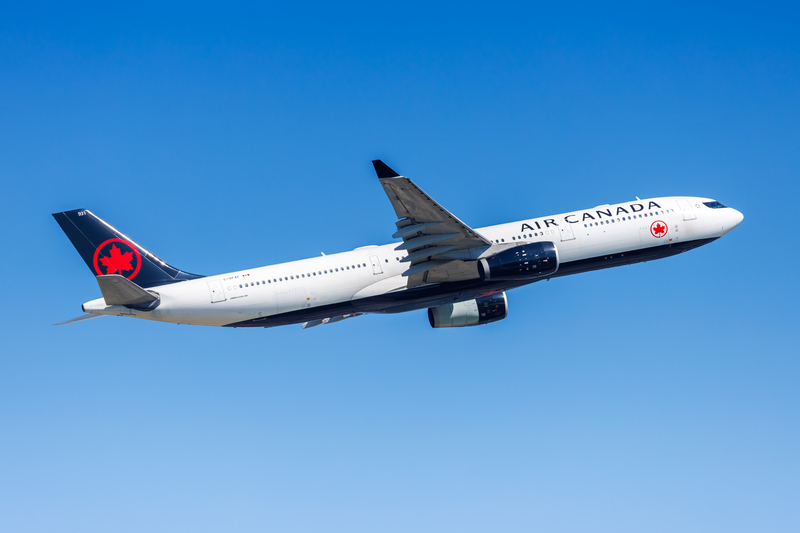
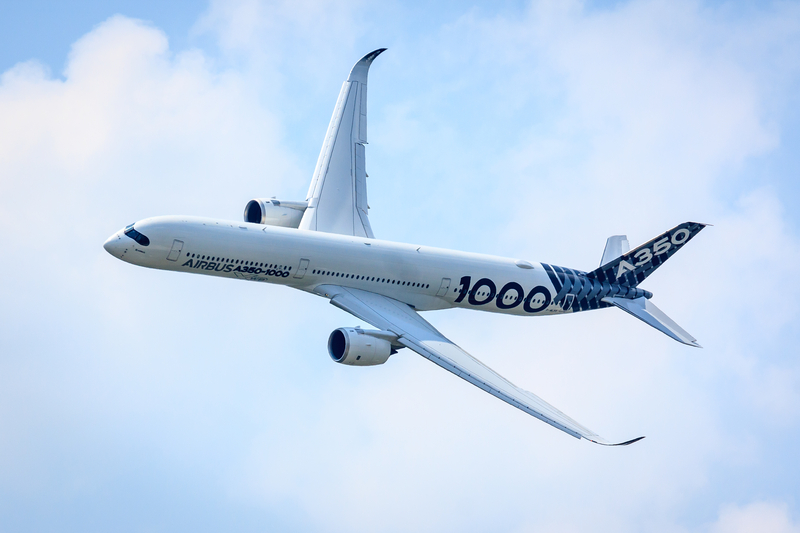
The Airbus A321XLR remains a major part of Air Canada’s future narrowbody long-haul strategy.
The airline has 30 on order, and the type is expected to eventually take over many of the thinner long-range missions now handled by the Boeing 737 MAX 8. That transition is still coming. But summer 2026 shows that the MAX remains essential in the meantime.
In other words, the A321XLR has not reduced the importance of the 737 MAX yet. If anything, the current schedule suggests Air Canada is leaning on the Boeing fleet even harder while it waits for the new Airbus to arrive in meaningful numbers.
Bottom Line
Air Canada’s summer 2026 schedule shows the Boeing 737 MAX 8 remains at the heart of its thinner transatlantic strategy.
With 326 one-way departures to Europe planned in the third quarter, up 30.9% from a year earlier, the airline is using the type more aggressively than before across markets such as Reykjavík (KEF), London Heathrow (LHR), Edinburgh (EDI), Brussels (BRU), Nantes (NTE), and Ponta Delgada (PDL).
For aviation readers, the key point is simple: even with the Airbus A321XLR on the horizon, Air Canada is not winding down its 737 MAX transatlantic operation. It is expanding it.
Keep reading FlyMag
Get the Daily Brief in the morning or the Route Watch weekly recap on Fridays. Or both.