A United Airlines flight from Chicago O’Hare International Airport (ORD) to Minneapolis–St. Paul International Airport (MSP) diverted to Madison, Wisconsin, on Friday night after an onboard security incident involving an unruly passenger.

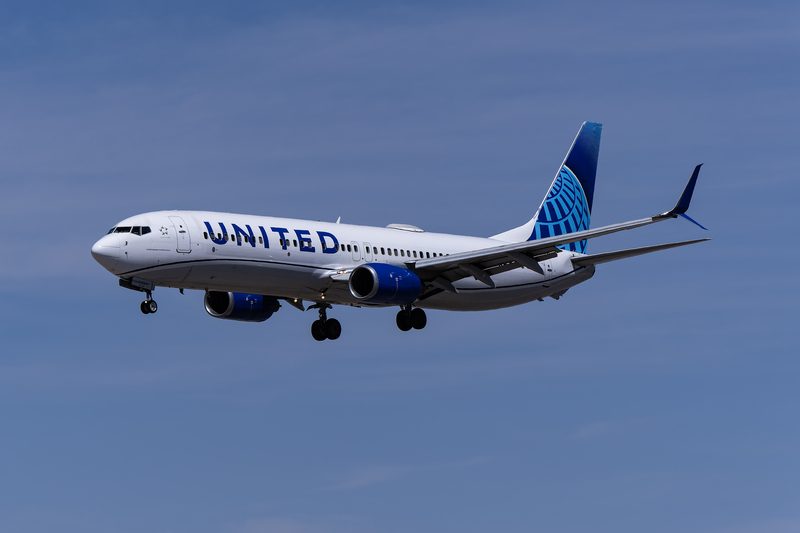
United Flight UA2005, operated by a Boeing 737-900ER, landed safely at Dane County Regional Airport (MSN) after the crew reported a security concern in the cabin. Law enforcement officers who were already on board helped restrain the passenger before the aircraft arrived in Madison (MSN), where local deputies removed the individual from the flight.
There were 147 passengers and six crew members on board. No injuries were reported.
Read our stories in your inbox
Two aviation newsletters. Zero fluff.
While some early reports described the incident as an attempted cockpit breach, United’s public statement was more measured, referring to a security concern involving an unruly passenger. Air traffic control audio and passenger accounts, however, indicate the situation was serious enough for the crew to divert rather than continue the short remaining distance to Minneapolis (MSP).
Flight UA2005 Diverts From Its Planned Route
United Flight UA2005 was scheduled to operate a routine evening domestic sector from Chicago O’Hare (ORD) to Minneapolis–St. Paul (MSP). Under normal conditions, the flight is a short hop across the Upper Midwest, typically blocked at around 90 minutes depending on routing, traffic, and weather.

Instead, the Boeing 737-900ER diverted to Madison (MSN), roughly midway between Chicago (ORD) and Minneapolis (MSP), after the cabin situation escalated.
From an operational standpoint, Madison (MSN) was a logical diversion point. Dane County Regional Airport has a runway long enough to accommodate Boeing 737 operations, is close to the aircraft’s route of flight, and offers access to law enforcement and ground support without requiring the crew to continue toward the destination with an unresolved onboard threat.
For pilots, that is the key decision point in an event like this. Once a passenger creates a potential security issue, the question is no longer whether the aircraft can physically continue to Minneapolis (MSP). The question is whether continuing is the safest and most controlled option for the passengers, crew, and aircraft.
The crew chose to get the aircraft on the ground.
Why A Cockpit-Related Threat Is Treated So Seriously
Any reported attempt to move toward or interfere with the flight deck is treated with extreme seriousness in commercial aviation.
Modern airline procedures are built around protecting control of the aircraft. Since the post-9/11 cockpit security overhaul, flight deck doors on U.S. commercial aircraft have been reinforced, access procedures have been tightened, and crews are trained to treat unauthorized cockpit access as a critical security concern.
That does not mean every cabin disturbance is a hijacking attempt. Most unruly passenger events involve intoxication, aggressive behavior, refusal to follow crew instructions, verbal abuse, or physical confrontation in the cabin. But once an incident involves movement toward the cockpit area, or a possible attempt to interfere with flight crew access, the risk assessment changes immediately.
In industry threat-classification terms, an attempted or actual breach of the flight crew compartment is considered one of the most serious categories of unruly passenger behavior. Even if the passenger never gets near the controls, the attempt itself creates an operational emergency because it can distract crew, alarm passengers, and require immediate intervention by cabin crew, pilots, and, when available, law enforcement officers on board.
That appears to be why United UA2005 did not continue directly to Minneapolis (MSP), despite being on a relatively short domestic route. The safest option was to divert to Madison (MSN), secure the aircraft on the ground, remove the passenger, and allow authorities to take over.
Law Enforcement On Board Helped Restrain The Passenger
One notable detail in this incident is that law enforcement officers were already traveling on the aircraft and assisted in restraining the passenger.
That likely made a major difference.
Flight attendants are trained to manage disruptive passengers, de-escalate conflicts, coordinate with the flight deck, and protect the cabin. But a serious physical confrontation, especially one involving a possible cockpit security concern, can quickly exceed what cabin crew should be expected to handle alone. When trained law enforcement officers are on board and able to assist, the crew gains an important tactical advantage.
Passenger accounts suggest the individual had shown signs of unusual behavior before the aircraft departed Chicago (ORD), including standing up while the aircraft was still on the ground. Later, the situation reportedly escalated after takeoff. Crew members also sought help from anyone on board who could speak Russian, suggesting there may have been a language barrier or communication difficulty during the incident.
Authorities later said the passenger was a 75-year-old man who appeared confused and was experiencing a mental health crisis. That detail is important because it changes the tone of the incident. The diversion was still a serious security response, but officials did not present the event as a conventional criminal hijacking plot.
The passenger was removed at Madison (MSN), and the flight later continued to Minneapolis (MSP).
The Aircraft: United’s Boeing 737-900ER
The aircraft involved was a United Airlines Boeing 737-900ER, registered N69818.
The Boeing 737-900ER is one of the largest members of the 737 Next Generation family and is widely used by United on domestic trunk routes, high-density short-haul sectors, and medium-haul flying across the carrier’s U.S. network. Compared with the 737-800, the 737-900ER has a longer fuselage and additional capacity, making it useful on routes where United wants narrowbody economics with more seats.
United’s 737-900ER aircraft are typically configured with 179 seats, including 20 domestic First Class seats and 159 seats in Economy, including Economy Plus. That makes the aircraft a common workhorse on routes through major United hubs such as Chicago O’Hare (ORD), Denver (DEN), Houston Intercontinental (IAH), Newark (EWR), San Francisco (SFO), and Washington Dulles (IAD).
On a Chicago (ORD) to Minneapolis (MSP) flight, a 737-900ER gives United more capacity than smaller Airbus A319, Boeing 737-700, or regional jet equipment. It is a relatively short mission for the aircraft, but Chicago O’Hare (ORD) is one of United’s largest hubs, and the airline frequently uses mainline narrowbodies on dense Midwest and connecting-bank routes.
In this case, the aircraft’s size also meant there were more passengers and crew involved in the diversion decision. A disruptive passenger event on a 179-seat narrowbody can affect a large number of travelers, even if the aircraft is not completely full.
The Operational Impact Was Significant
Although the aircraft landed safely and no injuries were reported, the diversion created a long delay for passengers.
After landing at Madison (MSN), the passenger had to be removed, law enforcement had to respond, and the crew and aircraft had to be cleared to continue. That process takes time. Even when the aircraft itself is mechanically fine, a security diversion is not a quick turn.
The flight later departed Madison (MSN) and continued to Minneapolis–St. Paul (MSP), arriving in the early morning hours. For passengers expecting a short evening flight from Chicago (ORD) to Minneapolis (MSP), the trip stretched into an overnight disruption.
That is one of the operational realities of unruly passenger incidents. The direct flying time lost may be modest, but the total delay can become substantial once a flight diverts, parks, coordinates with law enforcement, removes the passenger, resets the cabin, and resumes the journey.
For airlines, the cost extends beyond a single flight. A diversion can affect aircraft routing, crew duty limits, gate availability, customer connections, and downstream operations. If an aircraft is scheduled for an early-morning departure the next day, a late-night diversion can create knock-on pressure elsewhere in the network.
Why Crews Divert Even When The Destination Is Close
To passengers, it can sometimes seem counterintuitive when a flight diverts while already relatively close to its destination.
In this case, Minneapolis (MSP) was not on the other side of the country. But distance alone does not determine the safest course of action. Once a potential security issue exists, the crew has to consider whether the passenger is fully restrained, whether the situation could escalate again, whether the cabin crew can safely monitor the person, and whether the aircraft should remain airborne any longer than necessary.
A diversion also allows the captain to choose a controlled environment. Madison (MSN) offered a nearby airport where law enforcement could meet the aircraft, the passenger could be removed, and the flight could resume only after the immediate security concern had been addressed.
That is why the decision to divert should not be viewed as an overreaction. In commercial aviation, flight crews are trained to be conservative when security is involved. If there is credible concern about a passenger’s behavior near the cockpit, the safest outcome is usually to get the aircraft on the ground at a suitable airport as soon as practical.
Federal Authorities Were Notified
Because the incident occurred on a commercial aircraft in flight, federal authorities were notified and became involved.
That is standard for serious onboard disturbances, particularly those involving alleged interference with crew members or potential cockpit-related behavior. Local law enforcement can remove and detain the passenger after landing, but federal agencies may review the facts because crimes aboard aircraft fall under federal jurisdiction.
In this case, local reporting later indicated that no criminal charges were being pursued at the time, with authorities describing the passenger as confused and in mental health crisis. The passenger’s family in Minnesota was reportedly contacted.
That does not make the diversion less serious. It does, however, suggest that investigators were distinguishing between a deliberate criminal act and a medical or mental health-related event that created an aviation security concern.
For airlines, the response in the air is largely the same. Crews do not have the luxury of waiting for a full investigation before acting. They have to manage the risk in real time, using the information available at that moment.
Unruly Passenger Events Remain A Safety Concern
The FAA has said unruly passenger incidents have fallen sharply from their pandemic-era peak, but serious events continue to occur. Airlines still report cases involving threats, assaults, interference with crew members, intoxication, refusal to follow instructions, and attempts to access restricted areas.
The trend matters because flight crews operate in a safety-critical environment. A disturbance in the cabin is not the same as a disturbance in a restaurant, train station, or stadium. On an aircraft, disruptive behavior can affect crew workload, passenger safety, flight deck coordination, and diversion decisions.
The physical layout of a narrowbody aircraft adds to the challenge. On a Boeing 737-900ER, the forward galley, lavatory, flight deck door, and First Class cabin are all close together. If a passenger moves aggressively toward the front of the aircraft, the space for cabin crew to intervene is limited. That is why early de-escalation, crew coordination, passenger assistance, and rapid communication with the flight deck are so important.
United UA2005 appears to have benefited from quick action by passengers, crew, and law enforcement officers on board. The aircraft landed safely, the passenger was removed, and the flight continued to Minneapolis (MSP).
Bottom Line
United Airlines Flight UA2005 from Chicago O’Hare (ORD) to Minneapolis–St. Paul (MSP) diverted to Madison (MSN) after an onboard security incident involving an unruly passenger.
The Boeing 737-900ER, registered N69818, landed safely with 147 passengers and six crew members on board. Law enforcement officers traveling on the aircraft helped restrain the passenger, and Dane County Sheriff’s deputies removed him after arrival at Madison (MSN). No injuries were reported.
While early reports described multiple attempts to breach the cockpit, United’s public statement referred more broadly to a security concern involving an unruly passenger. Later local reporting said the passenger was a 75-year-old man who appeared confused and was experiencing a mental health crisis, with no criminal charges being pursued at the time.
For passengers, the result was a long delay on what should have been a routine short domestic flight. For the crew, it was a reminder that any potential cockpit-related threat, even if ultimately tied to confusion or a medical crisis, must be treated with the highest level of caution.
The aircraft continued safely to Minneapolis (MSP) after the passenger was removed. That is the outcome every crew wants in an incident like this: control maintained, passengers protected, aircraft safe, and the security concern resolved on the ground.