China Eastern Airlines has resumed nonstop service between Shanghai and Stockholm, restoring one of the most important direct air links between mainland China and Scandinavia.

The route connects Shanghai Pudong International Airport (PVG) with Stockholm Arlanda Airport (ARN). It returned on June 22, 2026, after a six-year suspension that began during the COVID-19 pandemic.
The inaugural resumed flight, MU289, departed Shanghai (PVG) for Stockholm (ARN) with a full passenger load.
Read our stories in your inbox
Two aviation newsletters. Zero fluff.
For Sweden, the route restores a direct link to China’s largest city and one of Asia’s most important commercial centers. For China Eastern, it adds another European destination back into a network that is growing quickly again.
Three Weekly Flights Between PVG And ARN
China Eastern will operate Shanghai (PVG)–Stockholm (ARN) three times per week.
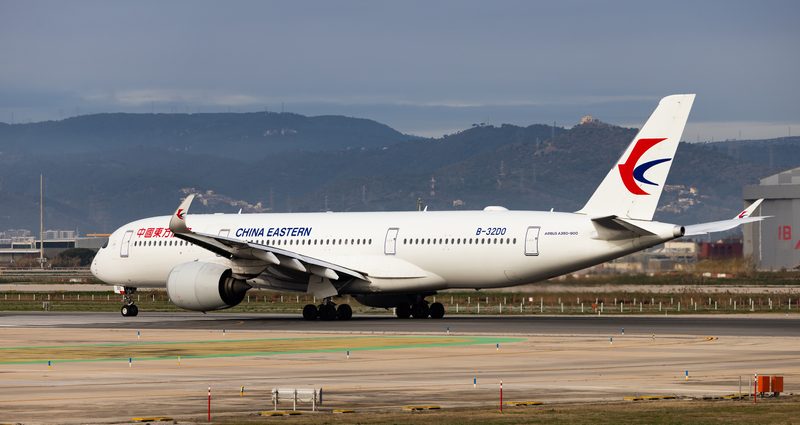
Flights are scheduled on Mondays, Thursdays and Saturdays. The outbound service, MU289, departs Shanghai Pudong (PVG) in the afternoon and arrives in Stockholm Arlanda (ARN) the same evening.
Current schedule reporting lists MU289 leaving Shanghai at 2:50 p.m. and arriving in Stockholm at 8:10 p.m. local time. The planned flying time is around 11 hours and 20 minutes.
The return flight, MU290, departs Stockholm (ARN) at 10:40 p.m. and arrives in Shanghai (PVG) the following afternoon. The eastbound flight time is about 10 hours.
That schedule works well for both local and connecting passengers.

The evening arrival into Stockholm gives travelers access to Sweden the same day. The afternoon arrival back into Shanghai supports onward travel across China Eastern’s domestic and regional network.
The Aircraft: Airbus A330 Widebody
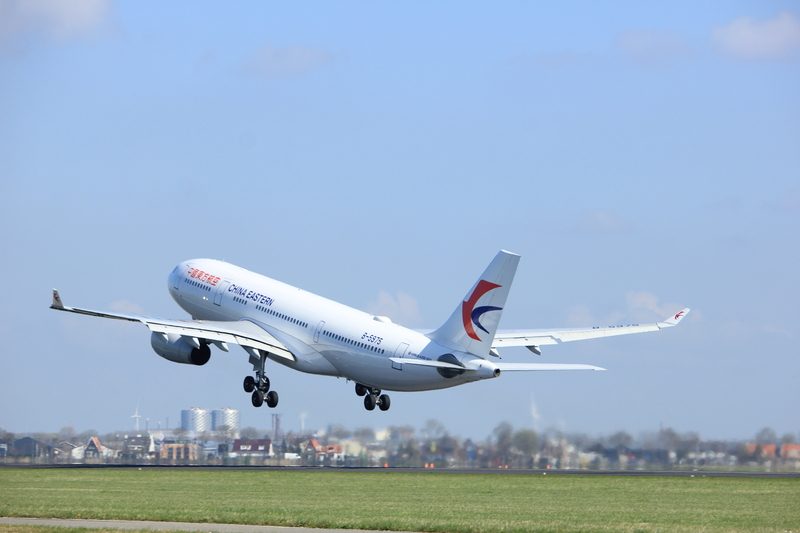
China Eastern is using Airbus A330 widebody aircraft on the route.
Flight-tracking data for the first resumed service showed an Airbus A330-200 operating MU289. That makes sense for the mission.
The Airbus A330-200 is a long-range twin-aisle aircraft built for medium- and long-haul routes. Airbus lists the aircraft with typical seating of 220 to 260 passengers and range of up to 8,150 nautical miles, depending on configuration.
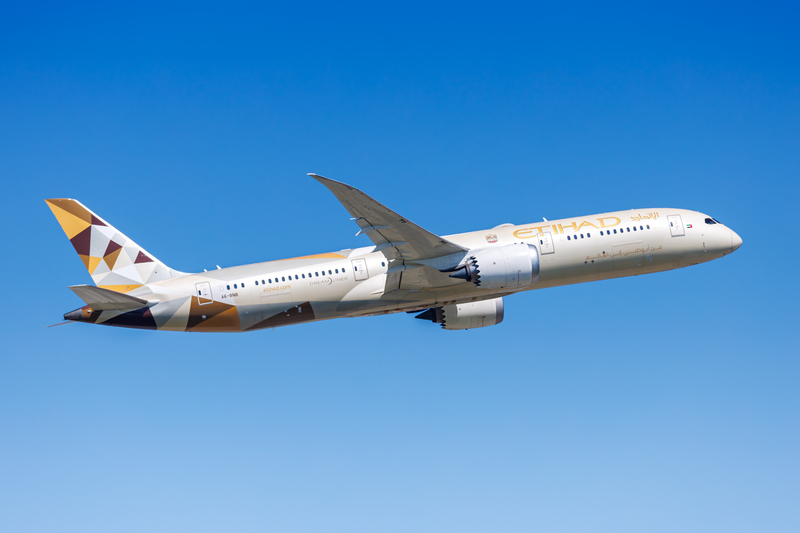
That gives the A330-200 more than enough capability for Shanghai (PVG)–Stockholm (ARN).
It also gives China Eastern a useful capacity balance. The route is long enough to require a true long-haul aircraft, but it does not necessarily need the size of a Boeing 777-300ER or Airbus A350-900 at this stage.
For a three-weekly restart, the A330 is a sensible tool.
Why The A330 Fits Stockholm
The A330 gives China Eastern flexibility.
It has enough range for Northern Europe. It also provides belly cargo capacity, which can be important on a route linking two high-value economies.
Stockholm–Shanghai traffic is not only about tourism. It also includes business travel, family visits, student traffic and cargo.
That mix can support a widebody flight even when passenger volumes are still rebuilding.
China Eastern’s A330 fleet includes several cabin layouts. Some A330-200 aircraft have two cabins, while some A330-300 aircraft include Business, Premium Economy and Economy. The airline can therefore match the aircraft to demand as the route develops.
This is one reason the A330 family remains useful.
It may not be the newest long-haul aircraft in the fleet, but it is reliable, flexible and well suited to routes where an airline wants widebody capability without overcommitting capacity.
Stockholm Regains A Key Asia Link
Stockholm Arlanda (ARN) benefits strongly from the route’s return.
Swedavia, the operator of Stockholm Arlanda, said China Eastern’s return is an important addition for Swedish connectivity. The airport also noted that Shanghai is China’s financial and commercial hub and a base for many major Swedish companies.
That is the central point.
Shanghai is not just another long-haul destination. It is one of the world’s most important business cities. It also sits at the center of the Yangtze River Delta, one of China’s strongest economic regions.
For Swedish companies, a direct flight to Shanghai (PVG) reduces travel friction.
For Chinese travelers, the route opens a direct path to Stockholm, Sweden and the wider Nordic region.
China Is Sweden’s Largest Asian Trading Partner
The commercial case is helped by strong economic ties.
Swedavia says China is Sweden’s largest trading partner in Asia. That gives the Shanghai route a stronger foundation than leisure traffic alone.
Business travel is part of the story. So is cargo.
Sweden exports high-value goods such as pharmaceuticals, machinery, industrial products, technology and precision equipment. China exports electronics, consumer goods, machinery and manufactured products.
A nonstop widebody route can support both sides.
Passenger aircraft belly cargo is not always the headline, but it can be an important part of long-haul route economics. Shorter transit times and direct routings are especially valuable for time-sensitive goods.
Shanghai Is More Than A Destination
Shanghai Pudong (PVG) is one of China’s most important international gateways.
For China Eastern, it is a core long-haul hub. The airline can feed passengers from Stockholm into a large domestic and regional network across China and Asia.
That is important for the route.
Some passengers will travel only between Stockholm and Shanghai. Others will continue beyond Shanghai to cities across mainland China, Greater China and the Asia-Pacific region.
That network feed gives China Eastern an advantage.
A nonstop Stockholm–Shanghai route is stronger when it is connected to a broad onward network at PVG.
For Swedish travelers, that can make the service useful even if Shanghai is not the final destination.
The Route Had Been Missing Since 2020
China Eastern suspended the Stockholm route in 2020 during the COVID-19 pandemic.
The return therefore restores a link that had been absent for six years.
That long gap matters.
Many China–Europe routes took years to recover after the pandemic. Travel restrictions, slow reopening, airline capacity constraints, aircraft availability and changing demand patterns all delayed the return of some services.
Northern Europe was especially affected because long-haul China capacity was slower to rebuild outside the largest European gateways.
Stockholm’s restart is a sign that the recovery is moving deeper into the European network.
It also shows that Chinese carriers are again willing to add capacity beyond the biggest hub markets.
China Eastern’s European Network Keeps Expanding
China Eastern is rebuilding and expanding its European network quickly.
The airline currently operates 28 European routes serving 18 cities across the continent. The Stockholm return is part of that wider push.
Other growth is also underway.
China Eastern is launching Shanghai–Tbilisi service on July 15, 2026. That route will operate three times weekly with Airbus A330 aircraft and will be the airline’s first route to Georgia.
The airline is also preparing Shanghai–Dublin service from July 20, 2026. That route is scheduled to operate three times weekly with Airbus A350-900 aircraft.
Together, Stockholm, Tbilisi and Dublin show a clear strategy.
China Eastern is not only returning to pre-pandemic trunk routes. It is also adding new European and Eurasian markets from Shanghai.
A Stronger Northern Europe Position
Stockholm gives China Eastern a better position in Northern Europe.
The Nordic market is not as large as London, Paris or Frankfurt, but it has strong business and high-value travel demand. It also offers good tourism potential in both directions.
Chinese travelers are interested in Sweden’s cities, nature, design, technology and winter experiences. Swedish travelers are increasingly returning to Asia as China–Europe travel normalizes.
The route may also appeal to passengers across the wider region.
Depending on schedules and fares, travelers from other parts of Scandinavia and the Baltics may use Stockholm (ARN) as a gateway to Shanghai (PVG).
That gives the route a broader catchment area than the city pair alone.
Competition Is Mostly Indirect
The Shanghai–Stockholm route is mainly a nonstop-versus-connection market.
China Eastern currently provides the only nonstop service between Stockholm (ARN) and Shanghai (PVG). Other travelers can connect through major hubs such as Helsinki, Doha, Dubai, Istanbul, Frankfurt, Amsterdam or Paris.
That gives China Eastern a clear convenience advantage.
A nonstop flight is simpler. It reduces total travel time and removes the uncertainty of a connection.
However, indirect competitors still matter. They can offer more frequencies, wider European coverage, alliance loyalty options and competitive fares.
China Eastern will need to use its nonstop advantage carefully.
On a long route like Shanghai–Stockholm, schedule, price, reliability and China-side connectivity will all influence booking decisions.
A SkyTeam Boost At Arlanda
China Eastern is a member of SkyTeam, which also gives the route alliance relevance.
Stockholm Arlanda already has service from SkyTeam carriers such as Air France, KLM and Delta’s partners through European hubs. China Eastern now gives the alliance a direct link from Stockholm to mainland China.
That is useful for frequent flyers and corporate accounts.
Passengers can earn and redeem through China Eastern’s Eastern Miles and eligible SkyTeam partner programs, depending on fare rules and program terms.
For Arlanda, the route adds another long-haul alliance option and strengthens its position as Sweden’s main global gateway.
A Route With Tourism Value In Both Directions
Tourism also supports the route.
Shanghai is a major destination in its own right. It offers business travel, urban tourism, shopping, food, culture and onward access to nearby cities such as Suzhou and Hangzhou.
Stockholm offers a very different appeal.
The Swedish capital is known for design, history, waterfront scenery, museums, technology, cuisine and access to the Nordic region.
A direct flight makes both destinations easier to sell.
Tour operators, corporate travel teams and independent travelers all benefit when a route removes a connection. That is especially true on long-haul trips, where total journey time matters.
Bottom Line
China Eastern’s restored Shanghai (PVG)–Stockholm (ARN) service is an important step in the rebuilding of China–Northern Europe connectivity.
The route returned on June 22, 2026, after a six-year suspension that began during the pandemic. It now operates three times weekly on Mondays, Thursdays and Saturdays using Airbus A330 widebody aircraft.
For Stockholm Arlanda, the flight restores a direct link to one of Asia’s most important business cities. For China Eastern, it adds another European market back into the Shanghai long-haul network.
The route has strong business, tourism and cargo logic.
Shanghai is China’s financial and commercial powerhouse. Stockholm is Sweden’s main international gateway and a major Nordic business center. China is also Sweden’s largest trading partner in Asia.
That combination gives the route a stronger foundation than simple leisure demand.
After six years away, China Eastern’s return to Stockholm is more than a schedule restoration. It is another sign that China–Europe long-haul networks are rebuilding with more depth and more confidence.