Dublin Airport is about to get a new longest nonstop route, and it is not going west across the Atlantic. It is going east to China.

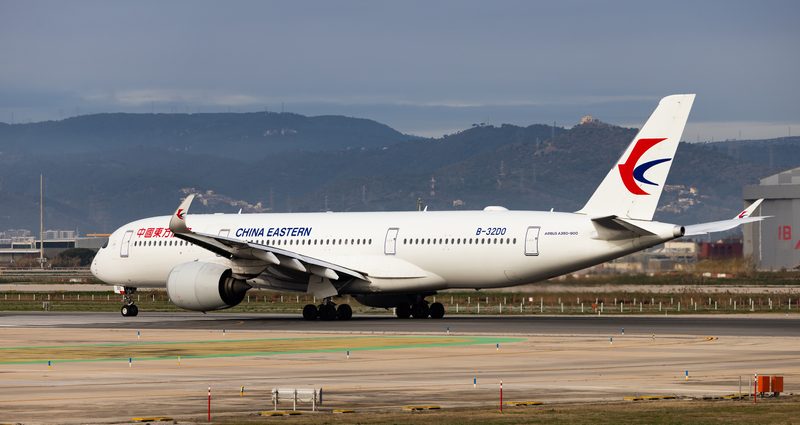
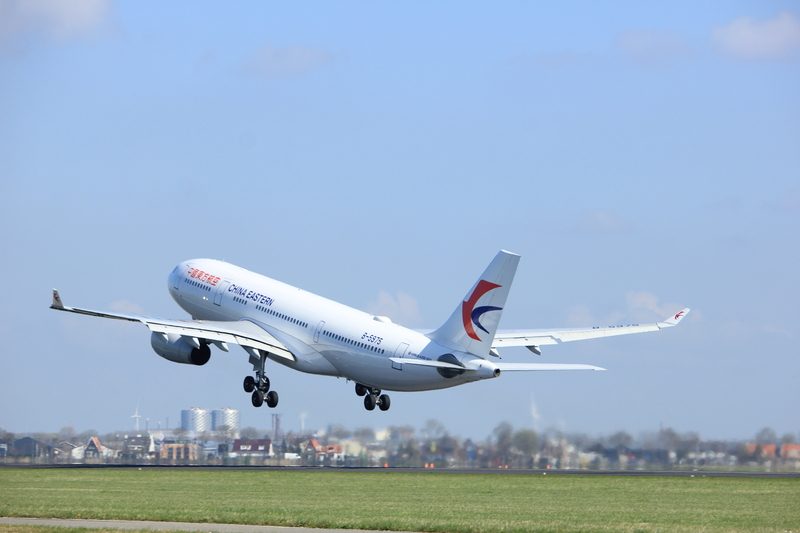
China Eastern plans to launch nonstop flights between Shanghai Pudong International Airport (PVG) and Dublin Airport (DUB) on July 20, 2026, operating three times weekly with the Airbus A350-900. By great-circle distance, the route comes in at roughly 5,819 nautical miles, making it longer than Dublin’s current longest nonstop service to Los Angeles.
That matters because this is not just another long-haul addition. It is a route that changes Dublin’s profile in Asia, strengthens Ireland’s direct access to China, and shows how airspace geopolitics now shapes which airlines can make long sectors work efficiently.
Read our stories in your inbox
Two aviation newsletters. Zero fluff.
Shanghai Will Become Dublin’s Longest Nonstop Route
The headline claim is real: Shanghai–Dublin becomes the longest scheduled nonstop route from the Irish capital by distance.
That is notable because Dublin’s long-haul identity has long been built around North America, helped by geography, strong transatlantic demand, and U.S. preclearance. A route to Shanghai taking the distance crown shifts the conversation. It underlines that Dublin is not only a transatlantic gateway. It is becoming more relevant on the Europe–Asia axis too.
For aviation readers, that makes the route more significant than a simple one-off launch.
The A350-900 Is A Serious Aircraft Choice
China Eastern is planning to use the Airbus A350-900, which tells you this is being treated as a serious long-haul operation rather than a tentative low-capacity test.
That makes sense. A sector of this length needs an aircraft with strong range, efficient long-haul economics, and the ability to sustain a full-service intercontinental product. The A350 is exactly that sort of aircraft. It also suggests the airline expects the route to support enough premium and cargo value to justify a flagship-type deployment rather than a more marginal long-haul setup.
Russian Airspace Likely Helps Make The Route Work
One of the more important operational details is that China Eastern can still use Russian airspace, allowing it to operate a route closer to the direct great-circle path than many European carriers currently can.
That matters because route economics on Asia–Europe flying are now heavily shaped by overflight access. Airlines barred from Russian airspace often face longer routings, higher fuel burn, and more difficult crew and aircraft utilization. China Eastern does not face the same handicap here, and that likely makes a route such as Shanghai–Dublin much more attractive than it would be for some Western competitors.
This is one of the clearest examples of how geopolitics quietly changes route feasibility.
The Schedule Fits Long-Haul Business Logic
The new route is scheduled on Mondays, Wednesdays, and Fridays, with a westbound departure from Shanghai in the early hours and arrival into Dublin in the morning. The return leaves Dublin before midday and arrives back in Shanghai the following morning.
That pattern makes operational sense. It gives the airline a long-haul rhythm that works for aircraft utilization while also making the route reasonably attractive for both local travelers and onward connections. It is the kind of schedule you would expect on a route meant to be part business link, part cargo lane, and part network builder.
Ireland Now Has A Stronger China Position
Dublin already has Chinese service through Hainan Airlines’ Beijing flights, and those services are themselves being strengthened seasonally.
But Shanghai changes the shape of the offering. It adds one of China’s largest commercial cities, deepens Irish access to the Chinese market, and gives Dublin a second major Chinese gateway with a very different economic and corporate profile from Beijing.
That matters because it broadens Ireland’s direct Asia connectivity beyond a single Chinese city and strengthens the case that Dublin can support more than one strategically important China route.
This Is Also A Policy Win For Ireland
The route did not appear in a vacuum.
Irish officials have linked the service to the air service agreement framework between Ireland and China, and that is important because long-haul growth to China often depends heavily on government-level aviation policy as much as on airline ambition. New bilateral flexibility and political support can be just as important as aircraft availability in making these routes possible.
So while China Eastern is the operating airline, Ireland itself has a stake in what the route represents.
Dublin’s Long-Haul Story Is Broadening Beyond North America
The bigger strategic lesson is that Dublin’s route map is becoming more varied.
Aer Lingus continues to deepen the airport’s transatlantic strength, but China Eastern’s Shanghai service shows that Dublin is also becoming more interesting as an Asia gateway. That does not mean Asia will suddenly rival North America in scale from Dublin. But it does mean the airport’s long-haul identity is broadening.
That is a useful development for an airport that has historically relied very heavily on one geographic direction.
Bottom Line
China Eastern’s new Shanghai–Dublin route is not just another long-haul service. It becomes Dublin Airport’s longest nonstop flight, adds a second major Chinese gateway to the airport’s network, and strengthens Ireland’s direct connectivity with one of Asia’s most important commercial centers.
The use of the Airbus A350-900, the likely benefit of Russian overflight access, and the strategic value of Shanghai all make this a more important launch than the headline distance alone suggests. For Dublin, it is not just a longer flight. It is a broader long-haul identity.
Keep reading FlyMag
Get the Daily Brief in the morning or the Route Watch weekly recap on Fridays. Or both.