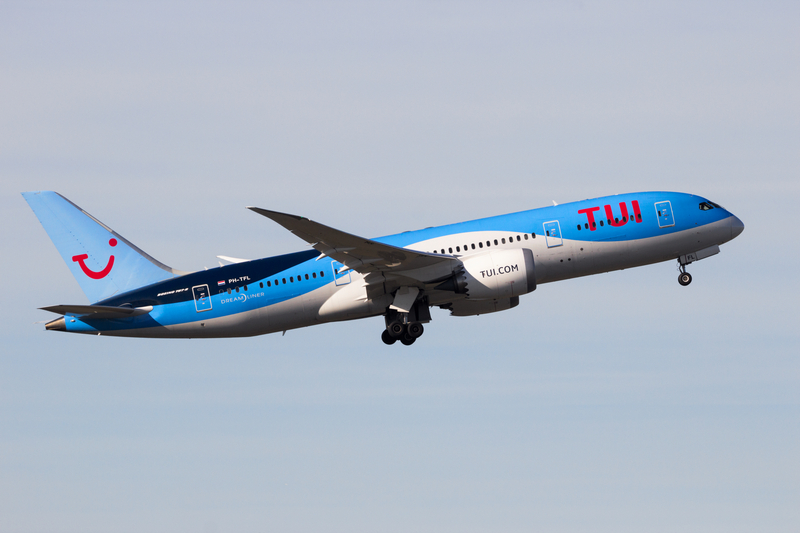
TUI is starting return flights from the Middle East to bring home holidaymakers stranded by the region’s sudden airspace shutdowns and airport disruptions. Speaking in an interview on March 3, CEO Sebastian Ebel said the group is coordinating closely with the Gulf’s major long-haul operators—Etihad Airways, Emirates, and Qatar Airways—to restart passenger flows and clear the backlog created when key transit corridors effectively went offline.

Ebel estimated that around 30,000 German tourists from all tour operators are currently stuck across the region, including about 10,000 TUI customers. For a tour operator, those numbers matter operationally as much as reputationally: once mass disruption crosses a certain threshold, ad hoc rebooking turns into a managed repatriation program with fixed priorities, dedicated flight allocations, and centralized passenger communications.
Why this is harder than “just rebook them”
In a normal disruption, airlines can reroute passengers through alternate hubs. This event is different because it hit the very hubs that make Europe–Asia–Africa itineraries work in the first place.
Read our stories in your inbox
Two aviation newsletters. Zero fluff.
A large share of stranded passengers are clustered around Gulf gateways such as Dubai (DXB/DWC), Abu Dhabi (AUH), and Doha (DOH)—airports designed for high-volume connecting banks. When those banks collapse, recovery becomes a multi-day exercise:
-
Aircraft and crews are out of position. Widebodies that should be at DXB or DOH for the next wave may be parked at alternates.
-
Connections can’t be rebuilt instantly. Even after partial reopening, hubs must meter departures and arrivals through limited routing corridors.
-
Seat inventory is the bottleneck. Once thousands of passengers need to move at the same time, “available seats” across the system disappear quickly.
That’s why TUI is leaning on the region’s largest network carriers. Emirates and Etihad can redeploy long-haul widebodies (A380/777 and 787/777/A350 families, respectively) and scale capacity quickly when airspace allows. Qatar Airways’ contribution, where operationally feasible, is especially valuable because of its global reach through Doha (DOH)—but it is also the most constrained if DOH access remains limited.
The repatriation playbook: block seats first, charters if needed
Tour operators typically recover passengers in layers. TUI’s first step is to secure capacity on partner airlines’ services as they restart—often via block seat allocations that can be sold and managed as a package rather than as individual, last-seat bookings.
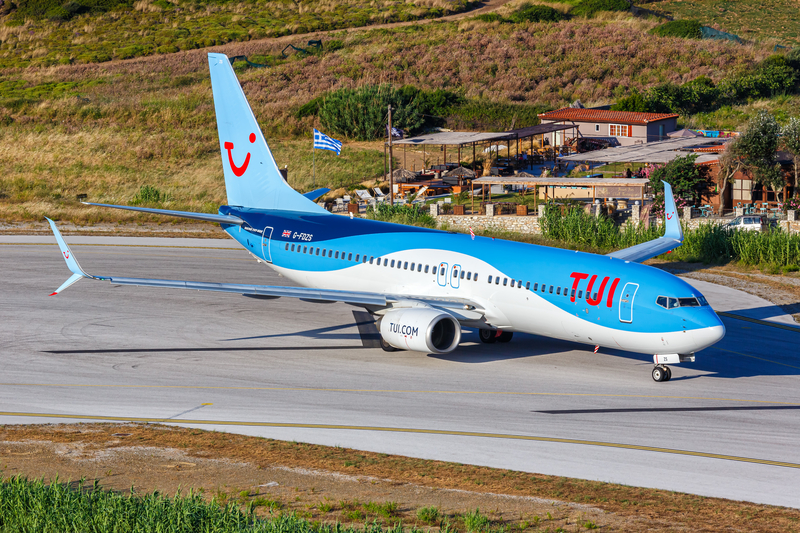
The next layer is special flights when the math demands it—either additional sections operated by airline partners or, if approvals and airspace access permit, flights operated by TUI’s own airline unit. TUI has said its own aircraft are on standby to support the operation, but those flights require governmental clearances and coordination, especially when routings are constrained and NOTAMs are changing quickly.
Where passengers may land in Germany
TUI has indicated initial flights are expected to start immediately as capacity becomes available, with early arrivals expected into German gateways such as Munich (MUC)—a practical choice for onward domestic and rail connectivity, and a major distribution point for repatriation and recovery travel.
From there, tour operators typically distribute passengers onward using a mix of scheduled flights, rail, and long-distance coach options depending on where travelers live and what inventory exists.
What stranded travelers should expect next
If you’re currently holding a TUI package itinerary that involved a Gulf connection, the near-term reality is “rolling recovery,” not instant normalization:
-
Expect staggered departures from hubs like DXB/AUH as limited routing corridors reopen and airlines rebuild banks.
-
Be prepared for substitutions (different carrier, different routing, different arrival airport in Germany).
-
Keep documentation and essentials close. In mass disruptions, baggage and medication access can become the biggest practical pain points, especially after diversions and hotel moves.
TUI says it is using its app and direct communications to keep customers updated—critical in a repatriation setting where information gaps can cause passengers to self-transfer to airports and overwhelm local resources.
Bottom Line
TUI’s repatriation effort is a high-complexity recovery operation built around one idea: restore movement through the Gulf by using the only carriers with enough scale to do it quickly. With about 10,000 TUI customers caught in a wider pool of roughly 30,000 stranded German tourists, the plan relies on Emirates (DXB), Etihad (AUH), and—where possible—Qatar Airways (DOH) to bring capacity back online and move passengers home in waves, starting from March 3 and likely continuing for several days as airspace access stabilizes.
Keep reading FlyMag
Get the Daily Brief in the morning or the Route Watch weekly recap on Fridays. Or both.