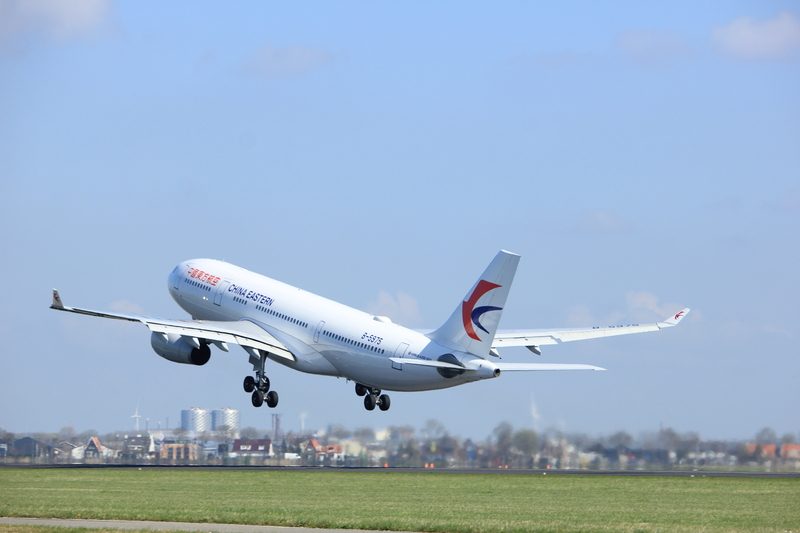
After a multi-year hiatus, China Eastern Airlines (MU) is bringing back a nonstop that matters to both Scandinavian business travel and the air-cargo world: Stockholm Arlanda (ARN) to Shanghai Pudong (PVG).

The service resumes June 22, 2026, restoring a direct link between Sweden’s primary intercontinental gateway and China’s most important commercial aviation hub. In practical terms, it gives corporate travelers and leisure passengers a one-flight option again—no forced connections via Frankfurt (FRA), Istanbul (IST), Doha (DOH), or other intermediates—and it returns widebody belly freight capacity to a trade lane that tends to move high-value, time-sensitive goods.
The schedule: timed for hub banks on both ends
China Eastern is filing the route three times weekly on Mondays, Thursdays, and Saturdays, which is a classic pattern for long-haul restarts: frequent enough to be useful, not so aggressive that the airline has to overcommit widebody hours before demand settles.
Read our stories in your inbox
Two aviation newsletters. Zero fluff.
The published timings also show deliberate network thinking:
-
MU289: Shanghai Pudong (PVG) 15:00 → Stockholm Arlanda (ARN) 20:10
-
MU290: Stockholm Arlanda (ARN) 22:40 → Shanghai Pudong (PVG) 14:40+1
Because Stockholm operates on summer time in late June, the clock math works out to roughly 11 hours westbound and about 10 hours eastbound, with the shorter return consistent with prevailing winds on the trans-Eurasian flow.
From an operations and connectivity standpoint, the schedule is smart:
-
A mid-afternoon departure from PVG fits China Eastern’s long-haul wave structure and keeps the aircraft flowing without requiring a dawn departure slot.
-
A late-evening departure from ARN is ideal for Sweden’s outbound market: passengers can connect in from domestic Sweden earlier in the day, and business travelers can still work a full day before heading to the airport.
-
A mid-afternoon arrival at PVG positions travelers for onward connections across China and the Asia-Pacific region.
Aircraft choice: Airbus A330-200—right-sized long-haul lift with meaningful cargo
China Eastern plans to operate ARN–PVG with the Airbus A330-200 (A332), a type that sits in the sweet spot for long-haul route rebuilding: widebody comfort and cargo capability without the trip-cost burden of larger aircraft like a 777-300ER.
Why the A330-200 fits this mission:
-
Range and margin: The A330-200 was designed for long sectors with solid performance and ETOPS capability, giving airlines flexibility on routing and alternates even when airspace constraints tighten.
-
Passenger capacity that matches restart economics: China Eastern can offer a true long-haul product and still protect load factor while demand rebuilds.
-
Belly freight volume: On a market like Sweden–China, cargo is not “nice to have.” It’s often a material contributor to route economics—especially for high-value goods where speed and reliability matter.
For ARN specifically, widebody belly cargo is a quiet differentiator. A nonstop widebody doesn’t just carry passengers; it restores a consistent logistics option for shippers who have otherwise been relying on indirect routings, capacity swaps, and longer transit times.
Why this route matters now: business, tourism, and cargo all align
The economics of restarting China–Europe long-haul are increasingly built on a three-legged stool: corporate travel, inbound tourism, and freight.
Business demand
Shanghai (PVG) isn’t just China’s largest city—it’s one of the world’s most important commercial centers. Sweden’s corporate footprint in China, and China’s position as Sweden’s largest Asian trading partner, makes a nonstop option highly valuable for travelers who care about time, predictability, and fewer points of disruption.
Tourism and VFR
A direct flight also removes the friction that often suppresses leisure demand. For many travelers, one-stop itineraries to China can add half a day and introduce missed-connection risk. A nonstop brings the journey back into a “single decision,” which tends to stimulate demand—especially in peak summer travel periods.
Cargo
Stockholm (ARN) is not a mega-cargo hub on the scale of Frankfurt (FRA) or Amsterdam (AMS), but it does handle high-value exports and imports where reliability beats pure volume. Shanghai (PVG), meanwhile, is an airfreight powerhouse in both passenger belly and freighter networks. A direct PVG–ARN reopens a faster lane for shipments that don’t tolerate extra handling and extra stops.
Connectivity: PVG as China Eastern’s hub, ARN as Sweden’s gateway
China Eastern’s strongest advantage is what happens after you land at PVG. Shanghai Pudong is the airline’s main international hub, meaning the ARN service can feed a wide range of onward markets—whether that’s secondary Chinese cities (often underserved from Europe) or broader Asia-Pacific destinations.
On the Stockholm side, Arlanda (ARN) consolidates much of Sweden’s long-haul demand. Even without a single dominant hub carrier in the way Frankfurt (FRA) or Paris (CDG) operates, ARN remains the country’s primary long-haul gateway, with ample domestic and regional Scandinavian feed that makes a three-weekly long-haul schedule workable.
What to watch between now and June 2026
Long-haul restarts are living things. A few details will signal how confident China Eastern is as the launch date approaches:
-
Frequency changes: Three weekly is the base case; stronger-than-expected demand can push toward 4–5 weekly over time.
-
Aircraft swaps: An A330-200 is the planned workhorse, but airlines sometimes upgauge or rotate equipment seasonally depending on fleet availability.
-
Cargo allocation: If belly freight performs strongly, it can become the stabilizer that keeps year-round flying viable beyond the first peak season.
Bottom Line
China Eastern’s return to Stockholm Arlanda (ARN) with a nonstop to Shanghai Pudong (PVG) from June 22, 2026 is more than a route relaunch—it’s the restoration of direct connectivity between Sweden and China’s premier commercial hub, operated with an Airbus A330-200 that can carry both long-haul passengers and meaningful belly cargo.
With a three-weekly schedule timed for hub connectivity at PVG and practical late-evening departures from ARN, the service is positioned to rebuild business travel, stimulate tourism, and give shippers a faster, simpler logistics option—exactly the mix a modern long-haul route needs to stick.
Keep reading FlyMag
Get the Daily Brief in the morning or the Route Watch weekly recap on Fridays. Or both.