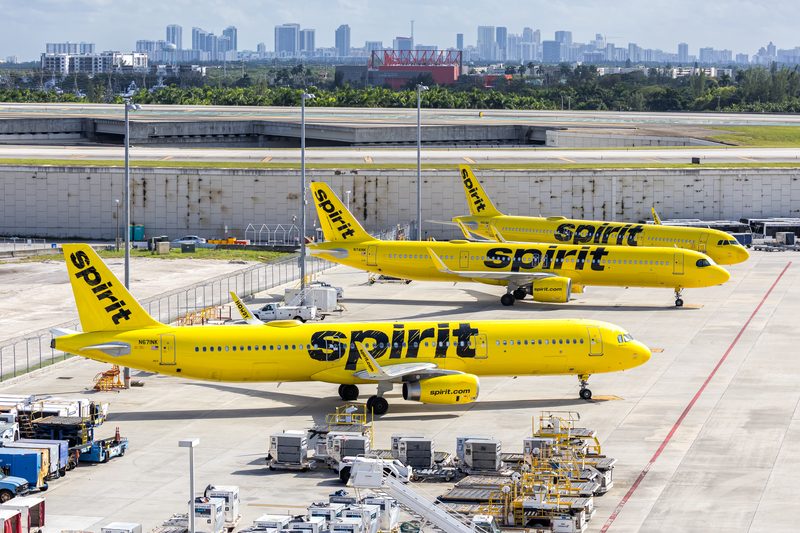
Spirit Airlines may be nearing a federal rescue package worth as much as $500 million, a move that would give the ultra-low-cost carrier badly needed liquidity but also raise unusually difficult questions about precedent, politics, and whether taxpayer support can really stabilize an airline whose business model was already under severe strain.
The reported proposal would not be a routine grant. Current reporting indicates the package is being discussed as government-backed financing that could convert into longer-term support and leave the U.S. government with a very large ownership position, potentially up to 90% depending on the final structure.
For aviation readers, that is the central issue. This would not just be emergency cash. It would amount to a major state intervention in a single airline.
Read our stories in your inbox
Two aviation newsletters. Zero fluff.
Spirit’s Situation Is More Fragile Than A Normal Restructuring Case
Spirit is not entering this moment from a position of ordinary weakness. It has already been through one bankruptcy restructuring and had been working through another difficult turnaround effort when the recent fuel-price shock hit.
That matters because a government rescue only makes sense if it is buying time for a viable business to recover. If the underlying economics remain broken, then the package becomes less a bridge and more a postponement.
Spirit’s challenge has never been only liquidity. It has also been yield pressure, execution risk, a strained balance sheet, and a product strategy that has struggled in a market where many travelers have become more willing to pay up for stronger reliability and service.
The Fuel Shock Changed The Timeline
The immediate trigger for the current rescue talks appears to be the sharp rise in jet fuel costs following the U.S.-Israeli conflict with Iran.
For an ultra-low-cost carrier such as Spirit, that is especially damaging. Fuel is one of the most volatile and consequential items in any airline cost structure, and low-fare operators have less room than network carriers to absorb a sudden spike without undermining already-thin margins.
In other words, the current crisis did not create Spirit’s vulnerability. It accelerated it.
A Rescue Would Be About Competition As Much As Jobs
One reason the White House appears interested is that Spirit still matters to the structure of the U.S. airline market.
The carrier has roughly 14,000 jobs at stake, but the broader concern is competitive. Spirit’s presence helps constrain fares in many domestic markets, particularly on leisure-heavy and price-sensitive routes. If the airline were to collapse outright, some competitors would likely gain pricing power and capacity discipline could tighten further.
That gives supporters of a rescue an argument that goes beyond one company. They can say the government is not just saving Spirit. It is preserving competition.
That case, however, is politically easier to make than economically.
Critics See A Dangerous Precedent
Opponents of the proposal are raising a different concern: once the government rescues one struggling airline directly, it becomes much harder to explain why others should not receive the same treatment later.
That is not a trivial objection.
Past federal airline support after September 11 and during the pandemic was broad-based and system-wide. What is now being discussed for Spirit would be very different, a targeted intervention for one company with a deeply challenged model.
That distinction is why the pushback has been so strong. Critics are not just asking whether Spirit deserves help. They are asking whether Washington wants to establish a template for rescuing individual carriers whenever markets lose confidence in them.
The Ownership Question Could Be The Most Remarkable Part
The most unusual element of the discussions is the possibility that the government could emerge with a very large equity stake.
If that happens, the rescue stops looking like a simple loan and starts looking more like a quasi-nationalization of a U.S. airline, even if temporary. That would be extraordinary in modern American commercial aviation.
For industry professionals, this would create a new kind of problem. The government would not just be regulator and policymaker. It could become a major stakeholder in one airline competing against other private carriers.
That would blur lines the industry usually prefers to keep very clear.
Operations Are Normal For Now, But The Strategic Question Is Unchanged
Spirit says operations continue as normal, and for passengers that remains the practical near-term reality. Flights are still bookable, credits and loyalty balances are still in use, and there is no immediate sign of day-to-day operational disruption.
But that should not obscure the larger question.
Even if a rescue is finalized, the package would only solve the liquidity problem for now. It would not automatically solve Spirit’s long-term challenge of building a more durable business in a cost environment and competitive landscape that have both become much harsher.
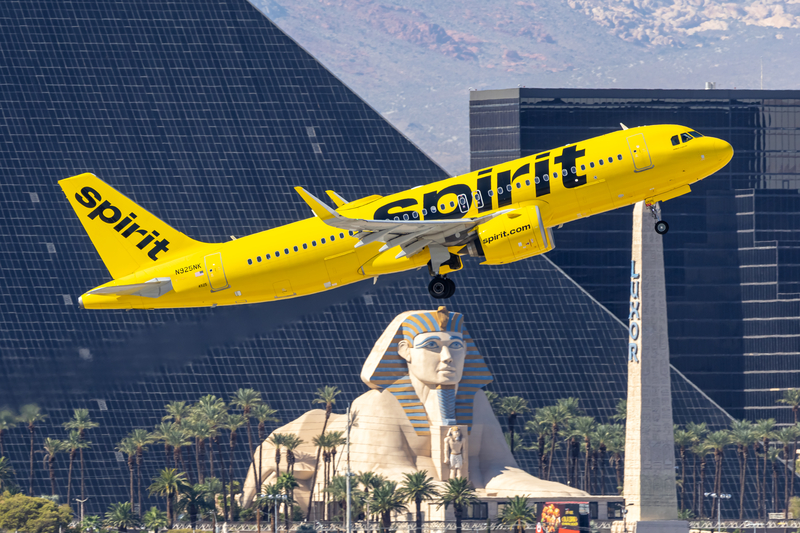
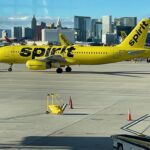
That is why this story matters so much. The proposed deal may keep the bright yellow Airbus narrowbodies flying. It does not yet prove they have found a sustainable future.
Bottom Line
A potential $500 million government rescue would give Spirit Airlines something it desperately needs: time. But it would also create a major precedent by directing taxpayer-backed support to a single struggling airline and potentially giving the government an outsized ownership stake.
For Spirit, that may be the only path left to avoid another collapse. For Washington, the harder question is whether preserving one airline’s survival is worth opening the door to a far more interventionist role in the airline industry.
Keep reading FlyMag
Get the Daily Brief in the morning or the Route Watch weekly recap on Fridays. Or both.