Spirit Airlines may be moving closer to a federal rescue, but the idea that President Donald Trump is preparing to personally buy the airline overstates what has actually been reported.
What is real is this: the Trump administration has been in advanced talks over a potential support package of up to $500 million for Spirit as the airline tries to avoid collapse during its latest restructuring crisis. Depending on the final structure, that package could leave the U.S. government with warrants or an ownership position large enough to dominate the airline’s equity.
That is already extraordinary. It does not need the added fiction of a personal presidential takeover to be dramatic.
Read our stories in your inbox
Two aviation newsletters. Zero fluff.
For aviation professionals, the more important story is not whether Trump likes the price. It is whether Washington is genuinely prepared to become the effective backstop for a failing ultra-low-cost carrier at a moment when Spirit’s business model, balance sheet, and operating outlook are all under severe pressure.
The Real Story Is A Government Rescue, Not A Personal Acquisition
The most important correction is straightforward.
There is no confirmed evidence that Trump is preparing to buy Spirit Airlines as a private owner. What has been reported more credibly is that the administration is considering a government-backed rescue, and that Trump has spoken positively about the airline’s aircraft, assets, and potential value if fuel prices fall.
That is a very different proposition.
A personal acquisition would raise a completely different set of political, ethical, and regulatory issues. A government-led intervention, while still deeply controversial, fits the reporting far more closely. The live question is whether the federal government will provide financing to keep Spirit operating, not whether Spirit is about to become a privately held Trump aviation asset.
That distinction matters, and it should not be blurred.
The Rescue Talks Have Become Serious
What makes the story important is that the bailout discussions are no longer speculative chatter on the fringe.
Recent reporting indicates the administration has been discussing a package of as much as $500 million to help Spirit continue operating through its financial crisis. The structure under discussion has been described as government-backed financing that could convert into longer-term support and potentially leave Washington with an enormous equity stake.
That would be highly unusual in U.S. commercial aviation.
This is not how airlines are normally saved. Broad industry support during a national crisis is one thing. A targeted federal intervention in one struggling airline is something else entirely.
Spirit’s Boston Winter Pivot: New Cancun and Santo Domingo Nonstops Join the Schedule
Spirit’s Position Is Weak Enough That Time Matters
Spirit’s vulnerability is not theoretical anymore.
The airline has been under intense pressure for years, with failed merger efforts, repeated restructuring, weak profitability, and a business model that has become increasingly difficult to sustain in a higher-cost, more volatile operating environment. The recent spike in jet fuel prices only made the situation worse.
That matters because the current talks are not happening in a vacuum. Spirit was already fragile before fuel costs surged. The fuel shock simply accelerated a crisis that many in the industry believed was coming anyway.
So the proposed package would not be rescuing a healthy carrier caught in a temporary storm. It would be trying to stabilize an airline that was already close to the edge.
Why Washington Might Still Step In
The strongest argument for intervention is not sentiment. It is market structure.
Spirit still matters in the U.S. airline system because it exerts downward pressure on fares in many leisure-heavy and price-sensitive markets. If the carrier disappeared entirely, some routes would likely see reduced competition and higher fares, especially where Spirit’s presence has forced larger airlines to match low base prices.
There is also the jobs issue. Spirit’s workforce is large enough that a sudden liquidation would have serious labor and regional consequences.
That is why some in Washington appear willing to keep talking. The administration can argue that it is not just saving one airline. It is preserving jobs and protecting competition.
Whether that argument holds up is another matter.
Critics See A Dangerous Precedent
The opposition case is just as strong, and in some ways stronger.
A targeted bailout for Spirit would mark a major precedent. Past federal support for airlines, whether after September 11 or during the pandemic, was designed as sector-wide stabilization. The Spirit case is different. This would be a rescue aimed at one company whose business model has struggled even outside system-wide crisis conditions.
That is why the backlash has been sharp. Critics are asking a simple question: if Spirit gets federal backing because it is too strategically awkward to fail, what stops future administrations from doing the same for other weak carriers?
Once that line is crossed, the relationship between government and commercial aviation changes in a meaningful way.
The Ownership Structure Could Be The Most Remarkable Piece
The financing itself is only part of the story.
If the reported structure holds, the government could end up with warrants or a stake so large that it would effectively dominate Spirit’s equity. That would make Washington not just rescuer, but potentially the airline’s most powerful stakeholder.
That is an extraordinary possibility.
A government that regulates the airline industry, controls major pieces of aviation policy, and oversees antitrust decisions would also become financially tied to one of the carriers operating inside that system. Even if temporary, that would be a highly unusual arrangement for the modern U.S. market.
This is one reason the Spirit story has become so politically explosive. It is no longer just about emergency cash. It is about how directly the state should involve itself in airline ownership.
Spirit Is Still Flying, But That Does Not Mean It Is Stable
For passengers, the practical reality is that Spirit continues to operate.
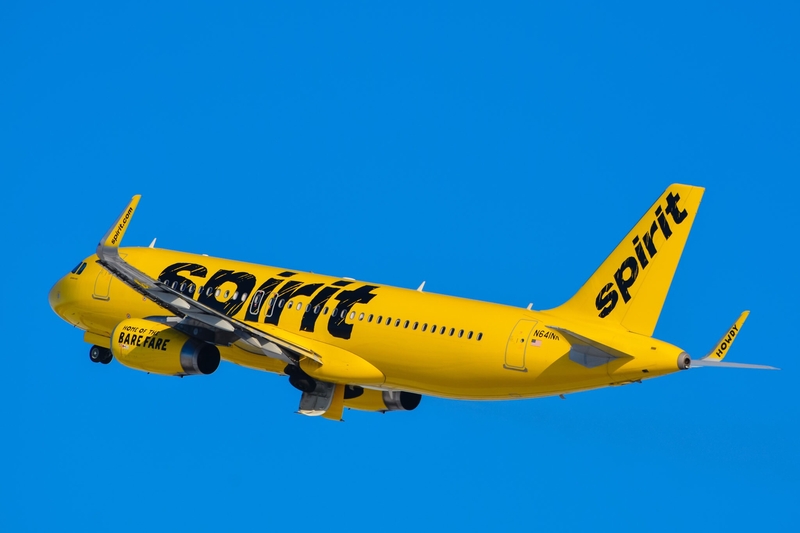
Flights remain on sale, the airline is still flying its Airbus A320-family fleet, and the immediate customer-facing picture has not collapsed. That is important, because airlines in crisis can still continue day-to-day operations for some time.
But operational continuity should not be mistaken for strategic stability.
The larger issue remains whether Spirit can become a viable airline again even if new financing arrives. A bailout might stop the immediate bleed. It would not automatically fix pricing weakness, cost pressure, route vulnerability, or the harder problem of rebuilding a sustainable low-fare model in today’s market.
The JetBlue Merger Question Is Still Lurking In The Background
One reason this whole episode feels so politically charged is that it reopens the argument around the blocked JetBlue-Spirit merger.
Supporters of intervention can point to that failed deal and argue that regulators helped box Spirit into a corner by blocking one potential escape route. Opponents can respond that using taxpayer-backed financing to unwind the consequences of a failed business model is not the same thing as defending competition.
That is part of what gives the story its unusual shape. Spirit’s future is now tied not just to airline economics, but to questions about antitrust philosophy, industrial policy, and how much the government should try to engineer outcomes in a market that was supposed to remain private and competitive.
Bottom Line
Trump is not confirmed to be personally buying Spirit Airlines, and framing the story that way gets the core issue wrong. The real development is more consequential: the Trump administration is considering a rescue package of up to $500 million that could leave the U.S. government with an enormous stake in the airline.
That would give Spirit more time, but it would also create one of the most unusual episodes in modern U.S. airline history. The question is no longer just whether Spirit can survive. It is whether Washington is willing to save it in a way that could permanently change the rules of airline intervention.
Keep reading FlyMag
Get the Daily Brief in the morning or the Route Watch weekly recap on Fridays. Or both.