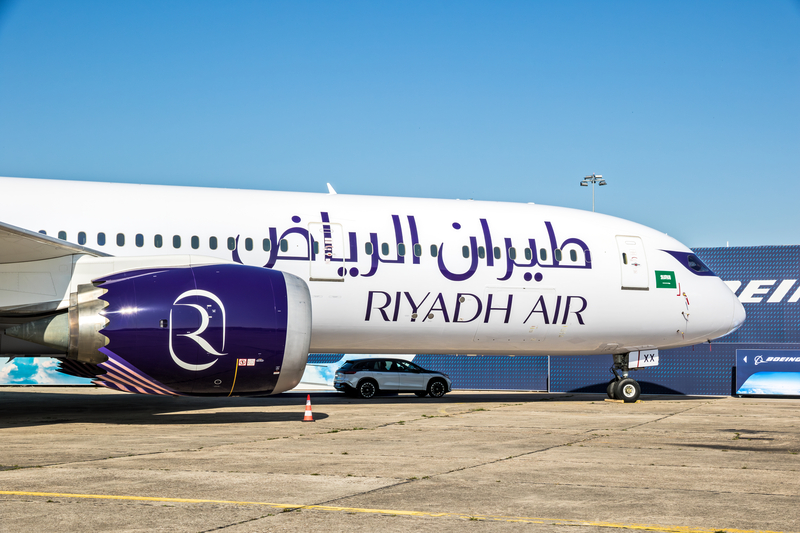
Riyadh Air’s launch network is starting to look less theoretical and more like a real airline timetable. The Saudi start-up has confirmed it will add daily nonstop service between Riyadh King Khalid International Airport (RUH) and Cairo International Airport (CAI), positioning Egypt’s capital as one of the carrier’s first headline markets alongside previously signaled launches to London Heathrow (LHR) and Dubai (DXB).
The airline says the route will begin shortly after delivery of its first Boeing 787-9 Dreamliner, expected in the coming weeks, as Riyadh Air transitions from readiness flying into full commercial operations.
Why Cairo (CAI) is an obvious early pick from Riyadh (RUH)
If you want a “starter route” that still behaves like a serious trunk market, RUH–CAI is it.
Read our stories in your inbox
Two aviation newsletters. Zero fluff.
The corridor is routinely described as one of the busiest capital-to-capital markets in the region, and Riyadh Air points to roughly 2.7 million passengers traveling between the two cities over the last year. Demand is also diversified in a way airlines love: business travel, tourism, religious travel, and deep VFR flows in both directions—meaning the route isn’t reliant on one narrow season.
Cairo (CAI) itself remains a major regional hub for commerce and tourism, with additional pull from new marquee attractions like the Grand Egyptian Museum, which has become a fresh anchor for inbound demand.
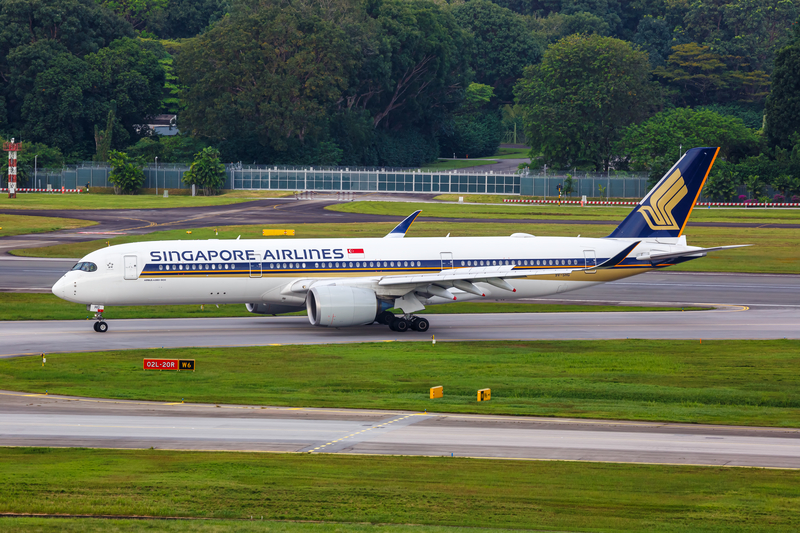
The aircraft choice: why a 787-9 on an 871 nm sector makes sense for a new airline
At first glance, assigning a Boeing 787-9 to a route of about 871 nautical miles is a widebody move on a narrowbody stage length. In practice, it fits Riyadh Air’s launch reality.
A start-up carrier typically has three competing priorities in its first months:
-
build brand and service consistency,
-
accumulate operational hours with its own crews and procedures, and
-
deploy the aircraft it actually has available.

Riyadh Air’s initial fleet plan is Dreamliner-led, and the 787-9 is a strong tool even on shorter sectors when you’re building a hub:
-
High seat capacity supports a dense market without needing multiple daily frequencies on day one (though Riyadh Air is going daily here).
-
Significant belly cargo capability can add margin on a route with strong trade and time-sensitive shipments.
-
Operational reliability and dispatch flexibility are valuable when you’re still scaling a new operation.
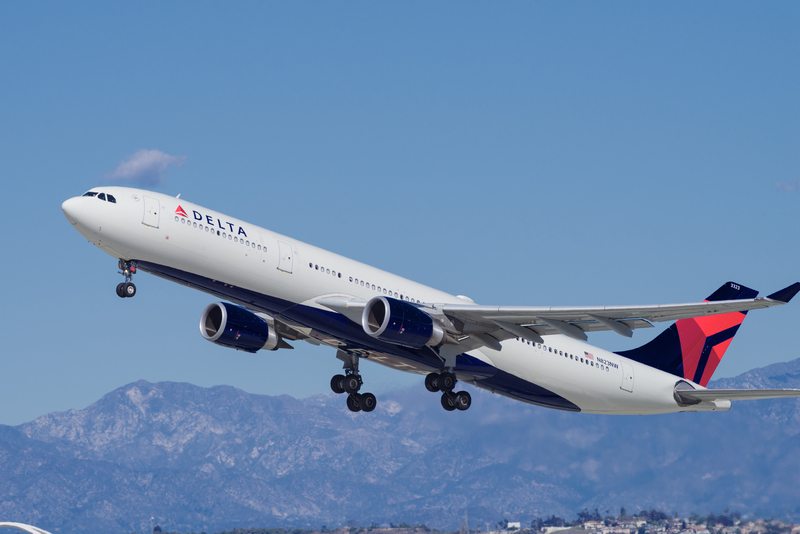
From a technical standpoint, the 787-9 is a long-range, twin-aisle widebody designed for sectors far longer than RUH–CAI, with a published range around 7,600+ nautical miles depending on configuration. It’s also engineered around passenger-comfort improvements that tend to show up in customer feedback: lower cabin altitude, higher humidity, and larger windows—features that matter for brand-building, even if the flight is under three hours block time.
A crowded route with room for a new premium challenger
RUH–CAI is not an empty lane. The market already supports multiple operators across full-service and low-cost models, which tells you two things at once: demand is real, and competition is intense.
That’s where Riyadh Air’s strategy will be tested. Launching daily widebody service suggests the airline is aiming to compete on product and consistency as much as price—especially if its long-haul-style cabin, onboard connectivity, and service identity are meant to differentiate from established incumbents.
It’s also a route where schedule timing can win. On dense regional trunks, the best-performing flights are often the ones that connect cleanly into onward banks—both at RUH, as Saudi Arabia builds Riyadh as a global gateway, and at CAI, where passengers disperse across Egypt and onward regional services.
“Sfeer” loyalty: digital-first perks tied directly to the route rollout
Alongside the route announcement, Riyadh Air is also pushing its digital-native loyalty proposition, Sfeer, which is being positioned as part of the airline’s “launch experience” rather than a later add-on.
Key hooks being highlighted include:
-
complimentary high-speed Wi-Fi for members,
-
early access to fares, and
-
points accrual and program benefits designed to plug into how the airline plans to sell and distribute seats from day one.
For airline professionals, the interesting angle isn’t that there’s a loyalty program—every airline has one. It’s that Riyadh Air is treating loyalty and connectivity as foundational elements of the product, not optional extras.
Bottom Line
Riyadh Air’s decision to open daily Riyadh (RUH)–Cairo (CAI) service on the Boeing 787-9 is a clear signal of how the carrier intends to launch: start with dense, proven markets; deploy the flagship widebody product immediately; and build frequency where demand can support it.
With Cairo joining early destinations London Heathrow (LHR) and Dubai (DXB), Riyadh Air is shaping a starter network that mixes global prestige with high-volume regional flying—exactly the combination you’d expect from an airline built to make Riyadh (RUH) a major hub under Vision 2030.
Keep reading FlyMag
Get the Daily Brief in the morning or the Route Watch weekly recap on Fridays. Or both.