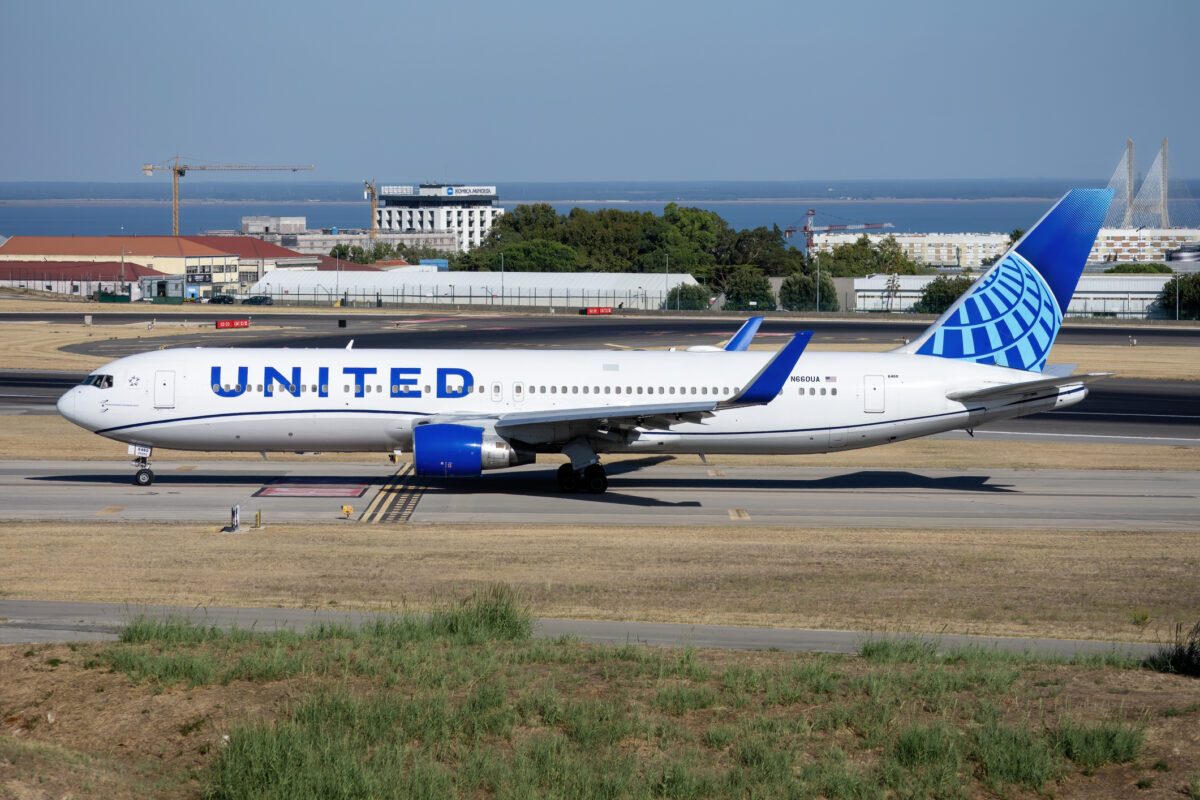
A United Airlines Boeing 767-300ER operating from Washington Dulles (IAD) to Amsterdam Schiphol (AMS) diverted to St. John’s (YYT) early Monday after developing an engine issue over the North Atlantic.

Flight UA946 landed safely in Newfoundland, and its 122 passengers and nine crew members left the aircraft normally, according to United. The airline arranged hotel rooms and dispatched another aircraft to complete the journey to Amsterdam.
Flight-tracking records identify the diverted aircraft as N644UA, a Boeing 767-300ER. The jet had left Washington on Sunday evening for the overnight transatlantic service before reversing course toward Newfoundland.
Read our stories in your inbox
Two aviation newsletters. Zero fluff.
Reports that the crew shut down an engine during the diversion have not been confirmed by United. The carrier has described the event as an engine issue.

Replacement Flight Leaves St. John’s
United organized an additional service, UA3010, to move the stranded passengers from St. John’s to Amsterdam. The St. John’s airport departure board showed the replacement flight leaving at 11:20 p.m. local time Monday, one hour and 50 minutes after its scheduled departure.
The recovery flight allowed United to continue the journey without returning the original aircraft to service. That is a significant operational distinction after an engine-related diversion: the affected 767 could remain at YYT for maintenance while a separate widebody and crew handled the passengers.
The interruption also affected the aircraft rotation in Amsterdam. United’s UA947 service from Amsterdam to Washington was canceled Monday, according to Schiphol’s departure record. A westbound cancellation is a typical downstream consequence when the inbound aircraft does not reach its planned station.
Recovery at St. John’s is more involved than at one of United’s hubs. The airline must position an aircraft, flight crew and potentially maintenance personnel into an airport where it does not operate a large scheduled program. Hotel capacity, ground handling and revised duty-time calculations also become part of the response.

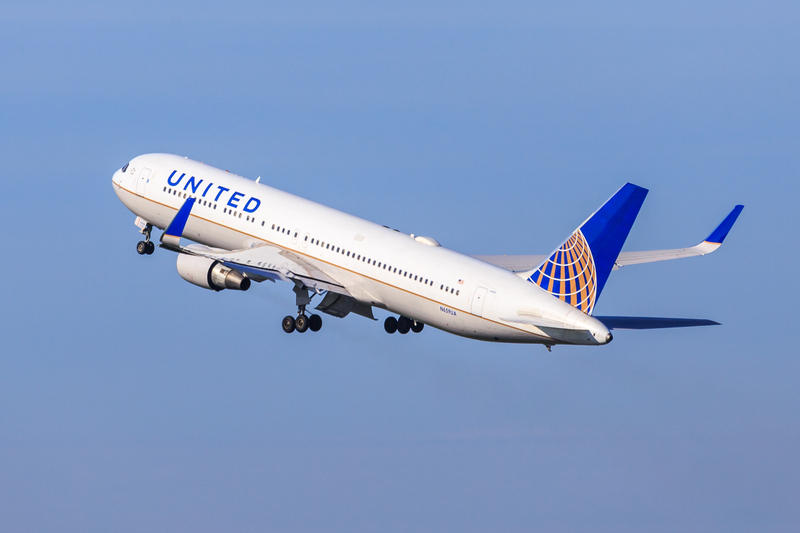
The Boeing 767’s Role on the Route
United uses the 767-300ER extensively on transatlantic routes where a larger Boeing 777 or 787 may provide more capacity than the market requires. Its combination of long-range capability and a relatively narrow twin-aisle cabin makes it particularly useful for connecting U.S. hubs with secondary European markets and for supporting multiple daily frequencies.
The airline’s 2025 annual filing listed 37 Boeing 767-300ERs, all owned, with standard configurations ranging from 167 to 203 seats. United reported an average fleet age of 29.8 years for the type at the end of 2025.
Those configurations include aircraft with a substantial allocation of premium seating, making the 767 well suited to business-heavy transatlantic markets. The twin-aisle cabin also allows United to offer direct aisle access in Polaris business class without deploying a higher-capacity widebody.
Boeing describes the 767 as a twin-engine, medium- to long-range family designed for extended-range operations. The manufacturer’s 767 airport planning document shows why the -300ER remains practical for Atlantic flying: center fuel tanks provide the range needed for long sectors, while the airframe remains smaller than current-generation long-haul widebodies.
United’s 767-300ERs use Pratt & Whitney PW4000-series engines. The airline has not identified which engine was affected on UA946 or disclosed the technical cause of the event.
St. John’s as a North Atlantic Diversion Point
St. John’s occupies a useful position for westbound and eastbound aircraft operating near the North American end of the North Atlantic system. A crew encountering a technical problem after progressing beyond Newfoundland can turn back toward YYT rather than continue across a long oceanic sector or divert farther inland.
Its ability to accept widebody aircraft makes YYT an important option even though accommodating a diverted international flight can require additional arrangements on the ground. In this case, the aircraft landed without incident, passengers disembarked normally and United was able to mount an onward flight later the same day.
N644UA remained out of the passenger recovery operation while the replacement aircraft continued to Amsterdam. Any return to service will depend on maintenance inspections and corrective work following the engine event.
Bottom Line
The diversion highlights why the 767 remains difficult for United to replace quickly despite the age of the fleet. The aircraft sits in a useful capacity band below the airline’s larger long-haul jets, while its premium-heavy cabins can support routes that generate strong business demand without requiring 777-level seat counts.
United’s July 2026 fleet plan called for the combined 767-300 and 767-400 fleet to remain at 53 aircraft through the end of the year. Over the same period, the airline expected its 787 fleet to grow from 88 aircraft at the end of the second quarter to 100. That points to a gradual transition rather than an immediate withdrawal of the older widebodies.
For passengers, the key operational result was United’s ability to position another aircraft and continue the trip within the same calendar day. For the airline, the next questions concern the extent of the engine work at YYT, how long N644UA remains unavailable and whether the event creates any further disruption within a 767 fleet that continues to carry a substantial share of United’s Atlantic schedule.
Keep reading FlyMag
Get the Daily Brief in the morning or the Route Watch weekly recap on Fridays. Or both.