United Airlines has begun rebuilding part of its Cleveland network, adding a year-round Las Vegas route and preparing to launch seasonal service to Miami. The expansion restores more nonstop options for Northeast Ohio passengers, but it bears little resemblance to the connecting operation United dismantled in 2014.

The carrier started flying between Cleveland Hopkins (CLE) and Las Vegas (LAS) on September 24, 2026. The service operates five times weekly, with no flights on Tuesdays or Wednesdays.
A second addition, linking CLE with Miami (MIA), is scheduled to begin December 3. That route will follow the same five-times-weekly pattern through April 5, 2027, covering the peak winter and spring-break travel period.
Read our stories in your inbox
Two aviation newsletters. Zero fluff.
The dates and operating patterns were confirmed in a May announcement from Cleveland Hopkins. United described Cleveland as an important market while emphasizing more nonstop choices for the local community rather than new connecting opportunities.
Two Routes Built Around Cleveland Demand
Las Vegas and Miami fit the demand profile of the post-hub Cleveland market. Both generate substantial leisure traffic, while LAS also draws convention passengers and MIA provides access to South Florida’s cruise market.
The Las Vegas schedule is designed as a conventional local-market round trip. United’s outbound leaves Cleveland in the morning, with the aircraft returning from LAS in the early afternoon. That pattern is useful to passengers beginning or ending their journey in Cleveland, but it is not part of a wider bank of arriving regional flights feeding departures across the country.
Miami is similarly targeted at winter demand. Its early-December start and early-April finish allow United to concentrate capacity during the strongest travel season rather than commit aircraft through the softer summer and fall periods.
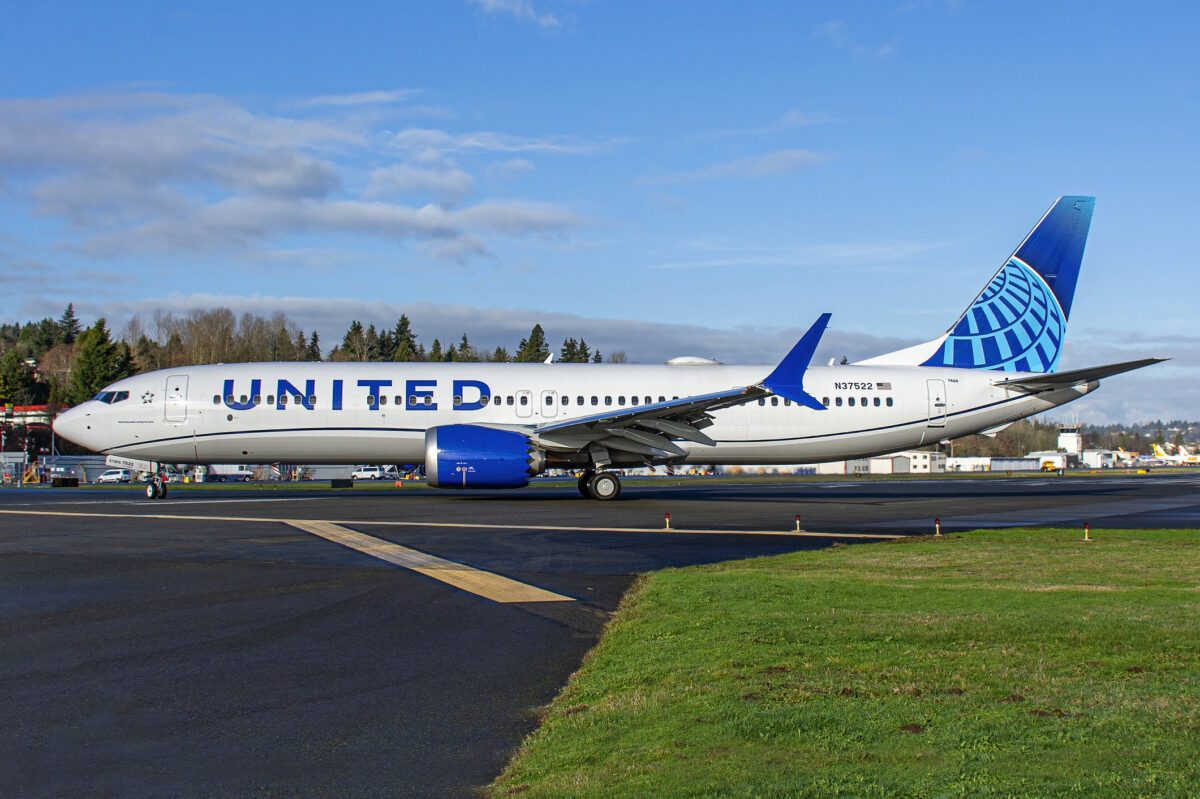
United is using Boeing 737-family aircraft rather than regional jets. The Las Vegas schedule has included the Boeing 737-800 and Boeing 737 MAX 8, while Miami International’s new-route listing identifies the Cleveland service as a Boeing 737 operation.
United’s Boeing 737-800 and Boeing 737 MAX 8 aircraft are configured at about 166 seats. The MAX 8 combines that capacity with lower fuel use per seat and United’s newer cabin product, including larger overhead bins and seatback entertainment. United’s own aircraft financing presentation describes the MAX 8 as a versatile replacement and growth aircraft within its domestic fleet.
That capacity makes sense on routes such as CLE-LAS, where several airlines can stimulate a large local passenger pool. It also shows that United is willing to deploy mainline aircraft from Cleveland without requiring a connecting complex to fill them.
Why This Is Not a Return to Hub Flying
United is not returning to Cleveland after a 12-year absence. It never left the airport. What ended in 2014 was Cleveland’s status as a connecting hub and the network of short-haul spokes that supported it.
United’s 2013 annual report still listed Cleveland among its hubs. In February 2014, the airline announced that it would cut average daily departures by roughly 60%, reducing the operation to 72 peak-day flights and 20 nonstop destinations once the changes were complete.
The airline attributed the decision to continuing losses in Cleveland, compounded by pressure on regional-airline staffing. The carrier’s regulatory filing for 2013 said the reductions would begin in stages that April.
The present network has a different purpose. Cleveland Hopkins now lists 14 United nonstop destinations, including the two new routes. Some connect CLE with United hubs, while others serve large local leisure markets such as Cancún, Orlando, Fort Myers, Fort Lauderdale and Tampa.
There is no comparable web of smaller spoke cities feeding a series of tightly timed banks. United can instead use Cleveland as a strong origin-and-destination station, selling nonstop trips where local demand supports them and routing the rest of its passengers over established hubs.
The airport itself has changed around that model. Cleveland estimated in 2019 that its traffic mix had shifted from about 65% origin-and-destination passengers during the hub period to 97% after the closure. By 2024, the airport said the figure had reached 99.5%, requiring terminal plans focused on passengers entering and leaving through the front of the building rather than moving between gates.
United Is Entering Competitive Markets
Neither new flight gives Cleveland an entirely new destination. United is adding its capacity to routes already served by other carriers.
Frontier Airlines and Southwest Airlines also fly nonstop between Cleveland and Las Vegas. On Miami, United faces both American Airlines and Frontier. The airport’s current listings show Southwest serving Las Vegas, while Frontier serves both LAS and MIA. American also lists Miami among its Cleveland destinations.
United therefore is not filling gaps in CLE’s route map. It is competing for passengers who already have nonstop alternatives, including customers who may prefer United because of MileagePlus status, corporate agreements or onward options elsewhere in the airline’s network.
The five-day operating pattern limits United’s exposure while still giving it a meaningful presence. Avoiding Tuesdays and Wednesdays concentrates capacity around longer leisure trips and higher-demand portions of the week, while the seasonal Miami schedule keeps the aircraft out of a market when fares are less likely to justify the service.
The approach is consistent with a carrier treating Cleveland as a valuable spoke and local market rather than as an emerging hub. United can add a route, adjust its season or change the aircraft without having to redesign dozens of connecting flights around it.
Cleveland Still Matters to United
United remained Cleveland’s largest airline immediately after the hub closure, operating more than 50 daily departures in 2015 even after the deepest reductions. The airport’s recovery was driven by a combination of retained United service, larger aircraft and expansion by low-cost competitors.
The airline also remains a signatory carrier at CLE. In July 2026, the airport finalized a new eight-year airline use and lease agreement, retroactive to January 1, with United among the participating passenger airlines. The agreement supports CLE’s planned terminal and landside modernization without implying that any carrier will rebuild a connecting hub.
Las Vegas and Miami should be viewed in that context. United has a long-established customer base, facilities and brand presence in Northeast Ohio. Selective nonstop growth allows it to make more use of those advantages without recreating the costly regional structure it abandoned in 2014.
Bottom Line
Cleveland passengers gain the most from United’s expansion. The airline is adding mainline capacity in two large leisure markets while preserving access to its broader network through its existing hub routes. Competition from Frontier, Southwest and American should also prevent United from treating the new flights as protected markets.
For United, the move signals a more flexible way to use a former hub. A station does not need connecting banks or dozens of regional spokes to support a broader schedule when the local catchment area can fill narrowbody aircraft. Cleveland’s overwhelmingly origin-and-destination traffic mix gives United room to add routes one at a time, with frequency and seasonality matched closely to demand.
The next indicator will be whether Miami returns for a second winter and whether Las Vegas retains year-round service through its first full schedule cycle. Further additions are possible, but they are more likely to resemble these targeted nonstops than the restoration of a Cleveland hub.
Keep reading FlyMag
Get the Daily Brief in the morning or the Route Watch weekly recap on Fridays. Or both.