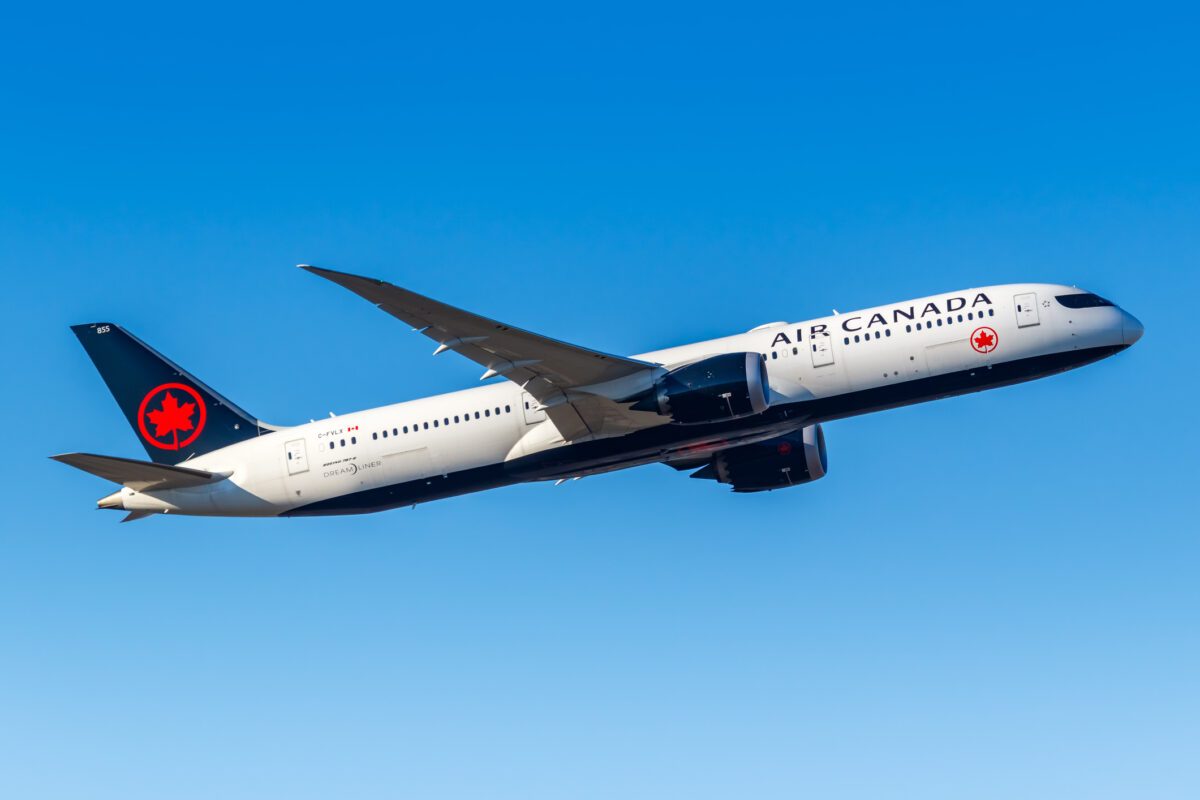
Air Canada has left Mumbai out of its published schedule for 2027, ending plans to restore its one-stop service from Toronto Pearson (YYZ) through London Heathrow (LHR).

The airline’s booking pages show no Air Canada-operated service between Heathrow and Mumbai (BOM) during winter 2026-27 or later in 2027. Mumbai is also absent from Air Canada’s announced international expansion for summer 2027, when the airline plans to add or restore several long-haul routes from Toronto.
The withdrawal leaves Air Canada without an aircraft serving BOM. The airline can still sell connecting itineraries to Mumbai through its partners, but those journeys are distinct from the through service it previously operated with its own aircraft.
Read our stories in your inbox
Two aviation newsletters. Zero fluff.
Air Canada’s Mumbai Strategy Changed Twice
Air Canada’s recent history in the Toronto-Mumbai market began with a nonstop operation. For winter 2024-25, the airline introduced flights four times weekly using the Boeing 777-200LR, an aircraft suited to the long sector between Canada and western India.
The airline’s original schedule had AC46 leaving Toronto on Mondays, Wednesdays, Fridays and Sundays, with AC47 returning from Mumbai on Mondays, Tuesdays, Thursdays and Saturdays. That seasonal program ran from late October 2024 through March 2025.
Air Canada subsequently changed the route’s structure. During winter 2025-26, published schedules showed Toronto-Mumbai operating through Heathrow, with the London-Mumbai sector flown under fifth-freedom rights. That allowed the airline to sell tickets solely between the United Kingdom and India as well as carry through passengers between Canada and Mumbai.
The revised operation used the Boeing 787 Dreamliner rather than the larger 777-200LR assigned to the earlier nonstop schedule. Routing the flight through Heathrow reduced the length of each individual sector and tied Mumbai to an established Air Canada station with a substantial flow of Canadian widebody flights.
Air Canada Cargo also marketed Mumbai capacity via Heathrow, reflecting the route’s ability to carry freight across both the transatlantic and UK-India sectors. The arrangement, however, required a widebody to continue beyond one of Air Canada’s most important European gateways instead of returning to Canada or operating another long-haul route.
The airline initially filed a limited return of the Heathrow-Mumbai sector for winter 2026-27, but that service was removed before the season began. Its Mumbai-London sales page now displays no Air Canada fares throughout the published 2027 booking period.
Air India Takes the Nonstop Market
Air India has moved into the gap with a seasonal nonstop operation between Mumbai and Toronto. The Indian carrier began the service on October 25, 2026, and plans to operate it through March 26, 2027.
Flights run three times weekly, on Wednesdays, Fridays and Sundays. AI193 departs Mumbai at 4 a.m. and reaches Toronto at 10 a.m. local time. AI192 leaves YYZ at 12:30 p.m. and arrives in Mumbai at 2:10 p.m. the following day.
Air India’s published schedule identifies it as the only carrier operating direct flights between the two cities during winter 2026-27. Unlike Air Canada’s most recent service, the Air India flight does not stop in London or at another intermediate airport.
The route uses an upgraded Boeing 777-300ER with 328 seats: eight First Class suites, 40 lie-flat Business Class seats and 280 Economy seats. Air India is also offering onboard Wi-Fi on the aircraft assigned to the route.
At three round trips per week, the schedule puts 1,968 seats into the market across both directions. The 777-300ER gives Air India a sizable premium cabin for corporate, visiting-friends-and-relatives and connecting demand, while the large Economy cabin provides the volume needed for a highly seasonal long-haul market.
Mumbai also functions as a domestic connecting hub for Air India. The airline is marketing onward access to cities including Ahmedabad, Bengaluru, Chennai, Hyderabad and Kochi, allowing the Toronto flight to draw traffic from beyond the local Mumbai market.
Delhi Remains Air Canada’s Indian Gateway
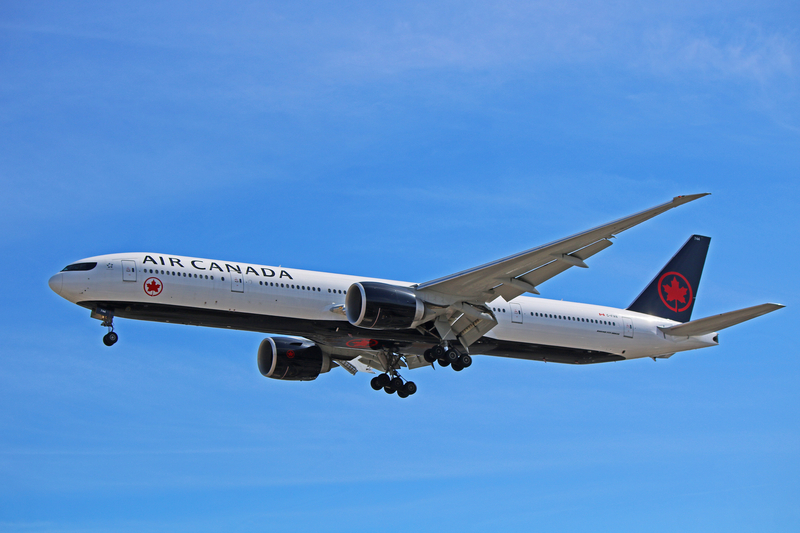
Air Canada continues to serve India through Delhi (DEL). Its Toronto-Delhi service remains on sale throughout 2027, preserving the airline’s primary nonstop link between eastern Canada and India.
The carrier also markets Indian domestic connections over Delhi under its reinstated codeshare with Air India. The partnership, which took effect in December 2025, allows Air Canada passengers to connect from Delhi to Mumbai, Ahmedabad, Amritsar, Hyderabad and Kochi on a single itinerary.
Air India said when announcing the codeshare agreement that more than two million people travel between India and Canada annually. The agreement gives Air Canada continued commercial access to Mumbai even after removing its own aircraft, although passengers must connect rather than remain on an Air Canada through flight.
The decision also frees a scarce widebody for other assignments. Air Canada currently lists eight Boeing 787-8s and 32 787-9s in its mainline fleet. Those aircraft underpin much of its long-haul growth and are being deployed across new and expanded markets in Asia, Europe and the Middle East.
For summer 2027, Air Canada is adding Toronto flights to Oslo, Shannon and Nice, restoring a daytime Heathrow service and increasing Shanghai to daily. Its announced international program also includes new routes from Montréal and Vancouver, but no return to Mumbai.
Bottom Line
Air Canada’s withdrawal shifts the Toronto-Mumbai market from a connecting through-flight to a straightforward competitive split. Air India has the only nonstop product, while Air Canada retains access through Delhi and partner connections. Passengers gain a faster journey when Air India operates, but the schedule’s three-weekly frequency and March 2027 end date limit its usefulness outside the winter peak.
For Air Canada, Mumbai illustrates the trade-offs involved in allocating a relatively small Dreamliner fleet. A Heathrow continuation could serve Canada-India, UK-India and cargo demand on the same aircraft rotation, but it also committed an aircraft to two long sectors and exposed the operation to disruption across three airports. Deploying that capacity elsewhere may produce a more consistent return as the airline opens new destinations and increases frequencies on established routes.
The next question is whether Air India extends Mumbai-Toronto beyond March 26, 2027. A second winter season or a year-round schedule would establish the route as more than a temporary response to available capacity. Until then, Delhi remains Air Canada’s core Indian gateway, and Toronto-Mumbai is Air India’s market to develop.