Alaska Air Group has acknowledged that its rapid international expansion is putting pressure on near-term financial performance as the company builds a nine-route intercontinental network from Seattle.


The expansion is a major shift for a company historically centered on domestic and near-international flying. Alaska Airlines and Hawaiian Airlines now have five long-haul destinations operating or seasonally served from Seattle (SEA), with four more scheduled to begin in 2027.
However, the company’s third-quarter net loss should not be read as a $147 million verdict on those routes. Alaska’s earnings release and financial statements show that it remained profitable at the operating and pretax levels during the quarter before a large income-tax charge pushed the final result into the red.
Read our stories in your inbox
Two aviation newsletters. Zero fluff.
The $147 Million Loss Was Not a Route-Level Result
Alaska Air Group reported $4.31 billion in third-quarter revenue, up 14% from a year earlier, while capacity increased 2.4%. Revenue per available seat mile rose 11.7%, and passenger yield improved 9.7%.
The company said those gains came despite pressure from investments in strategic growth markets and rapid international expansion. New long-haul routes generally carry substantial startup costs: crews and stations must be established, aircraft utilization patterns change, overseas sales channels need time to mature, and connecting traffic has to be developed at both ends of the route.
Even with that pressure, Air Group recorded $82 million in operating income and $18 million in pretax income. The $147 million GAAP net loss followed an income-tax expense of $165 million.
The unusual tax result arose after Alaska changed its full-year forecast from a pretax profit to a pretax loss, primarily because of higher fuel prices. That reduced its estimated annual effective tax rate and required the company to remeasure tax benefits recognized against losses earlier in the year. A $75 million catch-up adjustment was recorded in the third quarter.
On an adjusted basis, Alaska posted a $35 million net loss. Excluding the catch-up tax effect, it reported adjusted net income of $40 million, or 36 cents per share. The distinction matters because the company’s expanding international operation affected the underlying margin, but it did not by itself produce the reported net loss.
Fuel was the larger operating headwind. Aircraft fuel expense climbed 60% year over year to $1.21 billion, an increase of $453 million. Alaska paid an average of $3.94 per gallon, compared with $2.51 in the third quarter of 2025. The company now expects 2026 fuel expense to finish $1.8 billion above its original plan.
Nine Routes Span Three Aircraft Types
The Seattle long-haul build began with Tokyo Narita (NRT) and Seoul Incheon (ICN), followed in 2026 by Rome Fiumicino (FCO), London Heathrow (LHR) and Reykjavik (KEF). Athens (ATH), Paris Charles de Gaulle (CDG), Osaka Kansai (KIX) and Papeete (PPT) are scheduled to join the network in 2027.
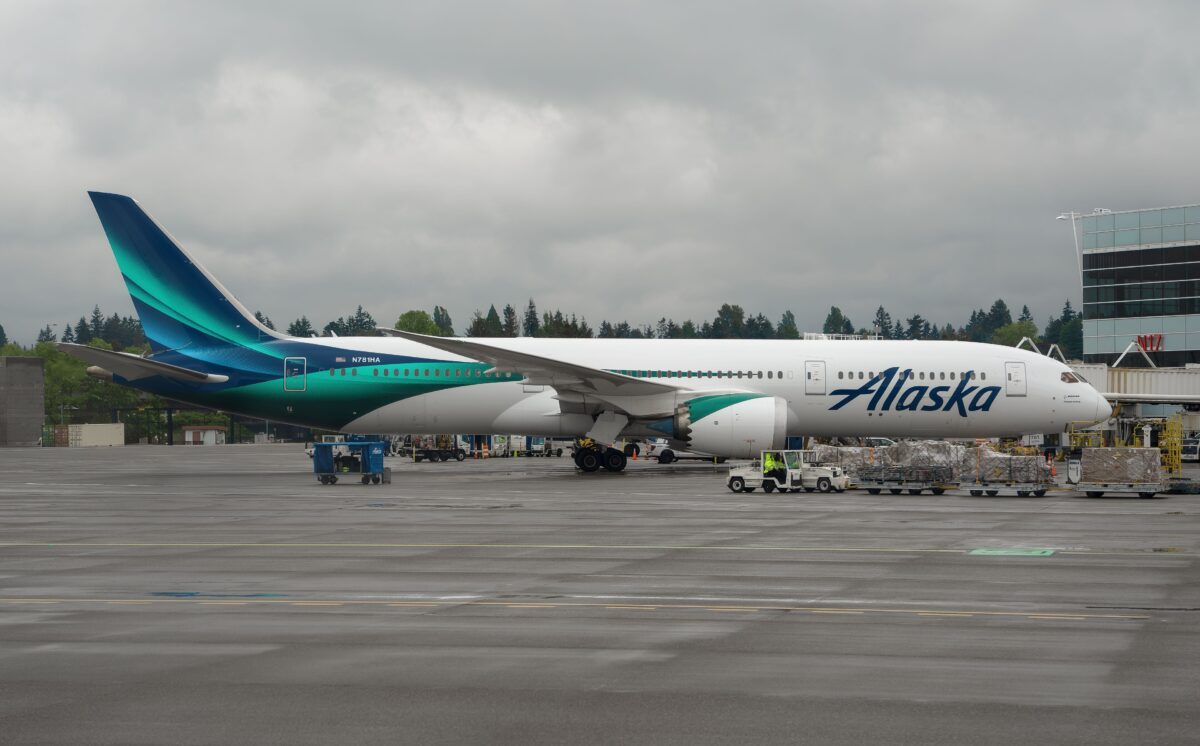
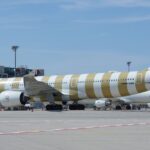
The core of the operation is the Boeing 787-9. Alaska uses the Dreamliner on Seoul, London and Rome, while Tokyo is also moving into the 787 operation. The aircraft has 34 enclosed, lie-flat business-class suites in a 1-2-1 layout, providing the premium capacity and cargo volume needed for larger European and Asian markets.
Alaska’s Athens and Paris schedule will also use the Boeing 787-9. Athens begins May 12, 2027, three times weekly and is planned as a seasonal route through October. Paris starts May 25 with five weekly seasonal flights. Athens will become Alaska’s longest route and places additional importance on efficient long-range performance from the 787 fleet.
Reykjavik is the outlier in the transatlantic portfolio. Alaska operates the summer route with a Boeing 737 MAX 8, whose range allows the airline to address a smaller seasonal market without committing widebody capacity. That lowers the number of seats Alaska must fill, although a narrowbody provides less premium and cargo capacity than the 787.

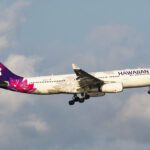
The two latest additions will be operated under the Hawaiian Airlines brand. The Osaka and Papeete routes will use the Airbus A330-200, including lie-flat business-class seating.
Osaka begins May 14, 2027, with four weekly year-round flights. Papeete follows June 11 with three flights per week throughout the year. Hawaiian already serves both destinations from Honolulu, giving Air Group existing sales, operational and brand experience in the two markets even as it adds Seattle as another gateway.
Alaska Is Accepting a Near-Term Margin Cost
Alaska is not responding to the current pressure by slowing the international build. The company expects fourth-quarter capacity to increase by between 1% and 1.5%, with the growth concentrated in international flying. It has also set a target of at least 15 intercontinental destinations from Seattle by 2030.
Under the company’s Alaska Accelerate strategy, long-haul flying is expected to rise from about 8% of system capacity to approximately 15% by the end of the decade. Alaska is pairing that growth with investments in premium cabins, lounges, cargo, international distribution and Atmos Rewards.
The strategy depends on more than the profitability of an individual flight. Long-haul service gives Alaska’s domestic network additional relevance to corporate accounts and loyalty members, while creating new opportunities to sell premium seats, cargo capacity and connecting itineraries through SEA. Those benefits take longer to develop than the immediate cost of launching a route.
Bottom Line
Alaska’s third-quarter numbers show the financial tension inherent in turning a strong domestic airline into an intercontinental operator. The Seattle routes are creating startup pressure, but the company still produced an operating profit while absorbing a sharp increase in fuel expense. The reported net loss was then magnified by tax accounting tied to losses from earlier in the year.
The more consequential test will come in summer 2027, when Athens, Paris, Osaka and Papeete join a network that is already supporting Tokyo, Seoul, London, Rome and Reykjavik. Alaska will need its domestic feed, Atmos Rewards base and oneworld partnerships to produce enough premium and connecting demand to support nine very different markets. Its mix of Boeing 787-9, Airbus A330-200 and Boeing 737 MAX 8 capacity gives planners useful flexibility, but the pace of expansion leaves little room for weak execution or another major fuel shock.
For Seattle, the program establishes a substantially broader hometown long-haul network. For Alaska, it is a deliberate trade: lower margins during the build-out in exchange for a network with greater premium, loyalty and international earning power. Investors will now be watching whether revenue maturation on the first five routes begins to offset the cost of launching the next four.