British Airways has resumed nonstop service between London Heathrow (LHR) and Dubai (DXB), restoring one of its principal Middle East routes after an eight-month suspension.
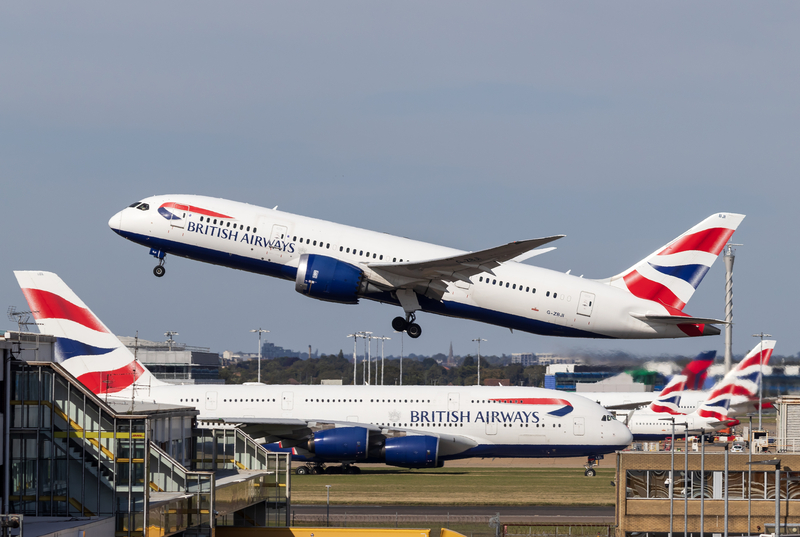
Flight BA105 operated from Heathrow on November 3, with the aircraft arriving in Dubai the following morning. The return BA104 departed DXB on November 4, completing the first round trip since British Airways halted the service amid regional airspace disruption at the end of February.
The carrier has initially restored one daily round trip. Its published timetable lists BA105 from London and BA104 from Dubai, giving British Airways an overnight eastbound departure and a daytime westbound return.
Read our stories in your inbox
Two aviation newsletters. Zero fluff.
A Daily Boeing 787-10 Operation
The winter schedule calls for BA105 to leave Heathrow at about 8 p.m. and reach Dubai at 7:45 a.m. the following day. BA104 is scheduled to depart Dubai at 10 a.m. and arrive at Heathrow shortly before 3 p.m. All times are local.
The timings place the eastbound flight in a familiar overnight window for Gulf services from Europe. The return reaches Heathrow early enough to connect into a substantial portion of British Airways’ late-afternoon and evening European network.
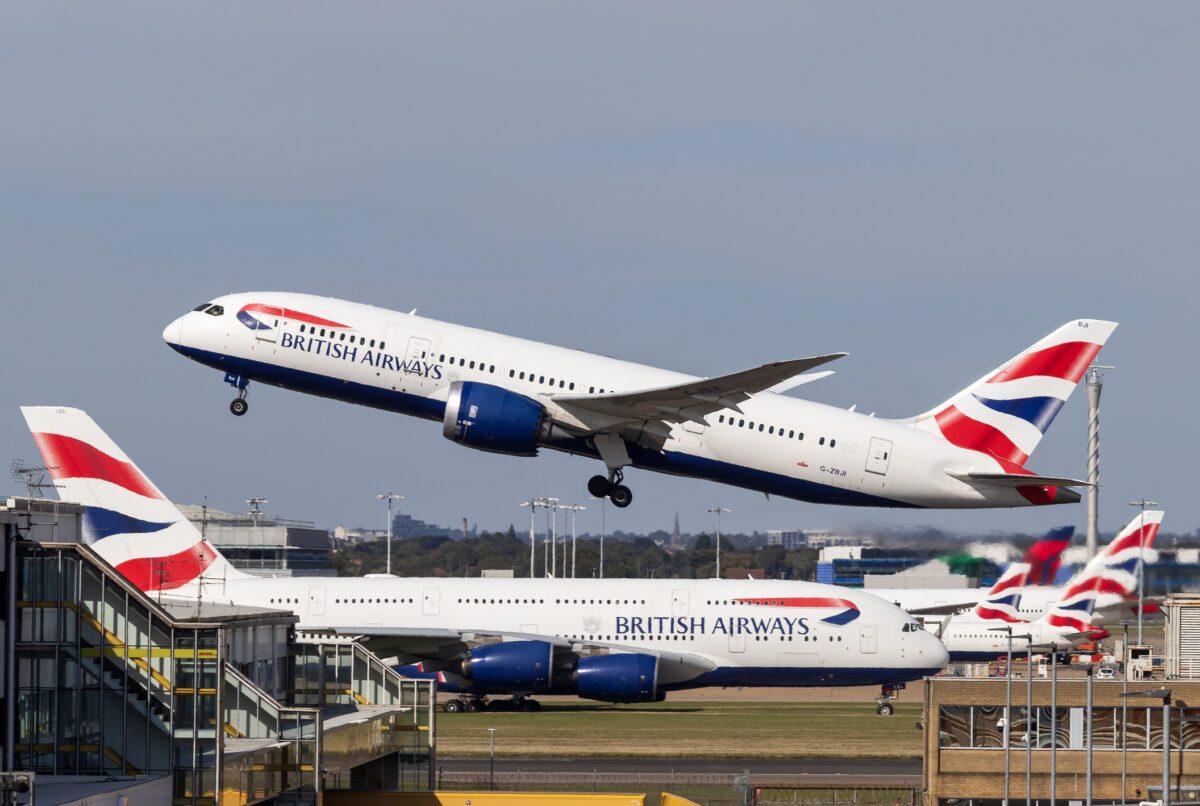
British Airways is assigning the Boeing 787-10 to the route. The airline’s 787-10 configuration accommodates 256 passengers across First, Club World, World Traveller Plus and World Traveller. The aircraft is fitted with Rolls-Royce Trent 1000 engines and has a published range of 6,330 nautical miles, well beyond the roughly 3,400-mile sector between London and Dubai.
The largest 787 variant is well matched to a market such as Dubai, where premium demand matters alongside substantial leisure and connecting traffic. British Airways’ 787-10 combines more capacity than its smaller Dreamliners with four cabins, including Club Suite business-class seats and an eight-seat First cabin.
At the planned daily frequency, the aircraft provides 1,792 seats in each direction per week, or 3,584 two-way seats. That remains a measured restoration compared with the multiple daily frequencies British Airways has historically deployed in the London-Dubai market.
Suspension Followed Regional Airspace Disruption
British Airways stopped operating to Dubai during the widespread disruption that began across the Middle East on February 28. The airline subsequently said it was unable to operate flights from several regional destinations, including Dubai, and mounted additional services to Singapore and Bangkok as traffic patterns shifted.
In March, British Airways formally extended cancellations to Dubai and other points while it reviewed airspace stability. It later offered additional flexibility to customers booked for travel through October 31, allowing refunds or changes even where a flight remained scheduled.
The airline’s Middle East travel notice described the changes as a response to continuing uncertainty and airspace restrictions. The November restart therefore represents a return to regular scheduled flying rather than a limited repatriation or relief operation.
British Airways had previously planned to resume the Dubai route with the start of the northern winter schedule on October 25. Moving the restart to November 3 delayed the return by nine days but preserved most of the peak winter season, when Dubai typically attracts stronger leisure demand from the United Kingdom and Europe.
Two of the World’s Largest International Gateways
The route reconnects two of the world’s largest international airports. Airports Council International ranked Dubai as the world’s busiest airport for international passengers in 2025, with 95.2 million travelers. Heathrow ranked second for international traffic and seventh for total passengers, handling 84.5 million during the year.
Those rankings make the restoration commercially significant beyond the local London-Dubai market. Heathrow supplies British Airways with connections across the United Kingdom, Europe and the Americas, while Dubai generates a large mix of point-to-point business, visiting-friends-and-relatives and leisure demand.
Dubai’s recovery has nevertheless been uneven following the regional disruption. The airport handled 31.5 million passengers during the first half of 2026, according to Dubai Airports, a 31.3% decline from the same period a year earlier. The operator said airline capacity and demand strengthened during the second quarter as operations began to stabilize.
British Airways’ return adds another long-haul operator at DXB and restores direct access to its Heathrow network. It also gives London-Dubai passengers an alternative to Emirates’ high-frequency operation, although BA’s single daily flight represents a relatively small share of capacity in one of the world’s busiest long-haul markets.
Bottom Line
The restart gives British Airways a controlled way to rebuild its Dubai presence without immediately committing the aircraft and crew required for a larger schedule. A daily 787-10 preserves all four long-haul cabins, serves both local and connecting demand and returns a strategically important Gulf destination to the Heathrow network.
The development also shows that international airlines are prepared to restore capacity selectively rather than bring their full pre-disruption schedules back at once. British Airways can add frequency later if demand, yields and the regional operating environment justify it. For now, the key measure will be whether the daily flight proves resilient enough to operate consistently through the winter peak.
Further expansion would signal confidence not only in Dubai demand but also in the stability of the airspace used to reach the Gulf. Until then, the 787-10 schedule offers meaningful capacity while limiting British Airways’ exposure should operating conditions change again.