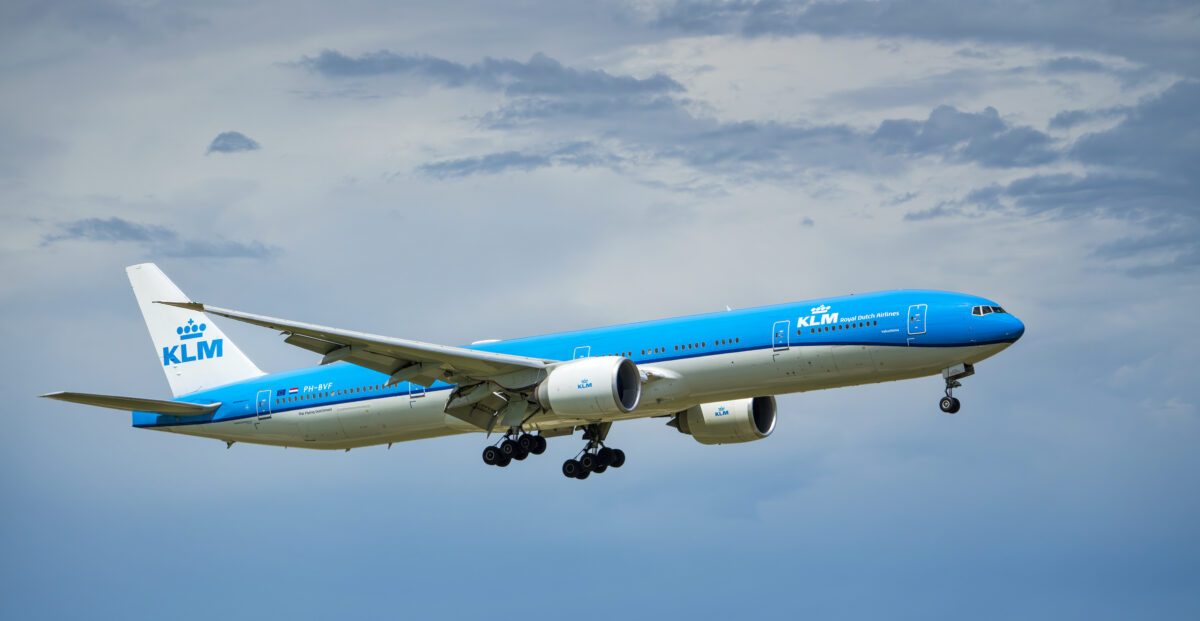
KLM has shifted its Aruba and Bonaire services from Airbus A330s to Boeing 777 and Boeing 787-10 aircraft, substantially increasing the number of premium seats available between the Netherlands and the two Dutch Caribbean islands.

The change began October 25, the opening day of KLM’s 2026-27 winter schedule. The aircraft operate from Amsterdam Schiphol (AMS) to Oranjestad (AUA) and Kralendijk (BON), replacing A330 operations that offered about 30 World Business Class seats and no separate premium-economy cabin.
According to KLM’s announcement, the incoming Boeing aircraft provide approximately 35 World Business Class seats and 24 Premium Comfort seats. The carrier said capacity in its other travel classes remains broadly comparable, making the change primarily a reallocation of cabin space toward higher-value products rather than a straightforward increase in economy inventory.
Read our stories in your inbox
Two aviation newsletters. Zero fluff.
Close to 60 Seats Across Two Premium Cabins
The new allocation gives KLM close to 60 seats across World Business Class and Premium Comfort on a typical flight, compared with roughly 30 seats in the A330’s sole premium cabin. Although Business Class grows only modestly, Premium Comfort creates an additional cabin and a distinct price point between economy and a fully flat bed.
KLM completed the installation of Premium Comfort across its Boeing 777 and 787 fleets in 2024. The two-year retrofit program covered 54 aircraft, with cabins containing between 21 and 28 seats depending on aircraft type. KLM also installed new World Business Class seats during the 777 work, giving each passenger direct aisle access and a sliding privacy door.

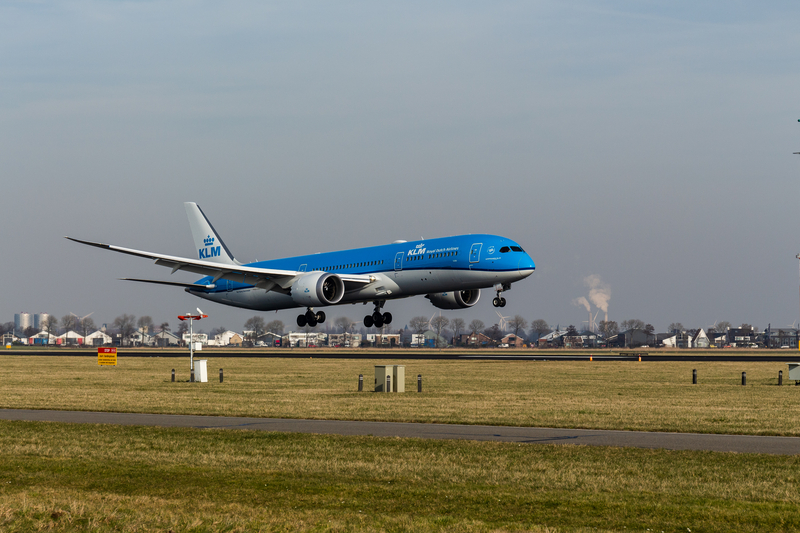
Premium Comfort is a separate cabin rather than an extra-legroom economy section. Its seats offer more width and recline, a leg and footrest, a larger entertainment screen and differentiated catering. On KLM’s Boeing 787-10, the cabin uses a 2-3-2 layout with an average pitch of 38 inches. World Business Class is arranged 1-2-1, while economy uses the Dreamliner-standard 3-3-3 layout.
The 787-10 can carry as many as 344 passengers in KLM service and has a published maximum range of about 7,450 miles. That combination of capacity and range makes the largest Dreamliner variant well suited to high-demand leisure routes within its operating envelope, including the roughly 4,900-mile sector between Amsterdam and the southern Caribbean.
Deployment Is Part of KLM’s A330 Withdrawal
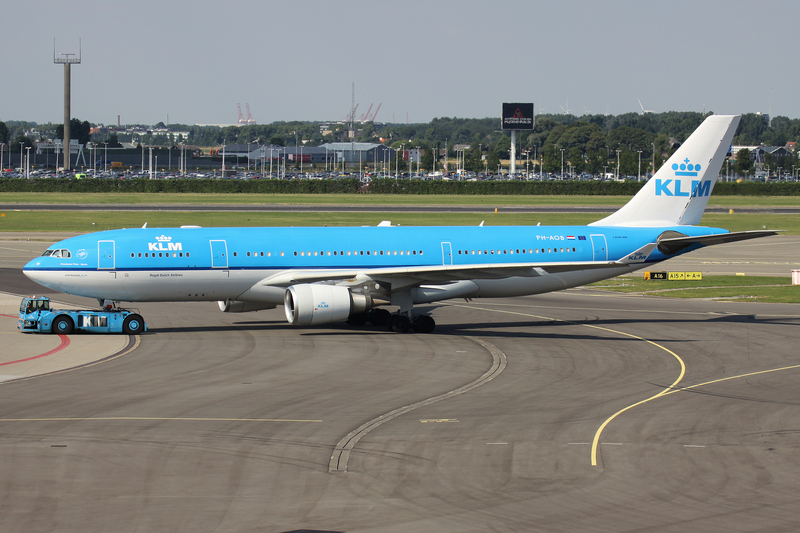
The Aruba and Bonaire switch forms part of a broader long-haul fleet transition. In its winter network plan, KLM said Aruba, Bonaire, Miami, Riyadh and Dammam would be operated mainly with Boeing aircraft as it continued withdrawing the Airbus A330-200.
KLM’s A330s retain a two-cabin long-haul configuration, with World Business Class and economy products but no Premium Comfort section. The A330-200 accommodates up to 268 passengers in the airline’s published configuration, while the longer A330-300 carries up to 292. Both use a 2-4-2 economy layout and 2-2-2 World Business Class layout.
The Boeing replacement does not produce the same result on every flight. A 777-200ER is broadly comparable with an A330-300 in total seat count, while the 787-10 and 777-300ER are substantially larger. KLM’s emphasis on comparable capacity outside the premium cabins indicates that the commercial objective is to improve the mix of seats for sale, not simply to add the maximum possible number of passengers.
For the Caribbean operation, the move also standardizes the onboard proposition with more of KLM’s long-haul network. Passengers can now book the airline’s full three-cabin product on the Aruba and Bonaire services, while the additional World Business Class seats provide more inventory for both paid demand and Flying Blue redemptions during peak vacation periods.
The Aruba Tourism Authority had signaled the change in June, saying the additional premium capacity aligned with the island’s effort to attract higher-spending visitors. Its announcement described the Boeing deployment as an increase concentrated in Premium Comfort and Business Class rather than across the entire aircraft.
Routes With Nine Decades of KLM History
The fleet change comes during Bonaire’s 90th year of scheduled KLM service. A Fokker Oriol, registered PJ-A10, made a successful test landing on the island on May 9, 1936. KLM operated the first official scheduled passenger flight later that month, on May 31, according to Bonaire International Airport’s anniversary account.
KLM’s history with Aruba began even earlier. The Fokker F.XVIII Snip landed there on December 23, 1934, after the airline’s first transatlantic flight placed an aircraft in the Caribbean. Scheduled regional service between Curaçao and Aruba followed on January 19, 1935, while scheduled nonstop Amsterdam-Aruba service began in February 1974, according to KLM’s historical record.
The airline is also adding capacity elsewhere in the Dutch Caribbean during the winter. Willemstad (CUR), Curaçao, is scheduled for nine weekly flights in the base program, rising to 10 in January and February, 12 over the Christmas period and 11 during the spring vacation peak.
Bottom Line
The Aruba and Bonaire deployment shows how premium economy is changing long-haul aircraft assignment. An A330 could provide sufficient overall capacity for these markets, but its two-cabin layout left KLM without a product for passengers willing to pay more than economy fares without moving all the way to World Business Class. The Boeing fleet allows the airline to pursue that revenue segment without materially enlarging the lower cabins.
Aruba and Bonaire gain a more competitive onboard product and a larger pool of premium seats during their key European winter season. KLM, meanwhile, can use aircraft already modified to a common three-cabin standard while continuing to reduce operational dependence on the aging A330 fleet. The 787-10 is particularly significant because it combines a larger cabin with the newer-generation economics expected to underpin more of KLM’s long-haul leisure network.
The detail to watch is the mix of 777 and 787-10 flying over the full season. Total capacity, business-class layout and operating economics vary between those types, so aircraft assignment will determine whether KLM’s change remains chiefly a cabin-mix strategy or also develops into a wider increase in seats to the islands.