Canadian North has formally inaugurated its expanded cargo base at Ottawa (YOW), completing a $22 million infrastructure project intended to increase freight capacity and shorten the ground-handling cycle for shipments moving to northern Canada.
The October 5 ceremony marked the public completion of a facility that had already entered service earlier in the year. Canadian North began accepting outbound shipments at 145 Thad Johnson Private on May 20, 2026, before transferring the remaining inbound pickup activity from its previous warehouse by the end of June.
The project combines an $11 million contribution from Canadian North with up to $11 million from the federal government’s National Trade Corridors Fund. Transport Canada said the new building increases the airline’s general cargo storage capacity by more than 40% and its cold-storage capacity by almost 85%.
Read our stories in your inbox
Two aviation newsletters. Zero fluff.
A 42,646-Square-Foot Cargo Facility
The purpose-built, 42,646-square-foot facility stands outside the airfield with public-road access from Thad Johnson Private. Federal project records show that the development includes truck loading docks, expanded refrigeration and approximately 100 parking spaces.
The additional temperature-controlled area is particularly important for groceries, pharmaceuticals and other time- or temperature-sensitive consignments. The federal project assessment identified refrigeration capacity as a central feature of the building, rather than an ancillary addition to a conventional warehouse.

WestJet Cuts 10 U.S. Routes From Winter 2026/27 Schedule as Vancouver Network Shrinks
Canadian North has also brought its previously separated Ottawa pickup and drop-off functions into the single building. In its operational opening announcement, the airline said the consolidation would support more efficient processing and strengthened shipment-tracking capabilities.
Transport Canada expects truck wait times to fall from 30 to 60 minutes at the old operation to between five and 10 minutes at the new facility. The revised layout is also intended to reduce the time required to move freight from the warehouse to an aircraft.
Those changes address two different constraints. The added floor and cold-storage space allow Canadian North to accept and protect more freight, while the loading docks and consolidated workflow increase the rate at which that freight can pass through the building. For a network vulnerable to weather disruption and limited frequency, reducing warehouse dwell time also gives the airline more room to recover after an interrupted operating day.
Ottawa’s Role in the Northern Network
Ottawa is Canadian North’s principal southern gateway for the eastern Arctic. Freight tendered there feeds a network carrying groceries, mail, medical supplies, building materials and commercial shipments to communities across Nunavut, Nunavik and the Northwest Territories.
The airline says its scheduled operation carries more than 25 million kilograms of freight and mail each year. Its passenger and cargo network connects 25 northern communities with southern gateways at Ottawa and Edmonton.
The Ottawa warehouse is therefore not simply a local cargo terminal. It is a consolidation point where shipments from suppliers and trucking companies are received, sorted, stored and prepared for the aircraft sectors that carry them north. More cold-storage space also reduces the operational exposure created when perishable freight arrives before its planned flight or must be held during an irregular operation.
The facility’s position beside YOW keeps that consolidation activity close to Canadian North’s aircraft operation while retaining landside access for shippers. The result is a shorter handoff between road transport, warehouse processing and the ramp than would be possible at a remote distribution center.
Combi Aircraft Remain Central to the Cargo Chain
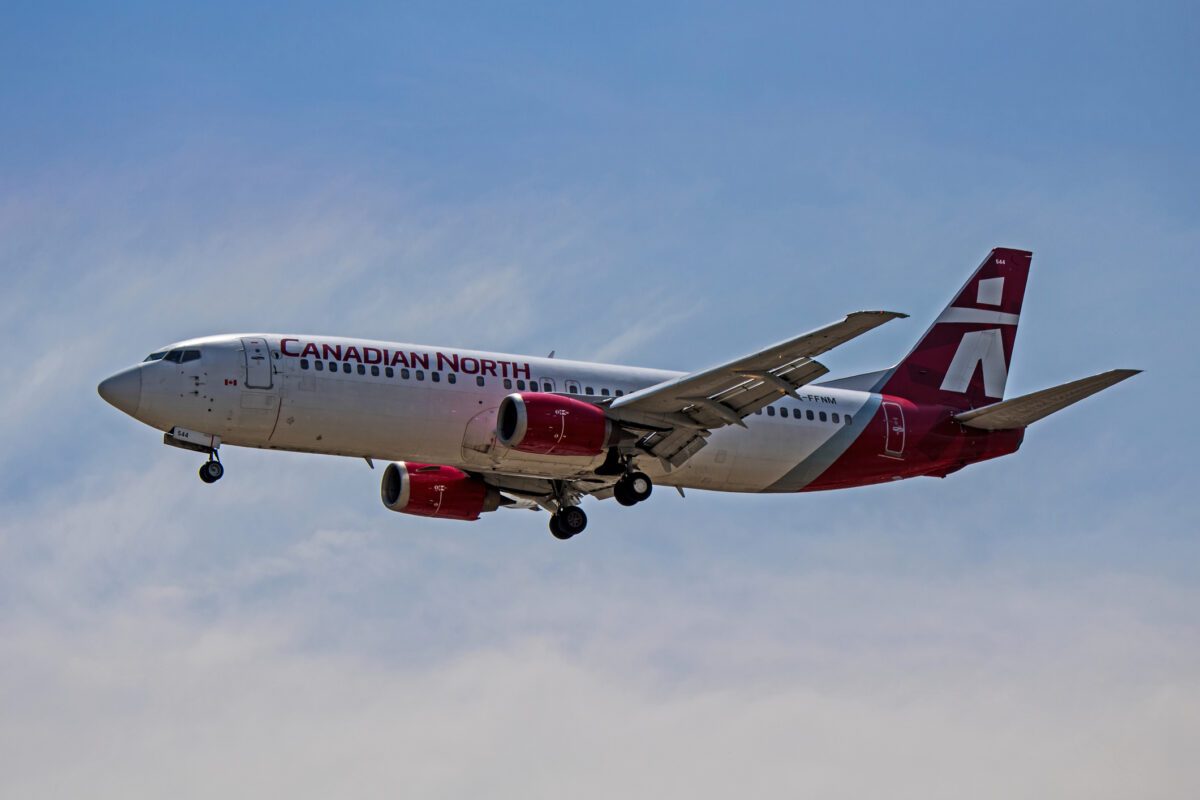
Canadian North’s fleet is structured around carrying passengers and freight on the same northern sectors. Its Boeing 737-300 Combi can operate with 80 passengers and three main-deck pallets, while the Boeing 737-400 Combi accommodates four pallets with 72 passengers. The airline lists a maximum payload of 35,500 pounds for the 737-400 Combi, which has a large main-deck cargo door and accepts standard AAA or AAE pallet formats.
That capacity makes the 737 combis suitable for moving consolidated loads from southern gateways to larger northern stations without separating passenger and freight flying into different services. The aircraft can carry palletized cargo that would be difficult to accommodate in the belly of a conventional passenger narrowbody.
Canadian North then uses ATR equipment for thinner sectors and airports requiring more specialized performance. The ATR 42-300 can be configured for passengers, freight or a combination of both, with a maximum payload of 10,000 pounds. The ATR 72-500F raises that figure to 17,000 pounds and provides a climate-controlled cargo compartment. Both types are listed as capable of operating from gravel and ice strips.
The expanded Ottawa base strengthens the first stage of that chain. It does not add aircraft lift by itself, but it allows the airline to assemble loads more efficiently, protect temperature-sensitive freight and deliver cargo to the ramp in a form that better matches the available Boeing and ATR capacity.
Bottom Line
The most immediate gains should come at the landside interface. Cutting a 30- to 60-minute truck queue to as little as five minutes improves vehicle utilization for suppliers and reduces congestion around receiving. Inside the building, the much larger refrigerated footprint gives Canadian North greater flexibility to manage food and pharmaceutical shipments when weather or aircraft availability disrupts the planned sequence.
The investment also underlines Ottawa’s continuing role as an Arctic logistics gateway. Canadian North’s operation is unusual among scheduled airlines because freight is not merely supplementary belly cargo; it is a core product that influences aircraft configuration, station staffing and network planning. A warehouse designed around that reality should allow the carrier to extract more useful capacity from its existing combi fleet before adding flying.
The measure to watch will be whether faster processing at YOW translates into more consistent delivery performance farther north. The facility removes a significant ground bottleneck, but the full benefit will depend on coordination with aircraft schedules, destination warehouse capacity and the smaller ATR sectors that complete many shipments’ journeys.
Keep reading FlyMag
Get the Daily Brief in the morning or the Route Watch weekly recap on Fridays. Or both.