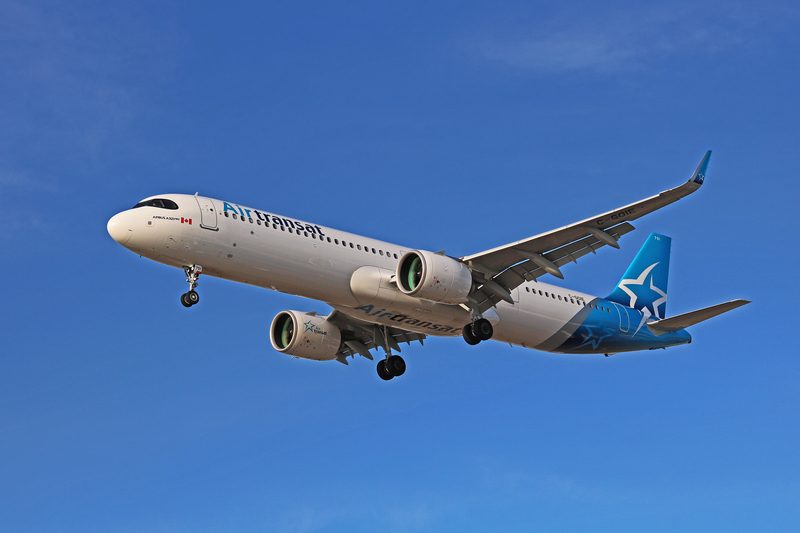
Air Transat has launched the first-ever nonstop service between Ottawa International Airport (YOW) and London Gatwick Airport (LGW), adding a new transatlantic option for Canada’s capital and giving Gatwick another long-haul Canadian route for the summer season.

The new service began on May 15, 2026 and operates three times weekly through October 23, 2026. For Air Transat, this is more than just a seasonal addition. It is a targeted route that strengthens Ottawa’s international profile while reinforcing the airline’s strategy of building leisure and VFR-oriented long-haul service from Canadian cities beyond only Toronto and Montreal.
For aviation readers, the significance is clear: this is the kind of route that can quietly reshape an airport’s place on the map.
Read our stories in your inbox
Two aviation newsletters. Zero fluff.
Ottawa Gains A New Kind Of European Access
The most important thing about this launch is what it gives Ottawa.
Canada’s capital already has some transatlantic connectivity, but a nonstop to London Gatwick adds a different kind of link than the more traditional major-hub model. Gatwick provides access not only to London itself, but also to one of the UK’s biggest outbound and inbound leisure markets. That makes the route useful for tourism, family traffic, and broader UK–Canada travel demand in a way that is slightly different from a more business-centric Heathrow-style proposition.
For Ottawa, that means more choice and a stronger international identity.
The Route Is Seasonal, But Still Meaningful
Air Transat is running the service as a summer seasonal operation, with flights scheduled three times weekly until late October.
That is a sensible approach. Ottawa–London is strong enough to justify direct service, but the market still benefits from a measured seasonal pattern rather than an all-year commitment from the outset. Airlines often use this kind of schedule to test and build a route while keeping aircraft deployment efficient during the most profitable travel window.
In other words, this is a disciplined launch, not an overreach.

The Airbus A321LR Is The Right Tool
The service is being operated by the Airbus A321LR, and that matters a great deal.
This aircraft is almost tailor-made for routes like Ottawa–Gatwick: long enough to require true transatlantic capability, but not so large that a widebody is always necessary. The A321LR gives Air Transat the range to cross the Atlantic with a much lower trip cost than a larger aircraft, which is exactly what makes thinner transatlantic markets more viable.
For a route like this, aircraft choice is a huge part of the story. Without the A321LR, the economics would look very different.
The Schedule Supports Both Ends Of The Market
The timing of the service is also telling.

Flights leave Gatwick in the morning and arrive in Ottawa around midday local time, while the return leaves Ottawa in the evening and arrives back in the UK the following morning. That is a classic transatlantic structure and one that works well for both leisure passengers and those connecting onward at either end.
For Air Transat, it also helps maximize aircraft use without needing an additional fleet type just for thinner Atlantic markets.
Porter Adds More Value To The Route
One of the more useful details behind the launch is Air Transat’s partnership with Porter Airlines.
That matters because it gives Ottawa-bound and Gatwick-bound passengers more than just a local endpoint. Through Porter, travelers arriving in Ottawa can connect onward to other destinations across Canada and selected U.S. cities. That makes the route more commercially flexible than a pure point-to-point operation.
In practical terms, the partnership helps Ottawa behave more like a small connecting gateway rather than just a destination airport.
Gatwick Gets A Distinctive Canadian Addition
For London Gatwick, the route also fits neatly into the airport’s wider strategy.
LGW has been growing its long-haul portfolio and continues to position itself as more than a short-haul leisure airport. Adding Ottawa strengthens that image, especially because the route is unique rather than duplicative. It gives Gatwick a new direct Canadian capital connection and adds another transatlantic market that is different in character from the bigger Toronto or Montreal corridors.
That is exactly the sort of route that helps diversify a long-haul portfolio.
This Is A Good Example Of How Mid-Sized Atlantic Markets Are Changing
The launch also says something broader about the transatlantic market.
Airlines increasingly do not need a large widebody and daily frequency to open a Europe–North America route. Aircraft like the A321LR are allowing carriers to connect mid-sized cities directly in ways that would have been much harder to justify even a few years ago. Ottawa–Gatwick is a very good example of that trend.
It is not one of the Atlantic’s giant trunk markets. But with the right aircraft and the right seasonal timing, it becomes a perfectly credible nonstop.
Bottom Line
Air Transat’s new Ottawa (YOW)–London Gatwick (LGW) service is an important route launch not because it is huge, but because it is smart. It gives Canada’s capital its first nonstop link to Gatwick, adds more transatlantic choice for Ottawa travelers, and shows how the Airbus A321LR is opening thinner European markets that once would have been difficult to serve directly.
For Air Transat, it is another sign of a carefully targeted long-haul strategy. For Ottawa, it is the kind of route that strengthens the airport’s international relevance in a very tangible way.
Keep reading FlyMag
Get the Daily Brief in the morning or the Route Watch weekly recap on Fridays. Or both.