American Airlines is adding two new routes from Miami International Airport (MIA).

The airline will launch daily flights from Miami (MIA) to Maracaibo (MAR), Venezuela, on July 14, 2026.
It will then add daily flights from Miami (MIA) to Cap-Haïtien (CAP), Haiti, on November 1, 2026.
Read our stories in your inbox
Two aviation newsletters. Zero fluff.
American says the two routes will bring its Mexico, Caribbean, and Latin America network to 100 destinations. The airline refers to this region internally as MCLA.
The milestone is useful for marketing. But the routes themselves are also important.
Maracaibo strengthens American’s return to Venezuela. Cap-Haïtien gives the airline a path back into Haiti while Port-au-Prince remains restricted for U.S. carriers.
Two New Routes From Miami
American’s new Maracaibo service will operate daily from Miami (MIA).
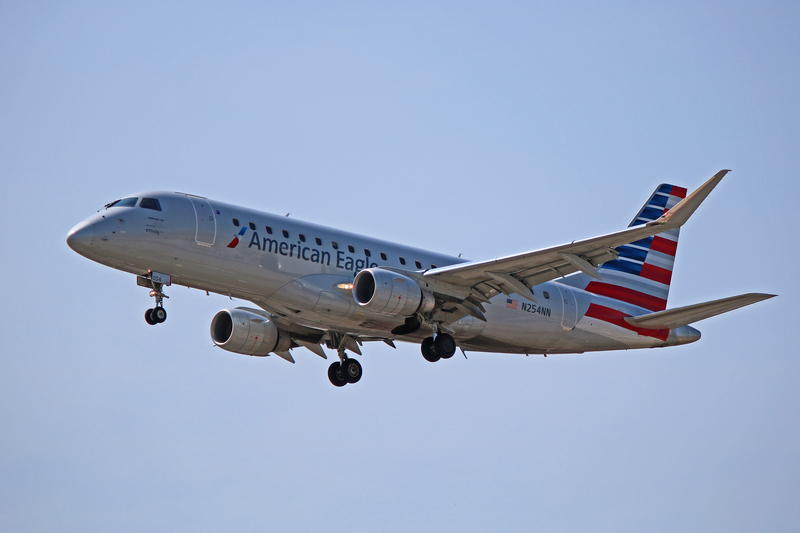
The route will use Embraer 175 aircraft operated in a dual-class layout. American says the aircraft will offer a premium cabin and free high-speed Wi-Fi sponsored by AT&T.
The Cap-Haïtien route will also operate daily from Miami (MIA).
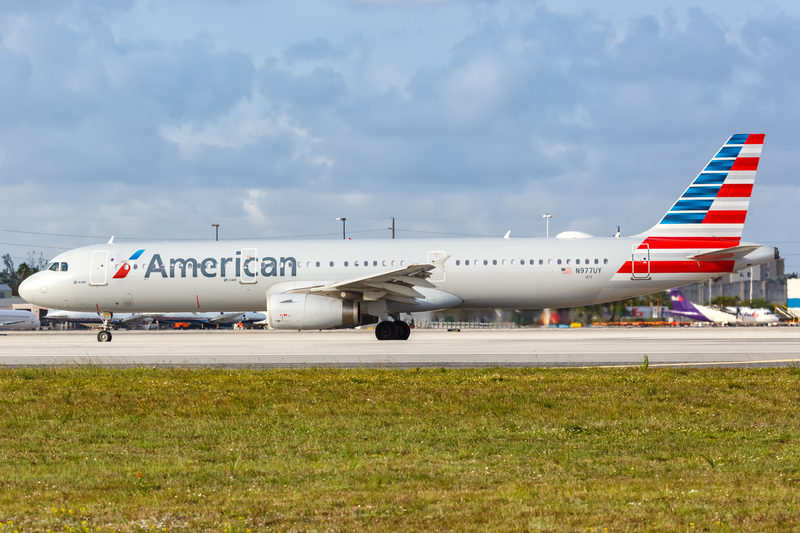
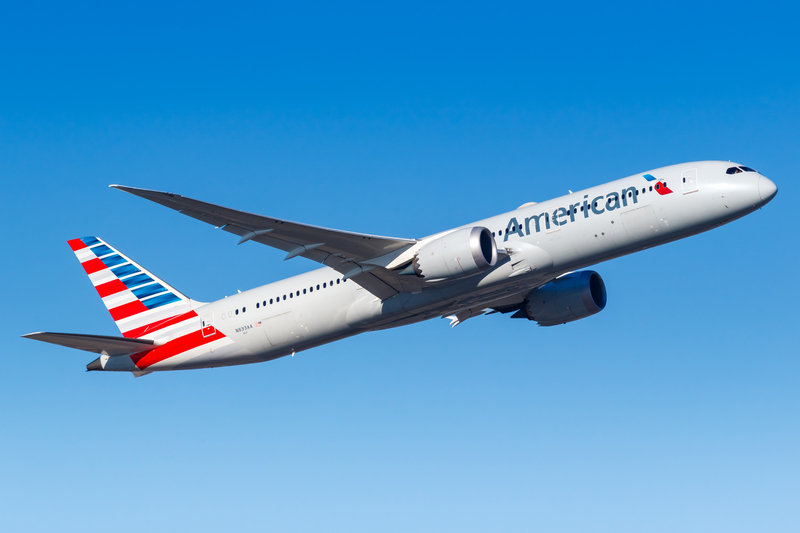
American says that service will use Boeing 737 aircraft. It will also feature a premium cabin and free high-speed Wi-Fi sponsored by AT&T.
The schedule gives American two very different route additions.
Maracaibo (MAR) is a Venezuela rebuild route. Cap-Haïtien (CAP) is a Haiti recovery route.
Both lean heavily on Miami’s role as American’s main gateway to the Caribbean and Latin America.
Maracaibo Deepens American’s Venezuela Return
The Maracaibo route follows American’s return to Caracas (CCS).
American resumed Miami (MIA)–Caracas (CCS) service on April 30, 2026. The airline later increased the route to twice daily.
Now it is adding western Venezuela.
Maracaibo is Venezuela’s second-largest city and an important oil-industry center. It is also a major family and diaspora market.
American says the new route will be the only nonstop service between the United States and Maracaibo (MAR).
That gives the airline an early lead in a market that had been cut off from scheduled U.S. airline service for years.
Why The E175 Makes Sense
The Embraer 175 is the right aircraft for Miami (MIA)–Maracaibo (MAR).
It is smaller than a mainline jet, but it still offers a premium cabin. That helps American serve the market daily without adding too much capacity too quickly.
The aircraft also fits the route’s likely demand profile.
This is not a mass-market leisure route like Cancun (CUN) or San Juan (SJU). It is more likely to carry family traffic, business travelers, Venezuelan diaspora traffic, and some humanitarian and government-related demand.
A daily E175 gives American frequency without the risk of a larger aircraft.
That is important as U.S.–Venezuela service rebuilds.
Venezuela Service Restarted After A Long Gap
American had not served Venezuela for several years.
The airline suspended Venezuela service in 2019. U.S. commercial passenger and cargo flights were later restricted under a federal suspension order.
That changed in 2026.
The U.S. government rescinded the suspension, and Reuters reported that the U.S. Department of Transportation approved American’s request to operate Miami flights to Caracas (CCS) and Maracaibo (MAR) through Envoy.
American’s Caracas launch came first. Maracaibo now gives the airline a second Venezuelan destination.
For Miami, that matters. South Florida has deep ties to Venezuela, and American has long used MIA as its main Latin America gateway.
Cap-Haïtien Brings American Back To Haiti
The second new route is Miami (MIA)–Cap-Haïtien (CAP).
American says it will become the first U.S. airline to announce the resumption of Haiti service.
That wording is important. The route is planned for November 1, 2026, so it has not started yet.
Still, the announcement is significant.
U.S. carriers suspended Haiti service in late 2024 after security conditions worsened. Flights to Port-au-Prince (PAP) remain restricted by the Federal Aviation Administration.
Cap-Haïtien (CAP), however, is outside the Port-au-Prince restriction area and is one of the Haitian airports where U.S. operations are permitted.
That gives American a way to return to Haiti without immediately returning to Port-au-Prince.
Why Cap-Haïtien Matters
Cap-Haïtien is Haiti’s second-largest city and the main gateway to northern Haiti.
For American, the route has a clear South Florida connection.
Miami-Dade and Broward counties have large Haitian-American communities. American also says travelers from cities such as New York and Orlando will be able to connect over Miami (MIA) to reach Cap-Haïtien (CAP).
That one-stop access matters.
The Haiti market has been underserved since U.S. airlines halted service. American is now using Miami to rebuild a controlled, daily link.
The route also gives travelers an alternative to Port-au-Prince (PAP), where aviation security concerns remain a major barrier.
The Haiti Route Carries A Security Context
Cap-Haïtien (CAP) is not being added in a normal operating environment.
The FAA has kept restrictions on Port-au-Prince (PAP) because of risks to civil aviation from armed groups. The restrictions were extended through at least September 3, 2026.
Reuters reported that U.S. planes may transit over Port-au-Prince only above 10,000 feet and that the FAA has permitted flights to several other Haitian airports, including Cap-Haïtien.
That makes American’s choice of CAP strategic.
It allows the airline to serve Haiti while avoiding the capital airport that remains restricted for U.S. airline operations.
Miami Remains The Core Gateway
Miami (MIA) is the center of the announcement.
American says MIA is the largest U.S. gateway to Latin America and the Caribbean. This winter, the airline plans more than 410 peak daily departures from the hub.
That scale is hard to match.
Miami is not just another American Airlines hub. It is the airline’s most important north-south gateway.
The route mix is different from Dallas/Fort Worth (DFW), Charlotte (CLT), Chicago (ORD), or Philadelphia (PHL). Miami’s role is built around Latin America, the Caribbean, South Florida’s immigrant communities, leisure traffic, and high-frequency regional service.
Maracaibo (MAR) and Cap-Haïtien (CAP) fit that model well.
American Is Also Adding Frequency
The new routes are part of a wider winter push from Miami.
American says it will increase several MIA routes during the winter season.
That includes two daily flights to Rio de Janeiro (GIG), up to eight daily flights to San Juan (SJU), and up to four daily flights to St. Thomas (STT).
The airline also plans two daily flights to Antigua (ANU) starting October 5.
Other increases include up to six daily flights to Tortola (EIS), three daily flights to Exuma (GGT), and two daily flights to St. Kitts (SKB) during the peak holiday and spring travel period.
This shows the broader strategy.
American is not only adding unusual or complex markets. It is also adding depth on high-demand Caribbean and Latin America routes.
The 100-Destination Milestone Matters
American’s 100-destination MCLA milestone is partly promotional.
But it also reflects real network scale.
A carrier can serve a region in two ways. It can focus on a few major cities with large aircraft. Or it can build a wide network of large, medium, and smaller points.
American is choosing the second model from Miami.
That is why cities such as Maracaibo (MAR) and Cap-Haïtien (CAP) matter. They are not the largest markets in the region. But they add reach and relevance.
For travelers, that can mean fewer connections. For American, it means a stronger position in markets where nonstop U.S. service is limited.
Aircraft Choice Shows The Strategy
The aircraft choices also tell the story.
The E175 on Maracaibo (MAR) gives American a lower-risk way to serve a recovering Venezuela market with daily frequency.
The Boeing 737 on Cap-Haïtien (CAP) adds more seats for a Haiti market where South Florida demand is likely to be strong.
Both aircraft offer premium cabin seating.
American is also using its free Wi-Fi rollout as part of the product message. The airline says free high-speed Wi-Fi sponsored by AT&T is available for AAdvantage members on many domestic and select international flights.
That is becoming more important as U.S. airlines compete on connectivity, not just schedule.
Bottom Line
American Airlines will add two new routes from Miami (MIA): Maracaibo (MAR) on July 14 and Cap-Haïtien (CAP) on November 1.
Both routes will operate daily.
Maracaibo will use Embraer 175 aircraft and gives American the only nonstop service between the United States and Venezuela’s second-largest city. Cap-Haïtien will use Boeing 737 aircraft and gives American a way back into Haiti while Port-au-Prince remains restricted for U.S. airline operations.
The routes also bring American’s Mexico, Caribbean, and Latin America network to 100 destinations.
For Miami, the announcement reinforces the airport’s role as American’s most important gateway south of the United States.
For American, the strategy is clear. It is using MIA not only for beach and leisure routes, but also for complex, underserved, and diaspora-heavy markets where nonstop service has real value.
Keep reading FlyMag
Get the Daily Brief in the morning or the Route Watch weekly recap on Fridays. Or both.